
The Future of AI: How Artificial Intelligence is Reshaping Our World
Explore the profound impact of AI on the future of work, healthcare, and society. Discover the opportunities and challenges of the intelligence revolution in this deep dive.
Introduction: The Dawn of a New Era
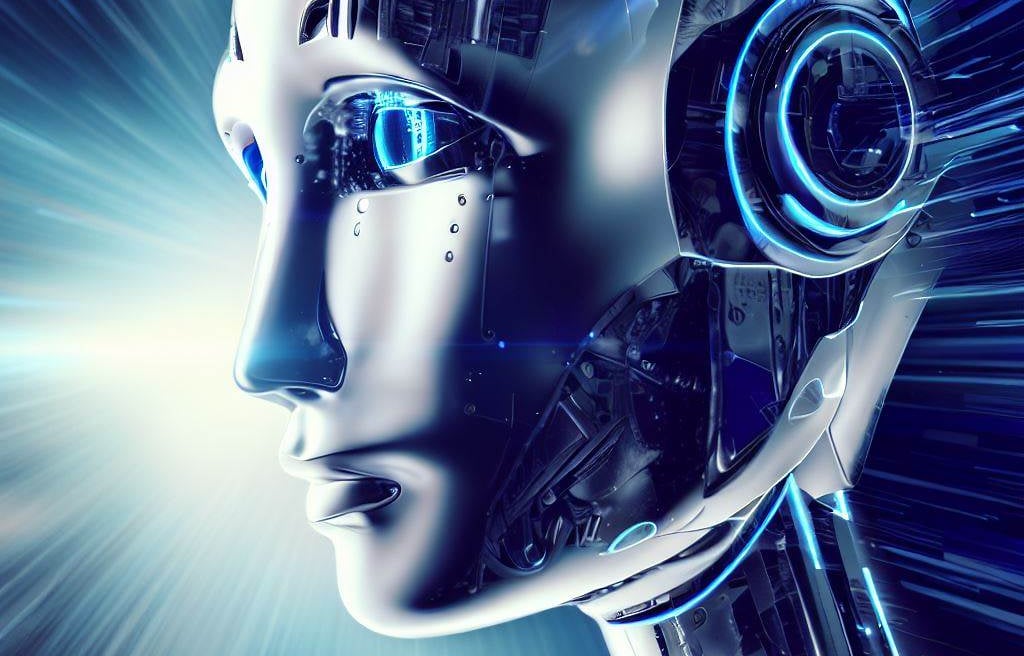
Artificial Intelligence (AI) is no longer a concept confined to the pages of science fiction. It is the defining technology of the 21st century, a "general-purpose technology" comparable to steam power or electricity. From the algorithms that curate our social media feeds to the neural networks diagnosing rare diseases, AI is quietly weaving itself into the fabric of daily life.
As we look toward the next decade, the question isn't whether AI will change the future, but rather how profound that change will be. We are standing at the threshold of an intelligence revolution—one that promises to amplify human capability while simultaneously challenging our existing social and economic structures.
Learn more about our technology analysis on FutureGrit
The Evolution of Intelligence: From Logic to Learning
To understand the future of AI, we must recognize how far it has come. Early AI was "symbolic," relying on rigid "if-then" rules programmed by humans. Today, we have moved into the era of Machine Learning (ML) and Deep Learning, where systems learn patterns from massive datasets.
The next frontier is Artificial General Intelligence (AGI)—the point at which a machine can perform any intellectual task that a human can. While we haven't reached AGI yet, the rapid progression of Large Language Models (LLMs) suggests that the gap is closing faster than many experts predicted.
AI in the Workplace: Displacement or Augmentation?
The most immediate concern for many is the impact of AI on the labor market. Historically, automation replaced physical labor; AI, however, is beginning to automate cognitive tasks.
1. The Shift in Skills
Routine administrative tasks, data entry, and even basic programming are increasingly being handled by AI. This doesn't necessarily mean "the end of work," but it does mean a radical shift in the skills required to succeed. The future worker will need to focus on Human-Centric Skills:
Critical thinking and complex problem-solving.
Emotional intelligence and empathy.
Creative strategy and innovation.
2. The Rise of the "Co-pilot"
We are entering the age of the "AI Co-pilot." Instead of replacing the lawyer, the accountant, or the doctor, AI will serve as a high-speed assistant. It can summarize thousands of legal documents in seconds or highlight anomalies in medical scans that the human eye might miss. This Human-AI Collaboration will likely lead to a massive spike in global productivity.
Healthcare: The Personalization of Medicine
Perhaps the most noble impact of AI will be in the field of medicine. We are moving away from "one-size-fits-all" treatments toward Precision Medicine.
Drug Discovery: Developing a new drug traditionally takes a decade and billions of dollars. AI models can now simulate molecular interactions, cutting the discovery phase down to months.
Predictive Diagnostics: Wearable devices powered by AI can monitor heart rhythms and glucose levels in real-time, predicting a heart attack or a diabetic episode days before it occurs.
AI in Surgery: Robotic-assisted surgeries, guided by AI, allow for precision that exceeds human capability, resulting in smaller incisions and faster recovery times.
The Ethical Frontier: Bias, Privacy, and Power
As AI takes on more responsibility, the ethical stakes rise. If an AI makes a mistake, who is responsible?
1. Algorithmic Bias
AI is only as good as the data it is trained on. If historical data contains biases, the AI will amplify them. This has already been seen in facial recognition software and hiring algorithms. Ensuring AI Fairness is a critical challenge for future developers.
2. The Privacy Paradox
To be effective, AI needs data. However, the collection of this data often conflicts with individual privacy rights. The future will require a delicate balance between data-driven innovation and the protection of personal liberties.
AI and Society: Education and Creativity
AI is also transforming how we learn and create.
Personalized Learning: In the future, every student could have a personal AI tutor that adapts its teaching style to the student's specific pace and interests.
Generative Art and Content: AI tools are democratizing creativity, allowing anyone to generate high-quality images, music, and videos. However, this also raises questions about intellectual property and the value of human-made art.
Conclusion: Steering the Ship
The future of AI is not a fixed destination; it is a path we are currently building. While the risks of job displacement and ethical lapses are real, the potential to solve humanity's greatest challenges—from climate change to terminal illness—is unprecedented.
To thrive in the age of AI, we must focus on Lifelong Learning and the development of robust Regulatory Frameworks. The goal should not be to build a world where machines replace us, but a world where machines empower us to reach our full potential.
Summary Checklist for the Future:
Embrace AI Literacy: Understand how these tools work to stay competitive.
Focus on Ethics: Advocate for transparent and unbiased systems.
Foster Creativity: Lean into the uniquely human traits that machines cannot replicate.
MicroNews © 2025
MicroNews empowers the generation of tomorrow for a brighter future and hope for every individual.
Thanks For Touch with us
We care about your data in our privacy policy.
Popular Post
Top 10 Calcium-Rich Vegetables for Strong Bones & Better Health
Patala Garuda (Rauvolfia serpentina): Health Benefits, Ayurvedic Uses
Ganga Siuli (Parijata Tree): Benefits, Uses, and Medicinal Properties
Freelancing Explained: How to Start, Earn, and Succeed as a Freelancer
Turmeric Benefits: Uses, Nutrition, Ayurveda Importance & Side Effects
Science of Longevity: New Research Reveals How Diet May Shape Lifespan