
Asthma: Causes, Symptoms, Triggers, Treatment, Diet, and Natural Management
Introduction
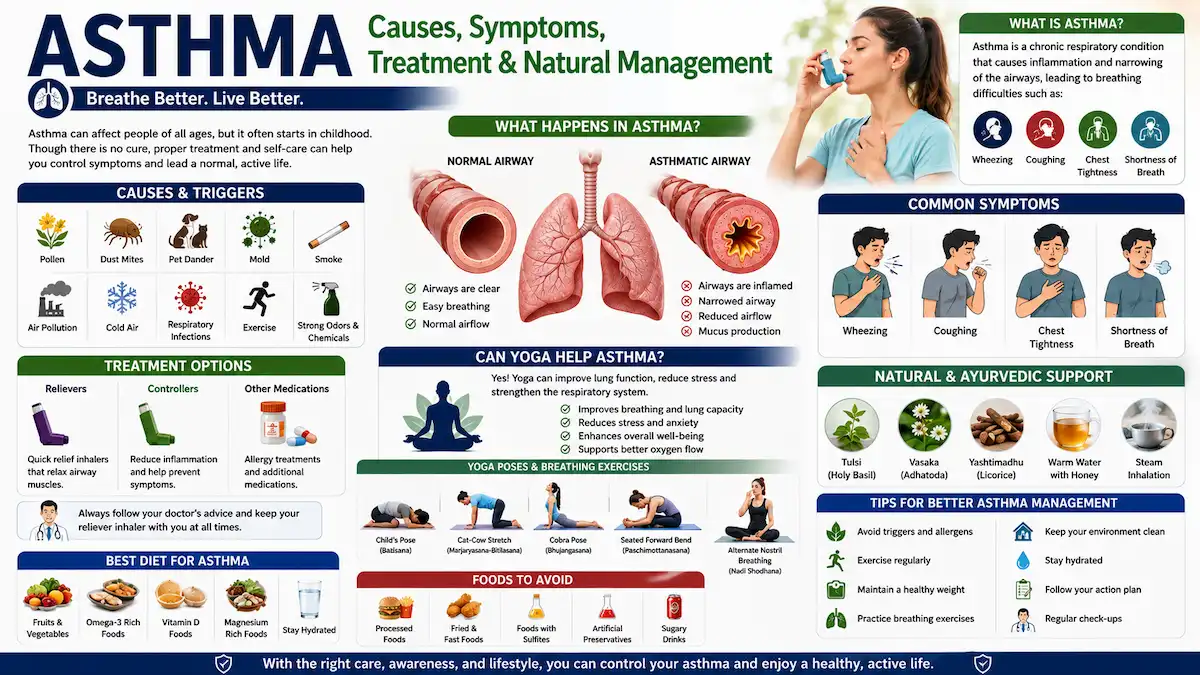
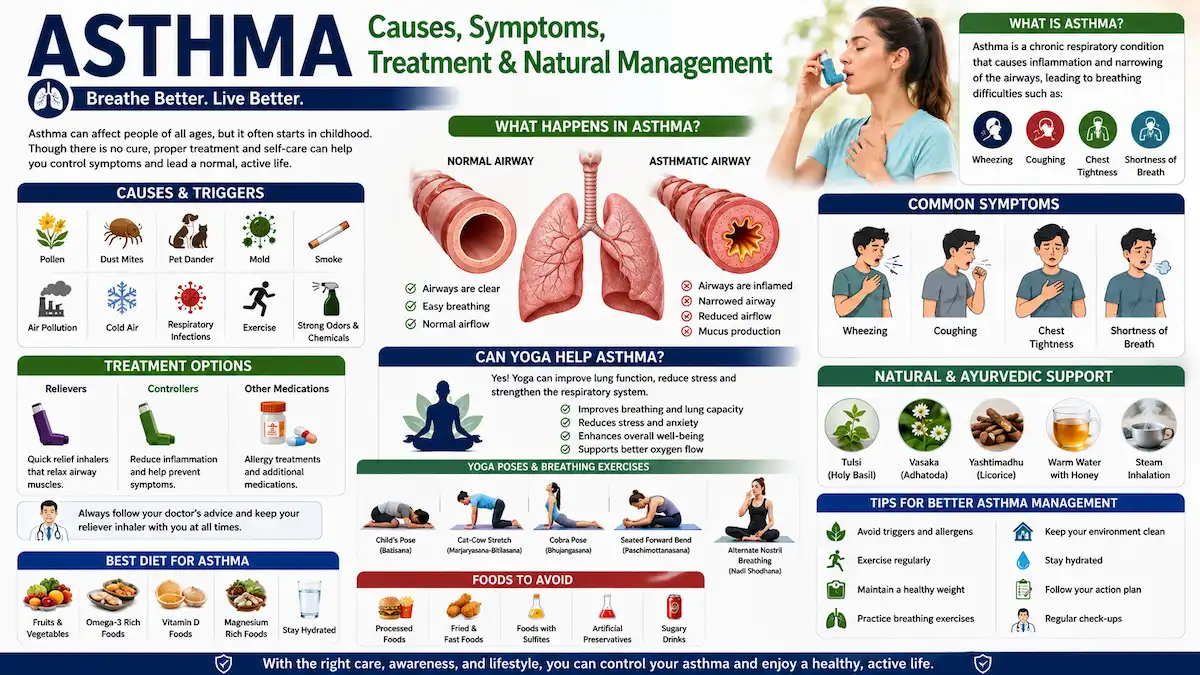
Asthma is a chronic respiratory disease that affects millions of people worldwide. It causes inflammation and narrowing of the airways, making it difficult to breathe. Common symptoms include wheezing, coughing, chest tightness, and shortness of breath.
Although asthma can affect people of all ages, it often begins during childhood. While there is currently no permanent cure for asthma, proper treatment, lifestyle modifications, and trigger management can help individuals lead healthy and active lives.
This comprehensive guide explains the causes, symptoms, risk factors, treatment options, diet recommendations, and natural ways to manage asthma effectively.
What Is Asthma?
Asthma is a long-term condition that affects the lungs and airways. During an asthma attack, the airways become inflamed, swollen, and narrowed, restricting airflow and making breathing difficult.
The severity of asthma varies from person to person. Some individuals experience occasional symptoms, while others may have frequent asthma attacks requiring ongoing medical care.
Is Asthma Hereditary?
One of the most common questions people ask is whether asthma is genetic.
The answer is yes—genetics can play a role in asthma development. Individuals with a family history of asthma or allergies are more likely to develop the condition.
However, asthma is not caused by genetics alone. Environmental factors also contribute significantly.
Risk Factors for Asthma
Family history of asthma
Exposure to allergens
Air pollution
Tobacco smoke exposure
Respiratory infections
Occupational irritants
Obesity
Environmental triggers
Common Causes and Triggers of Asthma
Asthma symptoms can worsen when exposed to certain triggers.
Common Asthma Triggers Include:
Pollen
Dust mites
Pet dander
Mold
Cigarette smoke
Air pollution
Cold weather
Respiratory infections
Exercise
Strong odors and chemicals
Stress and anxiety
Identifying and avoiding personal triggers is an important part of asthma management.
Symptoms of Asthma
Asthma symptoms may vary from mild to severe and can change over time.
Common Symptoms Include:
Wheezing
Persistent coughing
Shortness of breath
Chest tightness
Difficulty sleeping due to breathing problems
Rapid breathing
In severe cases, asthma attacks may require immediate medical attention.
Can Asthma Improve With Age?
Many children experience fewer asthma symptoms as they grow older.
Several factors may contribute to this improvement:
Why Asthma May Improve Over Time
Airway development and growth
Maturation of the immune system
Hormonal changes during adolescence
Better awareness of triggers
Improved lifestyle habits
Reduced exposure to allergens
However, asthma does not disappear in everyone, and some individuals continue to experience symptoms throughout adulthood.
Asthma Treatment Options
Although asthma cannot be cured, it can be effectively controlled with appropriate treatment.
Medications Used for Asthma
1. Bronchodilators
These medications relax airway muscles and provide quick relief during asthma attacks.
2. Inhaled Corticosteroids
Help reduce airway inflammation and prevent symptoms.
3. Combination Inhalers
Contain both anti-inflammatory and bronchodilator medications.
4. Allergy Treatments
May help individuals whose asthma is triggered by allergies.
Always follow your healthcare provider’s treatment plan and keep a rescue inhaler available when needed.
Can Yoga Help Asthma?
Yoga is increasingly recognized as a complementary therapy for asthma management.
Regular yoga practice may help:
Improve lung function
Enhance breathing control
Reduce stress and anxiety
Increase oxygen intake
Improve overall respiratory health
Recommended Yoga Poses for Asthma
Child’s Pose (Balasana)
Cat-Cow Stretch
Cobra Pose (Bhujangasana)
Seated Forward Bend
Legs-Up-The-Wall Pose
Bridge Pose
Pranayama Breathing Exercises
Benefits of Pranayama
Pranayama focuses on controlled breathing techniques that help strengthen the lungs and improve airflow.
Popular breathing exercises include:
Diaphragmatic Breathing
Alternate Nostril Breathing (Nadi Shodhana)
Deep Belly Breathing
Always consult your doctor before starting a new exercise or yoga program.
Best Diet for Asthma Patients
A healthy diet can help reduce inflammation and support better lung health.
Foods That May Help Asthma
Antioxidant-Rich Foods
Berries
Oranges
Leafy green vegetables
Broccoli
Omega-3 Fatty Acids
Salmon
Mackerel
Flaxseeds
Walnuts
Vitamin D Sources
Fortified dairy products
Eggs
Fatty fish
Safe sunlight exposure
Magnesium-Rich Foods
Nuts
Seeds
Whole grains
Foods to Avoid With Asthma
Some individuals may notice worsening symptoms after consuming certain foods.
Potential Trigger Foods
Fast food
Foods containing sulfites
Artificial preservatives
Excess sugary beverages
Keeping a food diary can help identify personal dietary triggers.
Ayurvedic Approaches to Asthma
Ayurveda is an ancient Indian system of medicine that focuses on balancing the body’s natural energies.
Common Ayurvedic Remedies Used for Asthma
Tulsi (Holy Basil)
Vasaka (Adhatoda)
Yashtimadhu (Licorice)
Herbal formulations
Pranayama breathing exercises
Dietary modifications
Ayurvedic treatments should be used only under the supervision of a qualified practitioner and alongside conventional medical treatment.
Homeopathy and Asthma
Some individuals explore homeopathy as a complementary approach for asthma management.
However, scientific evidence supporting homeopathy for asthma remains limited.
Important Considerations
Do not replace prescribed asthma medications with homeopathy.
Always consult a healthcare professional.
Monitor symptoms carefully.
Follow evidence-based medical treatment.
Proper asthma management remains essential for preventing complications.
Tips for Living Well With Asthma
To reduce asthma symptoms and improve quality of life:
Follow your prescribed treatment plan.
Avoid smoking and secondhand smoke.
Exercise regularly.
Maintain a healthy weight.
Practice breathing exercises.
Reduce exposure to allergens.
Stay hydrated.
Schedule regular medical checkups.
Conclusion
Asthma is a manageable chronic respiratory condition that affects people of all ages. Understanding its causes, symptoms, and triggers is the first step toward effective control.
By combining medical treatment, healthy lifestyle choices, proper nutrition, trigger avoidance, and supportive practices such as yoga and breathing exercises, individuals with asthma can enjoy an active and fulfilling life.
Remember, successful asthma management requires ongoing care, regular monitoring, and close communication with your healthcare provider.
Take control of your asthma, breathe easier, and live healthier every day.