
Bones Anatomy and Structure : Functions, Types & Best Exercises for Strong Bone Health
Learn about the structure of bones anatomy, key bone functions, and the best exercises to strengthen bone density. Discover how long, short, flat, and irregular bones support movement, protection, and overall health.
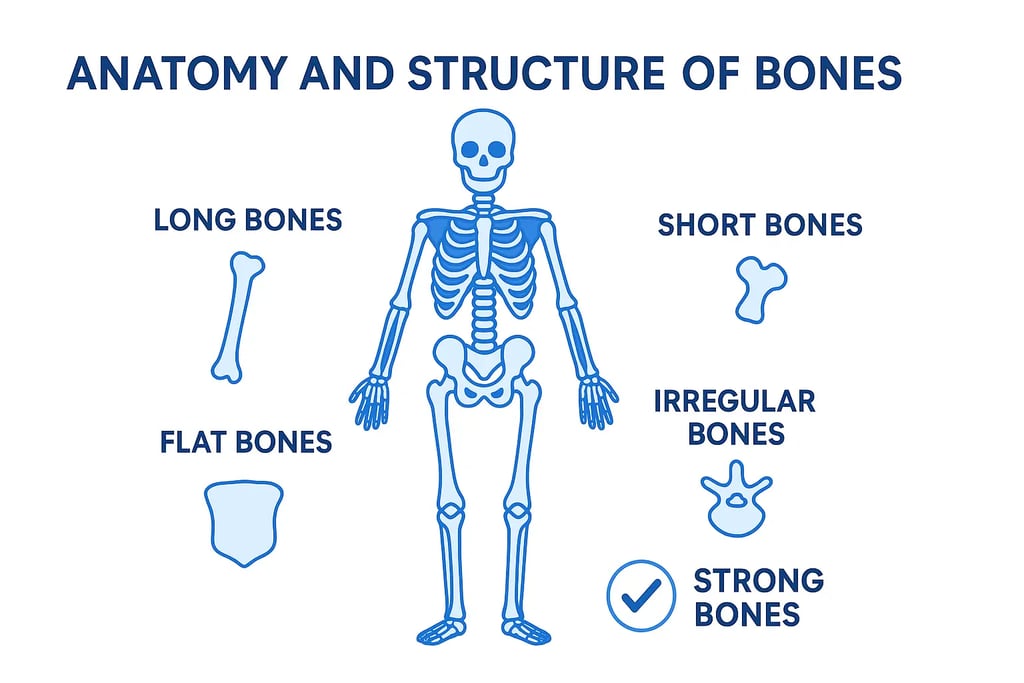
Anatomy and Structure of Bones: A Complete Guide to Bone Health
The human skeletal system is an intricate framework designed to support, protect, and mobilize the body. Understanding the anatomy and structure of bones is essential for maintaining lifelong bone health and preventing conditions like osteoporosis. Bones come in various shapes and sizes, each with unique functions that contribute to the skeletal system’s strength and stability.
Types of Bones in the Human Body
The bones in the body are categorized based on their shape and function:
1. Long Bones
Long bones—such as the femur, tibia, and humerus—are elongated and act as major levers that support body weight and enable smooth movement.
2. Short Bones
Short bones are compact and strong, found mainly in areas like the wrists (carpals) and ankles (tarsals). They provide stability with limited motion.
3. Flat Bones
Flat bones include the skull, ribs, and sternum. Their broad surfaces protect vital organs and offer large areas for muscle attachment.
4. Irregular Bones
Irregular bones—such as the vertebrae and certain facial bones—have complex shapes designed for specialized protection and support.
Internal Structure of Bones
Each bone consists of several layers and tissues that contribute to strength, flexibility, and overall function:
Periosteum
A dense, vascular membrane covering the outer surface of bones. It plays a crucial role in:
Bone growth
Repair
Nutrient supply
Compact Bone
A hard, dense layer beneath the periosteum that provides durability and strong support.
Spongy (Cancellous) Bone
A lighter, porous tissue found deeper within bones. It contains:
Red bone marrow (blood cell production)
Yellow bone marrow (fat storage)
Bone Cells and Their Functions
Three major types of cells maintain bone health:
Osteoblasts
Responsible for forming new bone by producing and mineralizing bone matrix.
Osteoclasts
Break down old or damaged bone tissue, supporting bone remodeling and calcium balance.
Osteocytes
Mature bone cells embedded within the bone matrix, helping regulate mineral content and signaling repair.
Functions of Bones in the Human Body
Bones do much more than provide structure. They perform several vital physiological roles:
1. Support
Bones create the body’s framework, maintaining shape and posture.
2. Protection
They shield essential organs:
Skull → Brain
Rib cage → Heart & lungs
Vertebrae → Spinal cord
3. Movement
Bones act as levers for muscles. When muscles contract, bones move—making locomotion and physical activity possible.
4. Mineral Storage
Bones store crucial minerals like calcium and phosphorus, releasing them into the bloodstream when needed.
5. Blood Cell Production
Bone marrow produces:
Platelets
This process is known as hematopoiesis.
7 Best Exercises to Strengthen Bones and Improve Bone Density
Regular exercise is one of the most powerful ways to boost bone density and prevent bone-related disorders. Here are seven effective bone-strengthening exercises:
1. Walking
A low-impact, weight-bearing exercise that helps slow bone loss in the hips, legs, and spine.
Recommendation: 30 minutes, 5 days a week.
2. Jogging
Higher impact than walking, jogging stimulates bone remodeling and increases bone mass.
Frequency: 20–30 minutes, 3–4 times weekly.
3. Stair Climbing
Climbing stairs engages bones and muscles in the lower body, strengthening key load-bearing areas.
Tip: Use stairs at home or work for daily activity.
4. Weight Lifting
Resistance training stimulates bone growth by stressing the skeletal system.
Goal: 2–3 sessions per week targeting major muscle groups.
5. Tai Chi
A gentle, balance-focused exercise that improves stability and reduces fall risk while enhancing bone strength.
Practice: 30 minutes daily.
6. Yoga
Yoga builds flexibility, balance, and strength. Weight-bearing poses such as Warrior and Tree Pose strengthen the spine, hips, and legs.
Routine: Several sessions per week.
7. Dancing
Fun and effective, dancing is a natural weight-bearing exercise that boosts bone health in the pelvis, legs, and spine.
Try: Zumba, aerobics, or any rhythmic activity.
Conclusion
Understanding the structure and function of bones helps highlight the importance of maintaining bone health through balanced nutrition, regular exercise, and healthy lifestyle choices. Incorporating weight-bearing and muscle-strengthening exercises into your routine can significantly improve bone density and support long-term skeletal strength.
MicroNews © 2025
MicroNews empowers the generation of tomorrow for a brighter future and hope for every individual.
Thanks For Touch with us
We care about your data in our privacy policy.
Popular Post
Top 10 Calcium-Rich Vegetables for Strong Bones & Better Health
Patala Garuda (Rauvolfia serpentina): Health Benefits, Ayurvedic Uses
Ganga Siuli (Parijata Tree): Benefits, Uses, and Medicinal Properties
Freelancing Explained: How to Start, Earn, and Succeed as a Freelancer
Turmeric Benefits: Uses, Nutrition, Ayurveda Importance & Side Effects
Science of Longevity: New Research Reveals How Diet May Shape Lifespan