
What Is Chlamydia? Symptoms, Causes, Testing & Treatment Explained
Learn about chlamydia causes, symptoms in men and women, testing methods, treatment options, and prevention tips to protect your sexual health. #Sexually transmitted infection (STI)
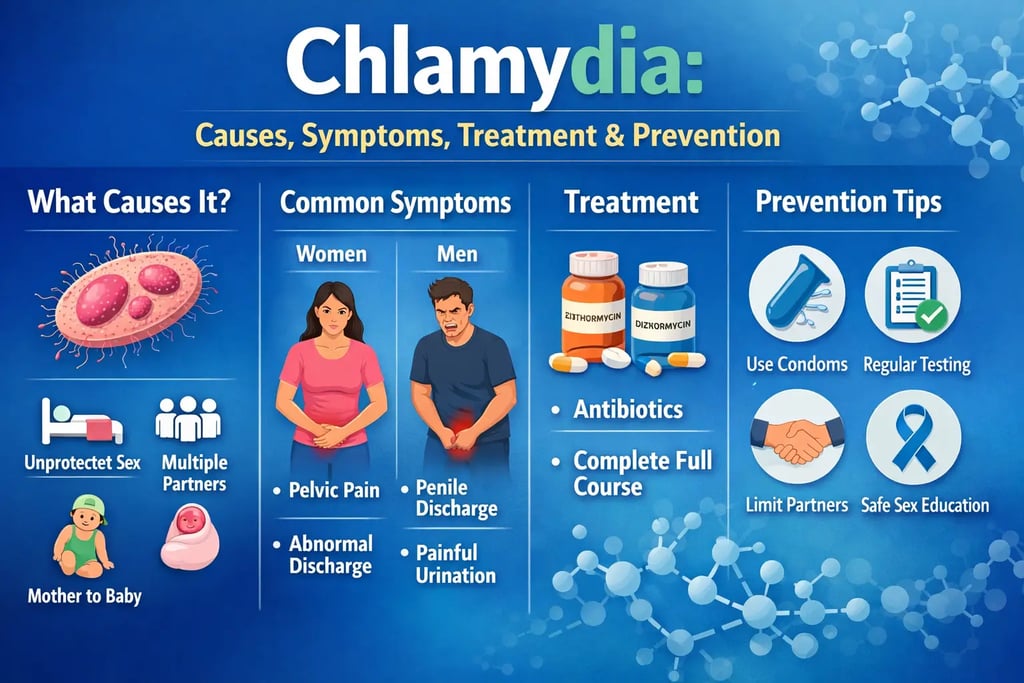
What Is Chlamydia? Causes, Symptoms, Treatment & Prevention Guide
Chlamydia is one of the most common sexually transmitted infections (STIs) worldwide. It is caused by the bacterium Chlamydia trachomatis and spreads primarily through unprotected vaginal, anal, or oral sex. Because it often causes no symptoms, many people unknowingly transmit the infection to others.
Understanding the causes of chlamydia, early symptoms, treatment options, and prevention strategies is essential for protecting your sexual and reproductive health.
What Causes Chlamydia?
Chlamydia is caused by infection with the bacterium Chlamydia trachomatis. The bacteria enter the body through mucous membranes found in the:
Genitals
Rectum
Throat (via oral sex)
How Is Chlamydia Transmitted?
Chlamydia spreads through:
Unprotected vaginal sex
Unprotected anal sex
Oral sex
Sharing sex toys without proper cleaning
From mother to baby during childbirth
You do not get chlamydia from casual contact like hugging, sharing utensils, or using public toilets.
Risk Factors for Chlamydia
Certain factors increase your risk of infection:
Having multiple sexual partners
Not using condoms consistently
Being sexually active under age 25
Previous history of STIs
New sexual partner
According to the World Health Organization, millions of new chlamydia cases are reported every year, making it one of the most frequently diagnosed bacterial STIs globally.
Chlamydia Symptoms: Signs in Men and Women
One of the biggest challenges with chlamydia is that it is often called a “silent infection.” Up to 70% of women and 50% of men may not notice symptoms initially.
Symptoms of Chlamydia in Women
When symptoms appear, they may include:
Abnormal vaginal discharge (yellowish or strong-smelling)
Burning sensation during urination
Pain during intercourse
Bleeding between periods
Lower abdominal pain
If left untreated, chlamydia in women can lead to pelvic inflammatory disease (PID), which may cause:
Chronic pelvic pain
Infertility
Symptoms of Chlamydia in Men
Men may experience:
Penile discharge (clear or cloudy)
Burning during urination
Itching or irritation at the urethral opening
Pain and swelling in one or both testicles (epididymitis)
Chlamydia can also infect the rectum in both men and women, causing:
Rectal pain
Discharge
Bleeding
Why Regular Chlamydia Testing Is Important
Because chlamydia often has no symptoms, regular screening is crucial, especially for:
Sexually active individuals under 25
People with multiple or new sexual partners
Individuals with a history of STIs
Early detection prevents serious complications and reduces transmission. A simple urine test or swab test can diagnose chlamydia quickly and accurately.
Chlamydia Treatment: Is It Curable?
Yes — chlamydia is curable with antibiotics.
The most commonly prescribed medications include:
Azithromycin (usually a single dose)
Doxycycline (taken twice daily for 7 days)
When taken exactly as prescribed, these antibiotics are highly effective.
Important Treatment Guidelines
Complete the full course of antibiotics
Avoid sexual activity until treatment is finished
Ensure your sexual partner(s) are tested and treated
Get retested after 3 months if recommended
Failing to treat both partners can result in reinfection.
How to Prevent Chlamydia
Preventing chlamydia involves safe sexual practices and regular health check-ups.
Effective Prevention Tips
Use condoms correctly and consistently
Limit the number of sexual partners
Practice mutual monogamy
Get regular STI screenings
Communicate openly with sexual partners
Public health awareness and sexual education programs also play a major role in reducing infection rates.
Complications of Untreated Chlamydia
If left untreated, chlamydia can cause serious long-term health issues, including:
Infertility (in both men and women)
Chronic pelvic pain
Increased risk of HIV infection
Pregnancy complications
Early diagnosis and treatment are key to preventing these complications.
Final Thoughts
Chlamydia is a common but preventable and treatable STI caused by Chlamydia trachomatis. Because it often shows no symptoms, regular testing, safe sex practices, and early treatment are critical for maintaining sexual health.
By staying informed, practicing protection, and seeking routine screenings, you can significantly reduce the risk of infection and protect both yourself and your partners.
MicroNews © 2025
MicroNews empowers the generation of tomorrow for a brighter future and hope for every individual.
Thanks For Touch with us
We care about your data in our privacy policy.
Popular Post
Top 10 Calcium-Rich Vegetables for Strong Bones & Better Health
Patala Garuda (Rauvolfia serpentina): Health Benefits, Ayurvedic Uses
Ganga Siuli (Parijata Tree): Benefits, Uses, and Medicinal Properties
Freelancing Explained: How to Start, Earn, and Succeed as a Freelancer
Turmeric Benefits: Uses, Nutrition, Ayurveda Importance & Side Effects
Science of Longevity: New Research Reveals How Diet May Shape Lifespan