
Gastroparesis: Symptoms, Causes, Diagnosis, Treatment, and Diet Tips
Introduction
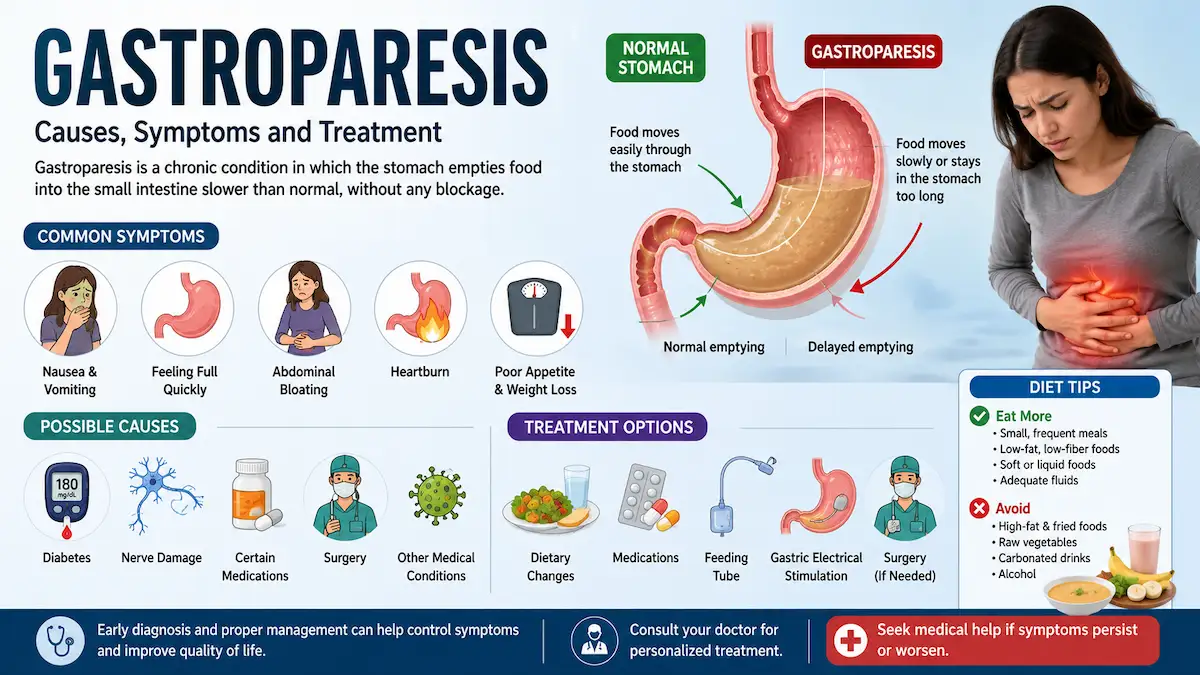
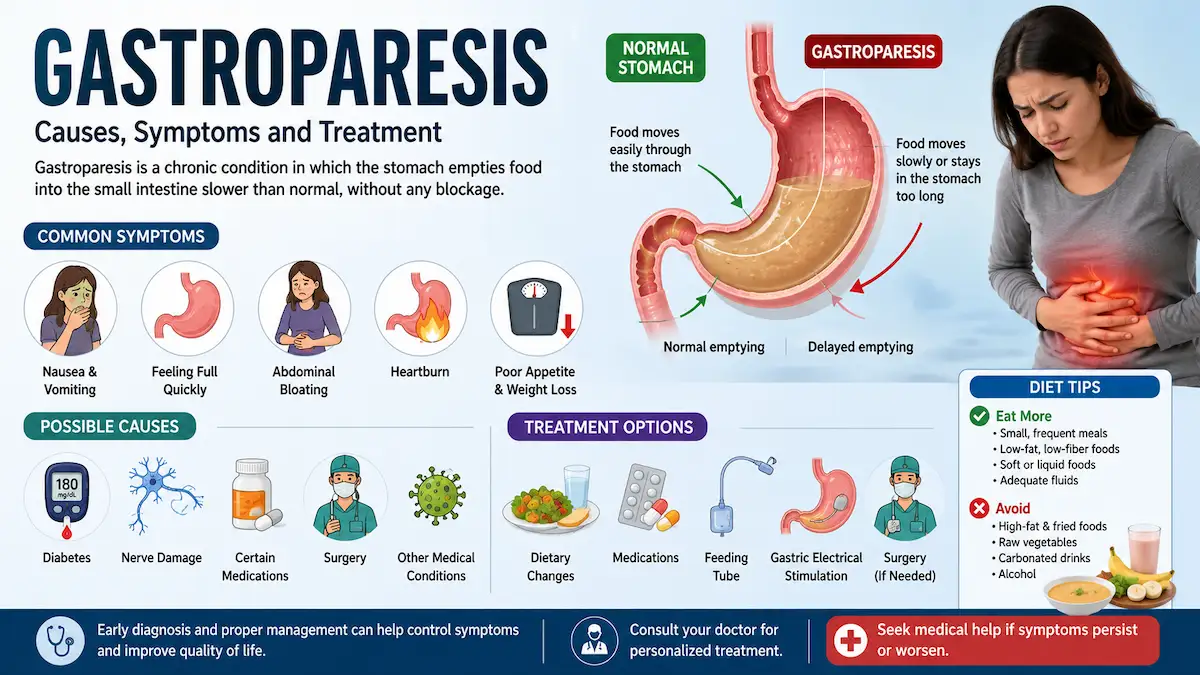
Gastroparesis is a chronic digestive disorder in which the stomach empties food into the small intestine more slowly than normal, even though there is no physical blockage. The condition occurs when the stomach muscles or the nerves controlling them, particularly the vagus nerve, do not function properly. As a result, food remains in the stomach for longer periods, causing digestive discomfort and nutritional problems.
Gastroparesis can affect people of all ages, but it is more common in individuals with long-term diabetes and those who have undergone stomach surgery. Early diagnosis and proper treatment can help manage symptoms and improve overall quality of life.
What Is Gastroparesis?
Gastroparesis, also known as delayed gastric emptying, is a condition where the stomach muscles fail to move food efficiently into the small intestine. Normally, coordinated muscle contractions push food through the digestive tract. When these contractions become weak or irregular, digestion slows significantly.
This delayed emptying may cause nausea, vomiting, bloating, abdominal discomfort, poor nutrition, and unstable blood sugar levels, particularly in people with diabetes.
Causes of Gastroparesis
Several conditions can interfere with the normal functioning of the stomach muscles and nerves.
1. Diabetes
Diabetes is one of the leading causes of gastroparesis. Persistently high blood sugar levels can damage the vagus nerve, reducing the stomach’s ability to empty properly.
2. Nerve Damage
Damage to the vagus nerve from illness, injury, or neurological disorders can slow stomach movement.
3. Surgery
Operations involving the stomach, esophagus, or upper digestive tract may accidentally injure the nerves controlling stomach muscles.
4. Medications
Certain medicines can slow stomach emptying, including:
Opioid pain medications
Some antidepressants
Anticholinergic drugs
Certain blood pressure medications
5. Neurological Disorders
Conditions such as:
Parkinson’s disease
Multiple sclerosis
Stroke
may interfere with nerve signals that regulate digestion.
6. Autoimmune Diseases
Some autoimmune disorders can damage nerves responsible for stomach movement.
7. Viral Infections
In some cases, gastroparesis develops after viral infections that temporarily affect nerve function.
8. Unknown Causes (Idiopathic Gastroparesis)
For many patients, no specific cause is identified. This is known as idiopathic gastroparesis.
Symptoms of Gastroparesis
Symptoms vary depending on the severity of delayed stomach emptying.
Common symptoms include:
Persistent nausea
Vomiting undigested food several hours after eating
Feeling full after only a few bites
Abdominal bloating
Upper abdominal pain or discomfort
Heartburn or acid reflux
Poor appetite
Unexplained weight loss
Malnutrition
Fluctuating blood sugar levels in people with diabetes
Dehydration due to repeated vomiting
Symptoms often worsen after eating large or high-fat meals.
Risk Factors
You may have a higher risk of developing gastroparesis if you:
Have long-term diabetes
Have undergone stomach or esophageal surgery
Have neurological disorders
Take medications that slow digestion
Have autoimmune diseases
Are female, as women are diagnosed more frequently than men
How Is Gastroparesis Diagnosed?
Doctors usually perform several tests to confirm the diagnosis and rule out other digestive disorders.
Common diagnostic tests include:
Gastric Emptying Study
The most reliable test for gastroparesis. It measures how quickly food leaves the stomach.
Upper Endoscopy
Helps identify ulcers, inflammation, or blockages.
Upper Gastrointestinal (GI) Series
Uses X-rays after drinking a contrast liquid to examine the digestive tract.
Wireless Motility Capsule
A swallowable capsule records how food moves through the digestive system.
Blood Tests
Used to check for nutritional deficiencies, dehydration, infections, and blood sugar control.
Treatment for Gastroparesis
Although there is currently no permanent cure, treatment focuses on symptom relief, improving nutrition, and managing the underlying cause.
1. Dietary Changes
Diet plays a major role in managing gastroparesis.
Doctors often recommend the following:
Eat 5–6 small meals each day.
Chew food thoroughly.
Choose low-fat foods.
Eat low-fiber foods to reduce the risk of food blockage.
Drink plenty of water.
Avoid carbonated beverages and alcohol.
Prefer soft or liquid meals when symptoms are severe.
2. Medications
Your doctor may prescribe medications to improve stomach emptying or control symptoms.
These may include:
Medications that stimulate stomach muscle contractions
Anti-nausea medicines
Anti-vomiting medications
These medicines should only be taken under medical supervision due to potential side effects.
3. Blood Sugar Control
People with diabetes should maintain stable blood glucose levels, as high blood sugar can further slow stomach emptying.
4. Nutritional Support
If eating becomes difficult, doctors may recommend:
Liquid nutritional supplements
Feeding tubes for severe malnutrition
Intravenous nutrition in rare cases
5. Advanced Therapies
For severe cases that do not respond to standard treatments, specialists may recommend:
Gastric electrical stimulation (a surgically implanted device that helps reduce nausea and vomiting in selected patients)
Endoscopic procedures such as gastric peroral endoscopic myotomy (G-POEM) for carefully selected individuals
Surgery in rare situations when other treatments have failed
The most appropriate option depends on the underlying cause and overall health of the patient.
Foods to Eat
People with gastroparesis often tolerate these foods better:
Cooked vegetables
Mashed potatoes
White rice
Oatmeal
Bananas
Apple sauce
Eggs
Lean chicken
Fish
Soups
Smoothies
Low-fat dairy products
Foods to Avoid
Avoid foods that are difficult to digest, including:
Fried foods
Fatty meats
Cheese and heavy cream
Raw vegetables
Corn
Beans
Nuts
Seeds
Popcorn
Possible Complications
Without proper treatment, gastroparesis may lead to:
Severe dehydration
Malnutrition
Vitamin deficiencies
Formation of hardened food masses (bezoars)
Blood sugar instability
Significant weight loss
Reduced quality of life
When Should You See a Doctor?
Seek medical attention if you experience:
Persistent vomiting
Severe abdominal pain
Difficulty eating
Unexplained weight loss
Signs of dehydration
Vomiting blood
Worsening symptoms despite treatment
Prompt evaluation can help prevent complications and improve long-term outcomes.
Can Gastroparesis Be Prevented?
Not all cases are preventable, but you can lower your risk by:
Keeping diabetes well controlled
Following a healthy diet
Staying physically active
Taking medications only as prescribed
Attending regular medical check-ups
Seeking treatment early if digestive symptoms develop
Conclusion
Gastroparesis is a chronic digestive disorder that slows the movement of food from the stomach into the intestines. Common symptoms include nausea, vomiting, bloating, early fullness, and poor appetite. While there is no cure, lifestyle modifications, dietary changes, medications, and advanced therapies can effectively control symptoms and improve quality of life. If you experience persistent digestive problems, consult a healthcare professional for an accurate diagnosis and a personalized treatment plan.
Frequently Asked Questions (FAQs)
Is gastroparesis curable?
There is currently no cure, but many people successfully manage symptoms through diet, medications, and treatment of underlying conditions.
Is gastroparesis dangerous?
It can become serious if it leads to severe malnutrition, dehydration, or uncontrolled diabetes, making timely medical care important.
What is the most common cause of gastroparesis?
Diabetes is one of the most common causes, particularly when blood sugar remains poorly controlled over time.
Can stress make gastroparesis worse?
Stress does not directly cause gastroparesis but may worsen digestive symptoms in some individuals.
What foods are easiest to digest with gastroparesis?
Soft, low-fat, low-fiber foods such as soups, yogurt, bananas, oatmeal, mashed potatoes, and smoothies are often easier to tolerate.