
Heart Transplant: Procedure, Eligibility, Risks, Recovery & Aftercare
Learn what a heart transplant is, when it becomes necessary, who qualifies, and what to expect before and after surgery. A complete guide to heart transplant procedures and recovery.
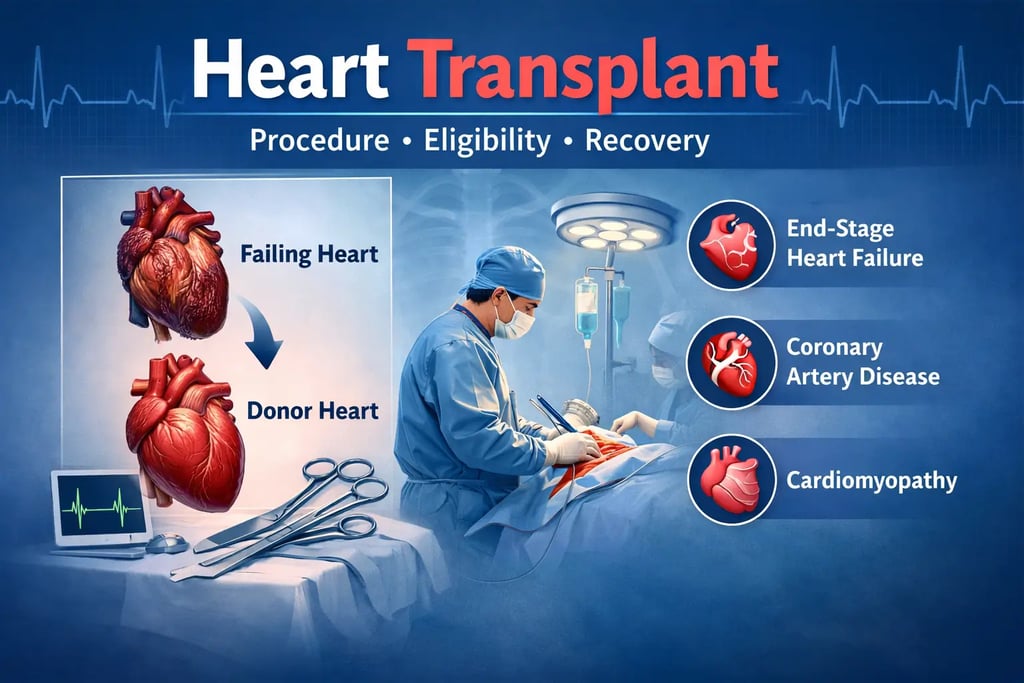
Heart Transplant: Procedure, Eligibility, and Recovery
What Is a Heart Transplant?
A heart transplant is a life-saving surgical procedure in which a diseased or failing heart is replaced with a healthy donor heart. This operation is typically performed in patients with end-stage heart failure, a severe condition where the heart can no longer pump enough blood to meet the body’s needs.
Heart failure may develop due to several underlying conditions, including coronary artery disease, cardiomyopathy, congenital heart defects, or repeated heart attacks. According to the World Health Organization (WHO), cardiovascular diseases remain the leading cause of death worldwide, highlighting the importance of advanced treatments like heart transplantation:
https://www.who.int/health-topics/cardiovascular-diseases
Patients often experience symptoms such as extreme fatigue, shortness of breath, and swelling in the legs and abdomen. When medications and less invasive treatments fail, a heart transplant may become the only effective option.
When Is a Heart Transplant Necessary?
A heart transplant is considered when severe heart disease progresses despite maximum medical treatment. The most common conditions that may require a transplant include:
End-Stage Heart Failure
This is the leading reason for heart transplantation. The American Heart Association explains that heart transplants are reserved for patients whose heart failure symptoms persist despite optimal medical therapy:
https://www.heart.org/en/health-topics/heart-transplant
Severe Coronary Artery Disease
Advanced coronary artery disease can cause irreversible damage to the heart muscle due to repeated heart attacks. When procedures such as angioplasty or bypass surgery are no longer effective, transplantation may be required.
Cardiomyopathy
Cardiomyopathy affects the heart muscle’s ability to pump blood efficiently. Over time, some forms of cardiomyopathy progress to a stage where standard treatments fail, making heart transplantation necessary.
Heart Transplant Procedure
The heart transplant process begins with a detailed medical evaluation to confirm eligibility. Once approved, the patient is placed on a transplant waiting list and matched with a suitable donor based on blood type, body size, and medical urgency.
According to Mayo Clinic, heart transplant surgery involves removing the diseased heart and replacing it with a healthy donor heart, followed by intensive monitoring in the ICU:
https://www.mayoclinic.org/tests-procedures/heart-transplant/about/pac-20384750
The surgery usually takes several hours and is performed by a specialized cardiac transplant team.
Recovery and Aftercare After a Heart Transplant
Recovery after a heart transplant is a lifelong process. Patients must take immunosuppressive medications daily to prevent organ rejection and attend regular follow-up appointments.
The NHS states that with proper aftercare and medication adherence, heart transplant recipients can enjoy a significantly improved quality of life:
https://www.nhs.uk/conditions/heart-transplant/
Lifestyle changes such as eating a heart-healthy diet, avoiding smoking, exercising regularly, and managing stress are essential for long-term success.
Heart Transplant Waiting List and Donor Matching
Donor hearts are allocated based on urgency and compatibility. In the United States, the transplant waiting list and organ allocation process are managed by the United Network for Organ Sharing (UNOS):
https://unos.org/transplant/heart/
This system ensures fair and medically appropriate distribution of donor organs.
Conclusion
A heart transplant is a complex yet life-saving procedure for patients with advanced heart disease. With modern surgical techniques, proper aftercare, and lifestyle changes, many recipients go on to live longer, healthier lives.
MicroNews © 2025
MicroNews empowers the generation of tomorrow for a brighter future and hope for every individual.
Thanks For Touch with us
We care about your data in our privacy policy.
Popular Post
Top 10 Calcium-Rich Vegetables for Strong Bones & Better Health
Patala Garuda (Rauvolfia serpentina): Health Benefits, Ayurvedic Uses
Ganga Siuli (Parijata Tree): Benefits, Uses, and Medicinal Properties
Freelancing Explained: How to Start, Earn, and Succeed as a Freelancer
Turmeric Benefits: Uses, Nutrition, Ayurveda Importance & Side Effects
Science of Longevity: New Research Reveals How Diet May Shape Lifespan