
US Israel Iran War Casualties: 2026 Airstrike Incident
Explore the tragic details of the 2026 Minab school airstrike during the ongoing US Israel Iran War conflict, where 180 girls lost their lives. Understand the broader implications of Iran war casualties and the impact on civilian life.
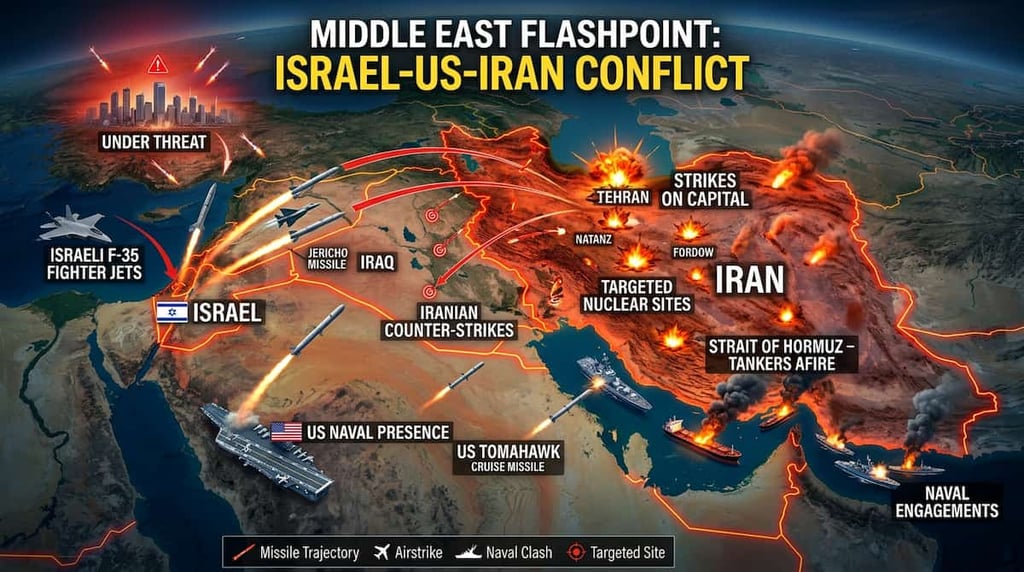
A US-Israel-Iran war erupted on February 28, 2026, with joint strikes under Operations Roaring Lion and Epic Fury targeting Iranian leadership, nuclear sites, and military assets. Iran retaliated via Operation True Promise IV, launching missiles and drones at US bases, Israel, and Gulf allies, escalating regional involvement. As of early March 2026, the conflict rages on, disrupting oil flows and global markets.
Casualty Overview
Iran reports over 1,000 deaths from US-Israeli strikes, with estimates up to 4,145 killed and 5,402 injured, including civilians and high-ranking officials like Supreme Leader Ali Khamenei. Israel has 12 killed and 1,276 injured from Iranian attacks, while US losses stand at 6 killed (four soldiers confirmed) and 18 injured, though Iran claims 650+ US casualties. Hezbollah-linked fighting in Lebanon adds 123 killed and 683 injured.
Military Losses
US equipment losses exceed $1.9 billion in four days, including a $500 million THAAD radar in UAE and hits on bases in Bahrain, Qatar, and Kuwait. Iran lost 8 aircraft (e.g., F-4 Phantoms, Su-22s), drones facilities, warships like IRIS Dena (87 sailors killed), and missile sites. Israel reports minimal direct losses but high interceptor use; over 1,200 munitions fired in initial strikes.
Financial Impact
Israel's daily war costs hit $725 million ($593M offensive, $132M defense), potentially $9-17.8 billion total (2-3% GDP). US direct military spend nears $2 billion, with broader economic hits up to $210 billion from oil disruptions and trade. Iran faces $24-35 billion losses (6-9% GDP), worsened by sanctions, infrastructure hits, and Strait of Hormuz closure.
Broader Scenarios
Oil prices surge as Hormuz closure stalls tankers, risking global recession; energy markets face weeks of volatility. Pro-Iran proxies like Hezbollah intensify attacks, drawing Lebanon in and prompting Israeli ground ops. Diplomatic fallout includes UN condemnations, NATO alerts after Turkish airspace breach, and protests against US involvement. Regime change in Iran remains a stated US-Israel goal amid internal unrest.
What are public opinions in USA on Trump Iran war
Americans largely oppose President Trump's military actions in the ongoing Iran war, with polls showing majority disapproval of both the strikes and his handling of the conflict. Recent surveys from early March 2026 highlight partisan divides, economic fears, and skepticism about long-term goals. Support hovers around 40-50% overall, driven by Republicans, but has dipped amid rising casualties and oil prices.
Key Poll Findings
Multiple polls conducted since late February 2026 reveal consistent trends: 50-60% disapproval rates for US strikes on Iran and Trump's performance.
Partisan Breakdown
Republicans back the actions strongly (50-77% approval), viewing Iran as a major threat and trusting Trump's plan, while Democrats overwhelmingly oppose (80-90% disapproval). Independents lean against (50-70% disapproval or excessive force), citing risks of escalation and unclear objectives. Even among Trump voters, pre-strike support was mixed (42-61%), with some MAGA Republicans wavering post-launch.
Broader Sentiments
Two-thirds of Americans say the administration lacks clear goals, fueling protests and calls to limit involvement. Fears of a prolonged war, higher gas prices, and troop deployments dominate, with 56% seeing Trump's force as excessive. Social media and street polls echo war weariness, though hawks praise strikes weakening Iran's military.
How has Trump approval changed since Iran strikes
President Trump's overall approval rating has declined slightly since the Iran strikes began on February 28, 2026, dropping from around 41-43% pre-conflict to 41-44% in early March polls, with disapproval rising to 54-60%. His specific approval on Iran handling fares worse, at 27-45%, amid public fears of escalation and economic fallout.
Pre- vs. Post-Strikes Trends
Aggregators show minimal net change overall but sharper drops on foreign policy and Iran-specific metrics. Disapproval spiked post-strikes, driven by independents and some Republicans.
Key Drivers of Change
Iran actions top reasons for 40-59% of unfavorable shifts, with 55% believing they increased terror risks over safety. Republicans hold steady (49-61% approval on strikes), but 30% of Trump voters opposed pre-war, and veterans show higher support (59%). Gas price fears and lack of congressional approval erode broader backing, pushing net approval to -13% from -15%.
How might Iran conflict affect Trump's midterm election chances
The Iran conflict poses significant risks to President Trump's Republican Party in the November 2026 midterms, potentially eroding their slim majorities in Congress amid low public approval for the war. While initial hawkish support rallied some voters, prolonged fighting, casualties, and economic pain like oil spikes could fracture GOP unity and boost Democratic turnout in swing districts.
Potential Upsides
Short-term "rally around the flag" effects might bolster Trump's image as a decisive leader among Republicans (49-61% approval on strikes), aiding base turnout if the war ends swiftly with clear wins like regime weakening. Historical precedents show brief conflicts can lift incumbents, especially tying Iran to domestic security gains.
Major Risks
Polls indicate 50-59% opposition to strikes, with independents (key in House races) and even 30% of Trump voters wary, prioritizing economy over foreign wars; gas prices and costs could amplify this by midterms. GOP internal rifts—MAGA isolationists vs. pro-Israel hawks—risk depressed turnout or third-party votes, threatening 20+ vulnerable House seats.
Scenario Impact on GOP Midterms
Quick Victory +5-10 House seats retained; Senate safe
Prolonged War Lose House majority; Senate at risk (-2-4 seats)
Economic Fallout Independents/Dems surge; 15-25 swing losses
Election Outlook
Analysts warn of a "midterm reckoning," with White House aides shifting from domestic messaging, exposing Republicans in tight races (e.g., CO, WI, PA) to war backlash over affordability. Democrats could gain by framing it as costly overreach, flipping control unless Trump pivots to victories soon
White House strategy to pivot from Iran to midterm domestic issues
The White House faces challenges pivoting from the Iran war to midterm-focused domestic issues like affordability and healthcare, as the conflict disrupts pre-planned messaging from Trump's State of the Union. Advisers are pushing for a quick endgame—now scaled back from regime change to airspace control—to free up political bandwidth, but Trump’s indefinite stance risks prolonging the distraction.
Messaging Shifts
Officials urged emphasis on economic relief post-SOTU, but strikes derailed this; now they aim to frame Iran as a short "cathartic" win tying into security gains, allowing a return to housing bills and cost-of-living talks. Vulnerable GOP reps in swing districts (e.g., CO's Gabe Evans, WI's Derrick Van Orden) want war-powers debates sidelined for local priorities.
Risks to Pivot
Prolonged fighting could sap MAGA turnout and alienate non-interventionists, forcing White House models to reassess House races over fuel costs and casualties rather than crypto or housing agendas. Top Republicans downplay economic fallout publicly, betting voters prioritize domestic wins if conflict wraps soon.
How might Iran conflict affect economy and voter turnout in midterms
The ongoing Iran conflict threatens to disrupt the US economy through oil price surges and market volatility, while potentially suppressing Republican voter turnout in the November 2026 midterms. With gas prices already spiking and affordability as the top voter issue, prolonged war could shift focus from GOP domestic wins to foreign policy blame, favoring Democrats.
Economic Effects
Iran's Strait of Hormuz disruptions have driven oil futures up sharply, inflating gas and grocery costs—key midterm concerns—while stocks like the Dow dropped 700 points amid uncertainty. Republicans hope quick resolution restores flows, but extended conflict risks recessionary pressures, complicating Trump's low-inflation narrative and hitting household budgets in swing states.
Voter Turnout Impacts
War unpopularity (50-60% opposition) may demotivate MAGA base isolationists, reducing GOP turnout by 5-10% in House toss-ups, as voters prioritize costs over strikes. Democrats could surge on anti-war messaging, boosting participation among young and independents focused on domestic relief.
How are rising oil prices from Iran war impacting US consumers
Rising oil prices from the Iran war, triggered by Strait of Hormuz disruptions and crude surges above $80 per barrel, are squeezing US consumers through higher gas, mortgage rates, and grocery costs. Average gasoline hit $3.25/gallon by early March 2026 (up 27 cents in a week), evoking 2005 Hurricane Katrina spikes and eroding recent relief.
Gas and Fuel Costs
Households face 8-10% jumps in energy bills, with transport and heating hit hardest; low-income families cut discretionary spending as disposable income shrinks. Retailers pass on logistics hikes, lifting food and goods prices amid fragile post-pandemic recovery.
Broader Household Strain
Mortgage rates topped 6.1% (from sub-6%), delaying home buys and refinancing; stock dips (Dow -800 pts) dent 401(k)s, while inflation fears stall Fed rate cuts. Consumer confidence nears lows, amplifying midterm affordability angst over war rationale.
Will oil prices hit $100 per barrel if war escalates
Yes, oil prices could hit $100 per barrel or higher if the Iran war escalates significantly. Analysts widely project Brent crude surpassing this threshold with prolonged Strait of Hormuz disruptions, Iranian supply cuts, or attacks on Gulf infrastructure, as seen in early March 2026 forecasts amid tanker halts and 10%+ surges.
Key Escalation Triggers
A full Hormuz blockade—handling 20% of global oil—would spike prices immediately, with RBC, Barclays, and Capital Economics eyeing $100+ if sustained beyond weeks. Iranian retaliation targeting Saudi or UAE facilities adds $10-20/bbl risk premiums, per TD Cowen and Rystad.
Price Scenarios
Current levels near $80 reflect initial panic; reopening flows could ease to $90, but infrastructure hits lock in higher baselines.
Which countries energy sectors hit hardest by Hormuz disruption
Countries in Asia whose energy sectors are most dependent on Middle Eastern oil and LNG via the Strait of Hormuz are being hit hardest by the current disruption. Among them, South Asian economies such as India, Pakistan, and Bangladesh, plus major Northeast Asian importers like China, Japan, and South Korea, face the sharpest physical and price shocks.
Hardest‑hit countries
India: Roughly 60% of oil imports and more than half of LNG imports come through the Gulf and Hormuz, so a prolonged blockade raises both crude and LNG costs and threatens power‑sector fuel supply.
Pakistan: Almost 99% of LNG imports flow from Qatar and the UAE through Hormuz; limited storage and no quick alternatives can quickly lead to gas shortages in power plants and industry.
Bangladesh: Around 72% of LNG imports are from Qatar and the UAE, on top of an existing structural gas deficit, so disruptions risk rolling blackouts and industrial curtailments.
Other major exposed economies
China: About 40% of its oil imports and 30% of LNG imports pass through Hormuz, and it is the world’s largest crude importer, so price spikes hit heavily even though it has bigger inventories.
Japan: Around 75% of oil imports and a notable share of LNG come from the Gulf, making it highly vulnerable to price shocks and margin pressure for utilities and industry.
South Korea: Roughly 70% of oil imports and 14% of LNG imports are Gulf‑linked, with limited reserve buffers, so even short‑term supply uncertainty can strain energy costs.
In contrast, some Gulf exporters and more diversified Asian economies such as Malaysia can be less affected or even gain from rerouting and higher prices, while these import‑dependent nations face the biggest risks to power generation, industry, and inflation.
How is India's economy impacted by Hormuz oil disruptions
India’s economy is being hit hard by Strait of Hormuz oil disruptions because the country depends heavily on Gulf‑sourced oil and LNG, which now cost more and face supply‑chain risks. The impact runs from higher inflation and a weaker rupee to pressure on industry margins and export competitiveness.
Oil‑import and macro impact
India imports about 85–88% of its crude oil and roughly half of its LNG, with around 40–60% of those flows passing through Hormuz. As Brent prices have jumped from the mid‑60s to above 80 dollars per barrel, every 10‑dollar rise can widen India’s current‑account deficit by about 0.4–0.5% of GDP and add several basis points to inflation, creating a stagflation‑like drag.
Rupee, interest rates, and inflation
Because higher oil imports are “paid” in dollars, the current‑account deficit and import bill swell, pushing the rupee weaker and forcing the Reserve Bank of India to intervene and mop up rupees with foreign‑exchange reserves. This tends to tighten monetary conditions, push up borrowing costs, and squeeze corporate and household credit, even without a formal rate hike.
Sector‑level shocks
Energy and power: Refiners face squeezed margins as higher crude costs cannot always be passed fully to consumers; LNG and LPG‑based power and industry see fuel‑cost spikes.
Agriculture and fertilizer: India imports about 60% of its Diammonium Phosphate and relies on imported gas for urea, so disrupted Gulf shipping and higher freight can push fertiliser costs up and raise food‑production costs.
Exports and shipping: Around 15–20% of India’s trade with West Asia, including key sectors like basmati rice, textiles, ceramics, and engineering goods, must transit Hormuz‑linked routes; higher freight charges and shipping delays damage thin export margins.
In short, a prolonged Hormuz disruption risks higher inflation, slower growth, rupee‑driven financial‑sector stress, and sector‑specific supply‑shortages in India, even if the government uses buffers and diversification to limit the worst‑case physical shock.
In Conclusion
The United Nations and UNESCO have strongly condemned the airstrike on the Shajareh Tayyebeh girls' elementary school in Minab, Hormozgan province, southern Iran, as a potential war crime, demanding immediate investigations. On February 28, 2026, during initial US-Israeli airstrikes in the ongoing war, the school was hit—likely by US forces targeting a nearby IRGC base—killing 168-180 people (mostly girls aged 7-12, plus teachers and staff) and injuring 95 in what Iranian media called a "triple tap" strike during school hours.
Public Reaction in Iran
Protests have erupted across Iranian streets, with demonstrators demanding the government urgently develop nuclear weapons ("build it now") amid grief over the civilian deaths. Unverified sources claim Iran possesses sufficient enriched uranium to produce 10-12 bombs within 24 hours, though experts dispute such rapid timelines as infeasible without testing.
Global and Political Fallout
Leading world powers, including China and Russia, have denounced the strike's cruelty under President Trump, blaming it for the loss of young lives. Analysts warn Trump's decision risks nuclear escalation in the region, severe economic shocks worldwide from oil disruptions, and political backlash damaging US and Israeli interests long-term
Sources:- Moneycontrol, nytimes, Youtube, aljazeera, wikipedia, cnn, freep, npr, nytimes, yahoo, usatoday, newsweek, bbc, news18, economictimes, specialeurasia, reuters, aa, barrons, cnbc, dw, sundayguardian, eia, zerocarbon, telegraphindia, indianexpress, economictimes, cppr, telegraphindia, vajiramandravi,
MicroNews © 2025
MicroNews empowers the generation of tomorrow for a brighter future and hope for every individual.
Thanks For Touch with us
We care about your data in our privacy policy.
Popular Post
Top 10 Calcium-Rich Vegetables for Strong Bones & Better Health
Patala Garuda (Rauvolfia serpentina): Health Benefits, Ayurvedic Uses
Ganga Siuli (Parijata Tree): Benefits, Uses, and Medicinal Properties
Freelancing Explained: How to Start, Earn, and Succeed as a Freelancer
Turmeric Benefits: Uses, Nutrition, Ayurveda Importance & Side Effects
Science of Longevity: New Research Reveals How Diet May Shape Lifespan