
7 Best Yoga Poses to Improve Brain Function, Memory, and Focus
Yoga is much more than a form of physical exercise. It is a complete mind-body practice that improves flexibility, strengthens muscles, reduces stress, and supports overall mental well-being. One of the most remarkable benefits of yoga is its ability to improve brain function by increasing blood circulation, reducing stress hormones, and promoting better concentration.
Regular yoga practice can enhance memory, sharpen focus, improve mental clarity, and even support long-term cognitive health. Certain yoga poses stimulate the nervous system, improve oxygen delivery to the brain, and encourage mindfulness, making them especially beneficial for students, professionals, and older adults.
In this article, we’ll explore the seven best yoga poses for brain function, along with their benefits and tips for practicing them safely.
How Yoga Improves Brain Function
Scientific research suggests that regular yoga practice positively affects the brain in several ways:
Improves blood circulation to the brain
Enhances oxygen supply to brain cells
Reduces cortisol (stress hormone) levels
Increases concentration and attention span
Supports memory retention
Improves sleep quality
Promotes emotional balance
Stimulates the nervous system
Encourages mindfulness and relaxation
These combined benefits help improve overall cognitive performance and mental health.
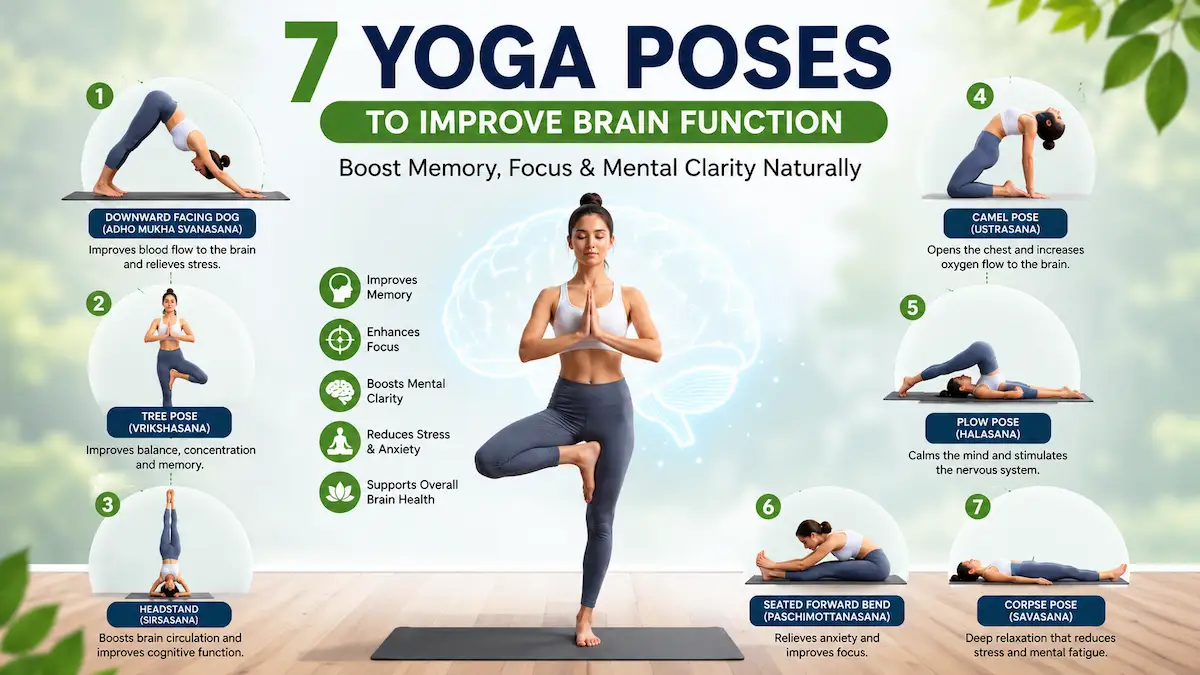
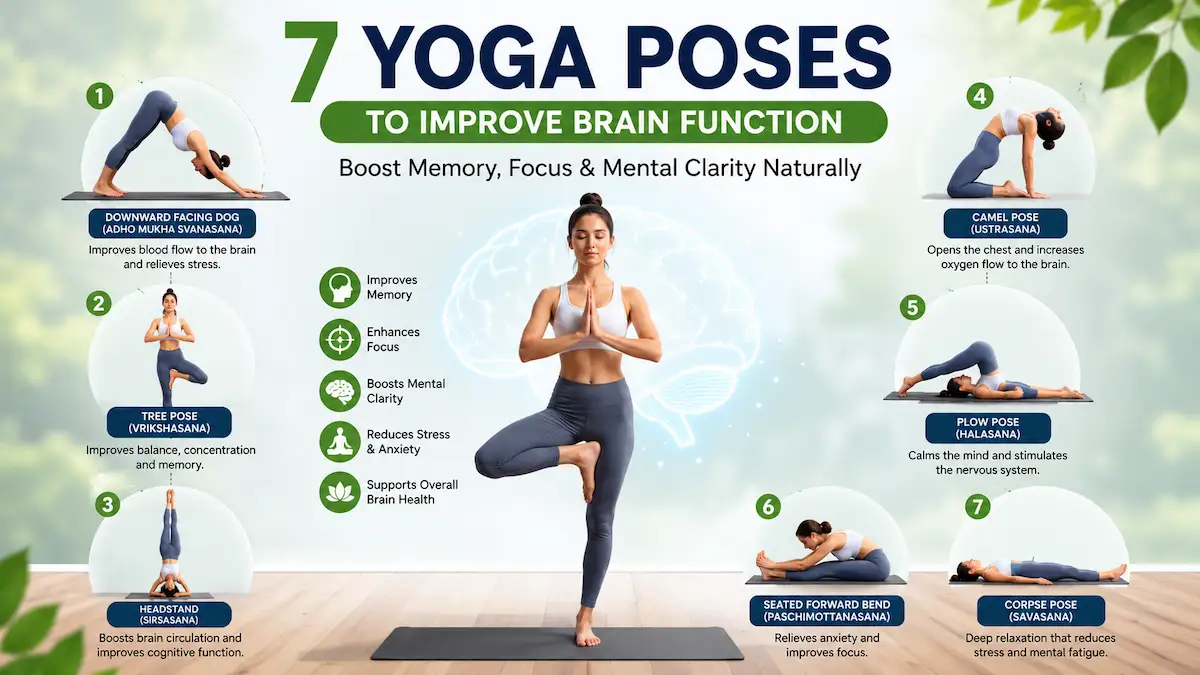
1. Downward Facing Dog (Adho Mukha Svanasana)
Downward Facing Dog is one of the most popular yoga poses for boosting brain health. This gentle inversion increases blood flow toward the head, providing more oxygen and nutrients to the brain.
Benefits
Improves concentration
Enhances mental clarity
Relieves stress
Strengthens shoulders and arms
Stretches the spine and hamstrings
How to Perform
Start on your hands and knees.
Keep your hands shoulder-width apart.
Lift your hips toward the ceiling.
Straighten your legs as much as comfortable.
Form an inverted “V” shape.
Relax your neck and breathe deeply.
Hold for 30–60 seconds.
Tip: Focus on slow, deep breathing throughout the pose.
2. Tree Pose (Vrikshasana)
Tree Pose improves balance, coordination, and concentration. Maintaining balance requires complete mental focus, making this pose excellent for strengthening the mind-body connection.
Benefits
Improves memory
Increases focus
Enhances balance
Builds confidence
Strengthens legs and core
How to Perform
Stand with your feet together.
Shift your weight onto one leg.
Place the opposite foot on the inner thigh or calf (avoid the knee).
Bring your palms together in front of your chest.
Focus your gaze on a fixed point.
Hold for 20–40 seconds before switching sides.
3. Headstand (Sirsasana)
Often called the “King of Asanas,” Headstand is known for increasing blood circulation to the brain. Because it is an advanced inversion, it should only be practiced with proper guidance.
Benefits
Boosts brain circulation
Improves memory
Enhances concentration
Reduces stress
Strengthens shoulders and core
How to Perform
Kneel on the mat.
Place your forearms on the floor.
Interlock your fingers.
Rest the crown of your head between your hands.
Slowly lift your hips.
Walk your feet closer.
Carefully lift your legs upward while engaging your core.
Hold briefly before lowering with control.
Safety Note: Avoid this pose if you have high blood pressure, glaucoma, neck injuries, or dizziness. Beginners should practice under the supervision of a qualified yoga instructor.
4. Camel Pose (Ustrasana)
Camel Pose is a deep backbend that opens the chest, improves posture, and increases oxygen intake, which may help support better brain function.
Benefits
Opens the chest
Improves breathing
Increases energy
Enhances focus
Reduces fatigue
How to Perform
Kneel with knees hip-width apart.
Place your hands on your lower back.
Gently arch your back.
If comfortable, hold your heels.
Keep your chest lifted.
Hold for 20–30 seconds.
Return slowly and rest in Child’s Pose.
5. Plow Pose (Halasana)
Plow Pose is another inversion that encourages relaxation and stimulates the nervous system. It can help calm the mind while improving circulation.
Benefits
Improves blood flow
Calms the nervous system
Relieves stress
Enhances mental clarity
Stretches the spine
How to Perform
Lie flat on your back.
Lift your legs overhead.
Slowly lower your feet toward the floor behind your head.
Keep your shoulders grounded.
Support your lower back if needed.
Hold for 20–30 seconds before slowly returning.
Safety Note: People with neck problems or spinal conditions should avoid this pose unless advised by a healthcare professional or certified yoga instructor.
6. Seated Forward Bend (Paschimottanasana)
This calming posture stretches the entire back body while helping reduce anxiety and mental fatigue.
Benefits
Improves concentration
Relieves stress
Calms the mind
Stretches the spine
Supports relaxation
How to Perform
Sit with your legs extended.
Inhale and lengthen your spine.
Exhale as you fold forward from the hips.
Reach for your feet or ankles.
Keep your spine as long as possible.
Hold for 30–60 seconds while breathing deeply.
7. Corpse Pose (Savasana)
Although simple, Savasana is one of the most important yoga poses. It allows the brain to rest, process information, and recover from stress.
Benefits
Reduces anxiety
Improves mental clarity
Relaxes the nervous system
Reduces fatigue
Supports better sleep
How to Perform
Lie flat on your back.
Keep your arms relaxed beside your body.
Let your feet fall naturally outward.
Close your eyes.
Breathe naturally.
Stay relaxed for 5–10 minutes.
Additional Tips to Improve Brain Health with Yoga
For the best results, combine yoga with other healthy lifestyle habits:
Practice yoga at least 4–5 days per week.
Stay hydrated before and after your session.
Practice deep breathing (Pranayama) regularly.
Eat a balanced diet rich in fruits, vegetables, nuts, and healthy fats.
Get 7–9 hours of quality sleep each night.
Practice meditation for 10–15 minutes daily.
Limit screen time before bedtime.
Stay physically active with walking or light exercise.
Precautions Before Practicing Yoga
While yoga is generally safe, keep these precautions in mind:
Warm up before attempting advanced poses.
Avoid painful movements.
Practice inversions only if you have proper training.
Consult your healthcare provider before starting yoga if you have chronic medical conditions, recent surgery, neck injuries, or uncontrolled high blood pressure.
Pregnant women should follow yoga practices recommended by their healthcare provider or prenatal yoga instructor.
Frequently Asked Questions (FAQs)
Which yoga pose is best for improving memory?
Tree Pose, Downward Facing Dog, and Headstand (when appropriate) are commonly associated with improved concentration and memory because they promote mindfulness and increase blood flow.
Can yoga improve brain function?
Yes. Regular yoga practice may improve attention, memory, stress management, and overall cognitive function by combining movement, breathing, and relaxation.
How often should I practice yoga for brain health?
Practicing yoga for 20–30 minutes, at least 4–5 times per week, can provide noticeable mental and physical benefits over time.
Is yoga better than meditation for concentration?
Yoga and meditation complement each other. Yoga prepares the body and mind, while meditation further strengthens focus and mental clarity.
Conclusion
Yoga is a natural and effective way to support brain health while improving flexibility, strength, and emotional well-being. Practicing these seven yoga poses regularly can help enhance memory, sharpen concentration, reduce stress, and improve overall cognitive function. Combined with healthy nutrition, quality sleep, and mindfulness, yoga can become a powerful tool for maintaining a healthy body and an active mind.
Whether you’re a student preparing for exams, a professional looking to improve focus, or someone interested in long-term brain health, adding these yoga poses to your daily routine can make a meaningful difference. Always practice at your own pace and prioritize proper technique and safety.