
Depression and Anxiety: Causes, Symptoms, Treatment, and Prevention
Introduction
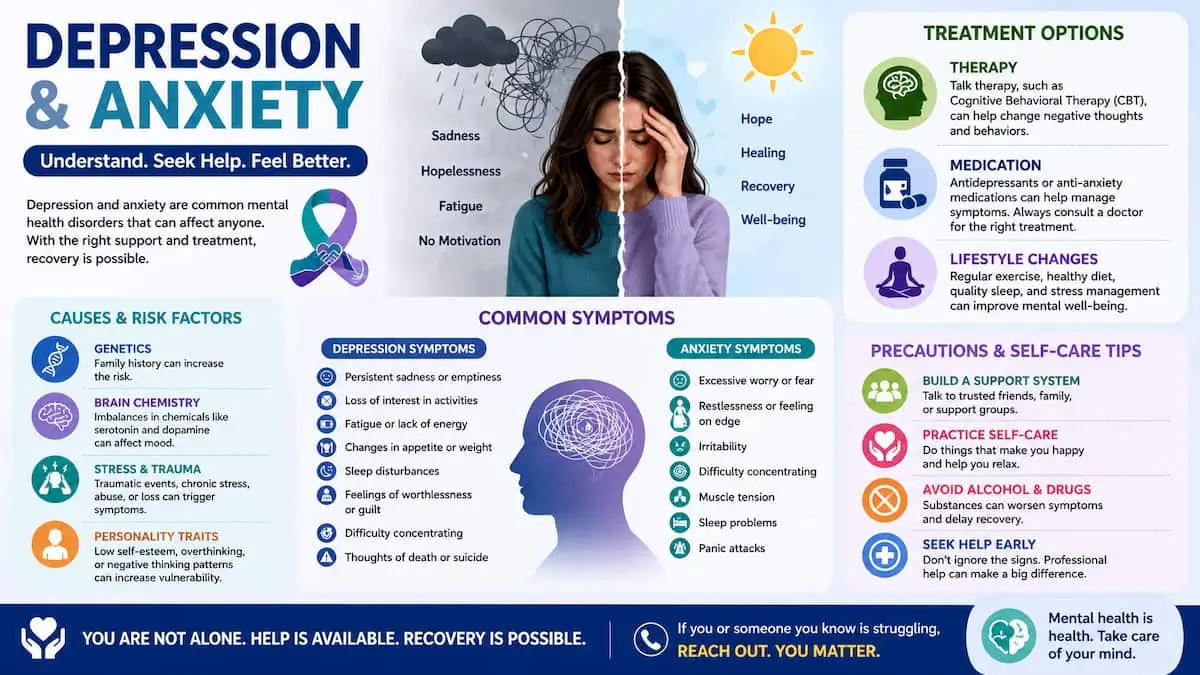
Depression and anxiety are among the most common mental health disorders affecting millions of people worldwide. These conditions can impact emotional well-being, relationships, physical health, work performance, and overall quality of life. Although depression and anxiety are different disorders, they often occur together and share many similar symptoms.
Mental health is just as important as physical health. Early recognition of symptoms and proper treatment can help individuals manage these conditions effectively and lead healthy, fulfilling lives. In this article, we will discuss the causes, symptoms, treatment options, and prevention tips for depression and anxiety.
What Are Depression and Anxiety?
Depression
Depression, also known as major depressive disorder, is a serious mental health condition that causes persistent feelings of sadness, hopelessness, and loss of interest in daily activities. It can affect how a person thinks, feels, and behaves.
Anxiety
Anxiety is a condition characterized by excessive worry, fear, nervousness, or panic. While occasional anxiety is a normal response to stress, chronic anxiety can interfere with daily life and become overwhelming.
Many people experience both depression and anxiety at the same time, making diagnosis and treatment especially important.
Causes of Depression and Anxiety
The exact causes of depression and anxiety are not completely understood. However, several biological, psychological, and environmental factors may contribute to these conditions.
1. Genetic Factors
A family history of depression, anxiety, or other mental health disorders may increase the risk. Genetics can influence how the brain responds to stress and emotions.
2. Brain Chemistry Imbalance
Neurotransmitters such as serotonin, dopamine, and norepinephrine help regulate mood and emotions. Imbalances in these brain chemicals may contribute to depression and anxiety symptoms.
3. Chronic Stress
Long-term stress from work, relationships, financial problems, or academic pressure can negatively affect mental health and increase the risk of anxiety and depression.
4. Traumatic Life Events
Experiences such as emotional abuse, physical abuse, accidents, loss of a loved one, or childhood trauma can trigger mental health disorders.
5. Personality Traits
People with low self-esteem, perfectionist tendencies, or a habit of overthinking may be more vulnerable to depression and anxiety.
6. Medical Conditions
Certain illnesses such as thyroid disorders, chronic pain, heart disease, and hormonal imbalances can contribute to mental health problems.
7. Substance Abuse
Excessive alcohol consumption or drug use can worsen emotional instability and increase the risk of depression and anxiety disorders.
Common Symptoms of Depression and Anxiety
The symptoms of depression and anxiety may vary from person to person. Some individuals experience mild symptoms, while others may struggle with severe emotional distress.
Emotional Symptoms
Persistent sadness or emptiness
Feelings of hopelessness or worthlessness
Excessive worry or fear
Irritability or mood swings
Feeling overwhelmed or emotionally numb
Physical Symptoms
Fatigue or low energy
Headaches or body aches
Rapid heartbeat
Sweating or trembling
Digestive problems
Behavioral Symptoms
Loss of interest in hobbies or social activities
Avoiding friends and family
Difficulty concentrating or making decisions
Changes in eating habits
Increased use of alcohol or substances
Sleep-Related Symptoms
Insomnia or difficulty sleeping
Oversleeping
Restless sleep
Frequent nightmares
Severe Symptoms
In severe cases, depression may lead to thoughts of self-harm or suicide. Immediate professional help should be sought if these thoughts occur.
Types of Anxiety Disorders
Anxiety disorders can appear in different forms, including:
Generalized Anxiety Disorder (GAD)
Persistent and excessive worry about everyday situations.
Panic Disorder
Sudden episodes of intense fear known as panic attacks.
Social Anxiety Disorder
Extreme fear of social interactions or public situations.
Phobias
Irrational fear of specific objects, places, or situations.
Obsessive-Compulsive Disorder (OCD)
Repeated unwanted thoughts and compulsive behaviors.
How Depression and Anxiety Are Diagnosed
Mental health professionals diagnose depression and anxiety through:
Physical examinations
Psychological evaluations
Symptom assessments
Medical history review
Doctors may also rule out underlying medical conditions that can mimic mental health symptoms.
Treatment Options for Depression and Anxiety
Depression and anxiety are treatable conditions. The right treatment plan often depends on the severity of symptoms and individual needs.
1. Psychotherapy
Cognitive Behavioral Therapy (CBT)
CBT is one of the most effective therapies for depression and anxiety. It helps individuals identify negative thought patterns and develop healthier coping strategies.
Talk Therapy
Counseling and emotional support can help individuals process difficult emotions and improve mental resilience.
2. Medication
Healthcare providers may prescribe:
Antidepressants
Anti-anxiety medications
Mood stabilizers
Medication should always be taken under professional medical supervision.
3. Lifestyle Changes
Healthy lifestyle habits can significantly improve mental well-being.
Regular Exercise
Physical activity helps release endorphins, which naturally improve mood and reduce stress.
Healthy Diet
Nutritious foods support brain health and emotional balance.
Quality Sleep
Maintaining a proper sleep routine can reduce anxiety and improve mood stability.
Stress Management
Practices such as meditation, yoga, breathing exercises, and mindfulness can help calm the mind.
Precautions and Prevention Tips
While depression and anxiety cannot always be prevented, certain habits can lower the risk and help manage symptoms effectively.
Build a Strong Support System
Spend time with supportive family members and friends who encourage open communication.
Practice Self-Care
Take breaks, enjoy hobbies, and prioritize activities that promote relaxation and happiness.
Avoid Alcohol and Drugs
Substance abuse can worsen mental health conditions and interfere with treatment.
Limit Negative Thinking
Challenge self-critical thoughts and focus on positive coping strategies.
Stay Physically Active
Regular movement and outdoor activities can improve both mental and physical health.
Seek Professional Help Early
Early treatment often leads to better outcomes and faster recovery.
When to See a Doctor
You should seek medical attention if:
Symptoms persist for more than two weeks
Anxiety interferes with daily life
Sleep and appetite changes become severe
You experience panic attacks frequently
You have thoughts of self-harm or suicide
Mental health professionals can provide proper diagnosis, support, and treatment plans tailored to individual needs.
Importance of Mental Health Awareness
Mental health awareness helps reduce stigma and encourages people to seek help without fear or shame. Depression and anxiety are medical conditions, not signs of weakness. Open conversations about mental health can create supportive communities and improve emotional well-being.
Conclusion
Depression and anxiety are serious but treatable mental health disorders that affect millions of people worldwide. Understanding their causes, recognizing early symptoms, and seeking professional support are essential steps toward recovery.
Treatment options such as therapy, medication, healthy lifestyle changes, and emotional support can significantly improve quality of life. If you or someone you know is struggling with depression or anxiety, remember that help is available, and recovery is possible with the right care and support.