
Brain Tumor: Causes, Symptoms, Diagnosis, Treatment, and Prevention
What Is a Brain Tumor?
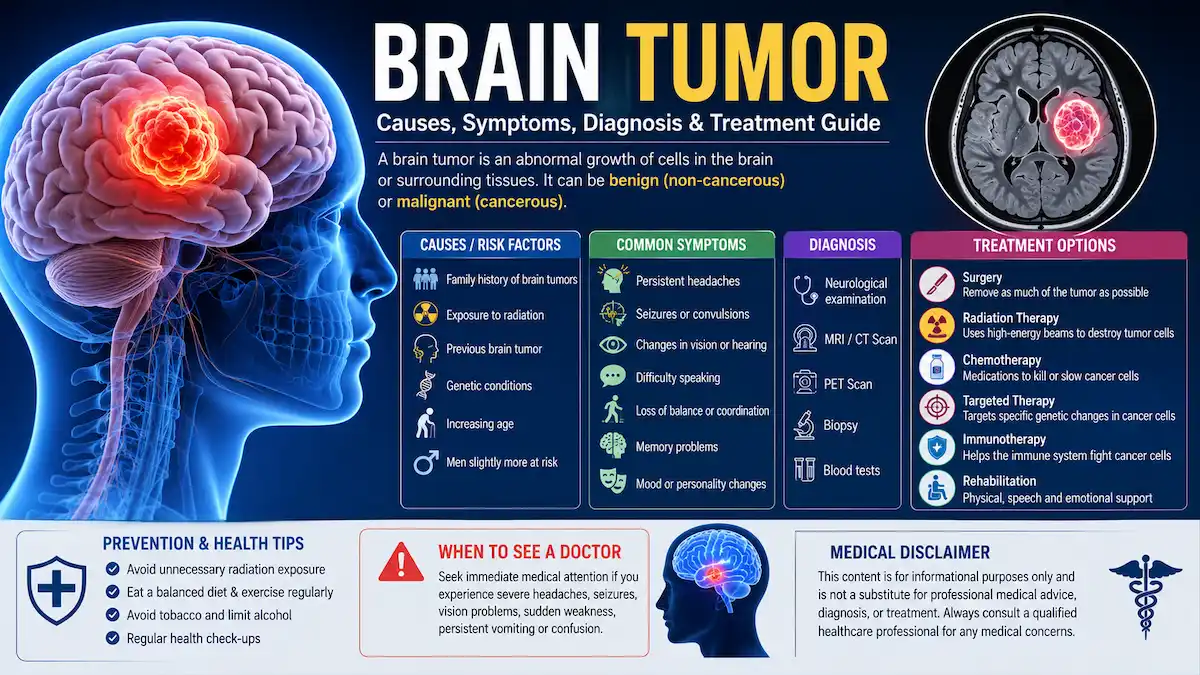
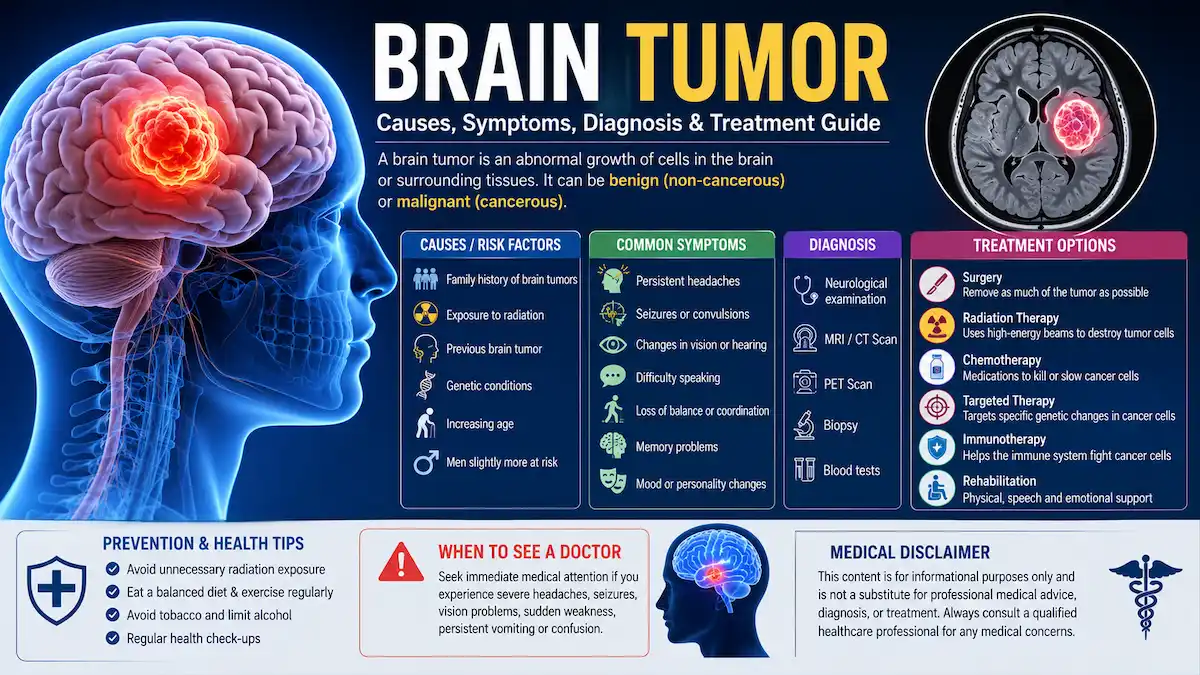
A brain tumor is an abnormal growth of cells inside the brain or in the tissues surrounding it, such as the meninges, cranial nerves, or pituitary gland. Brain tumors can be benign (non-cancerous) or malignant (cancerous). While benign tumors do not spread to other parts of the body, they can still be life-threatening because they increase pressure inside the skull and interfere with essential brain functions.
Malignant brain tumors grow more aggressively and may invade nearby brain tissue, making treatment more challenging. Early diagnosis and timely medical care can significantly improve treatment outcomes and quality of life.
Types of Brain Tumors
Brain tumors are generally classified into two main categories:
1. Primary Brain Tumors
These tumors begin in the brain itself. Common types include:
Meningiomas
Pituitary adenomas
Acoustic neuromas (Vestibular schwannomas)
Medulloblastomas
2. Secondary (Metastatic) Brain Tumors
These tumors develop when cancer from another part of the body, such as the lungs, breast, kidneys, or skin (melanoma), spreads to the brain.
What Causes Brain Tumors?
The exact cause of most brain tumors remains unknown. However, researchers have identified several factors that may increase the risk.
Common Risk Factors
Family history of brain tumors
Certain inherited genetic disorders
Previous exposure to ionizing radiation, especially radiation therapy to the head
Increasing age (although brain tumors can occur at any age)
Male gender for certain tumor types
Previous brain tumors
Weakened immune system (for some rare tumors)
Having one or more risk factors does not necessarily mean a person will develop a brain tumor. Likewise, many people diagnosed with brain tumors have no known risk factors.
Brain Tumor Symptoms
Symptoms depend on the tumor’s size, location, and growth rate. Some tumors grow slowly and produce mild symptoms, while others develop rapidly and cause serious neurological problems.
Common Signs and Symptoms
Persistent headaches that gradually worsen
Morning headaches or headaches accompanied by vomiting
Seizures or convulsions
Blurred vision, double vision, or loss of vision
Hearing loss or ringing in the ears
Difficulty speaking or understanding language
Weakness or numbness in one side of the body
Problems with balance and coordination
Dizziness
Memory loss and confusion
Mood swings or personality changes
Difficulty concentrating
Nausea and vomiting without another clear cause
Excessive sleepiness or fatigue
If any of these symptoms are persistent or suddenly become worse, seek medical evaluation promptly.
How Is a Brain Tumor Diagnosed?
Doctors may use several tests to confirm the presence of a brain tumor and determine its type.
Diagnostic Tests
Detailed neurological examination
MRI (Magnetic Resonance Imaging)
CT scan
Functional MRI (fMRI)
PET scan (in selected cases)
Brain biopsy
Blood tests (to assess overall health and rule out other conditions)
Early diagnosis helps doctors develop the most effective treatment plan.
Brain Tumor Treatment Options
Treatment depends on several factors, including:
Tumor type
Tumor size
Location in the brain
Patient’s age
Overall health
Whether the tumor is benign or malignant
1. Surgery
Surgery is often the first treatment whenever it is safe to remove the tumor. The goal is to remove as much of the tumor as possible while preserving healthy brain tissue.
Benefits
Reduces pressure inside the brain
Relieves symptoms
Provides tissue for diagnosis
May completely remove certain benign tumors
2. Radiation Therapy
Radiation therapy uses high-energy radiation to destroy tumor cells that cannot be safely removed by surgery or to eliminate remaining cancer cells after surgery.
3. Chemotherapy
Chemotherapy uses medications to kill cancer cells or slow their growth. It may be given orally or intravenously, depending on the type of brain tumor.
4. Targeted Therapy
Targeted therapy focuses on specific genetic or molecular abnormalities found in certain tumors. This approach may reduce damage to healthy cells.
5. Immunotherapy
Immunotherapy helps the body’s immune system recognize and attack cancer cells. Although not suitable for every brain tumor, it is becoming an important treatment option for selected patients.
6. Rehabilitation
Many patients benefit from rehabilitation after treatment, including:
Physical therapy
Occupational therapy
Speech therapy
Cognitive rehabilitation
Psychological counseling
Can Brain Tumors Be Prevented?
There is currently no guaranteed way to prevent brain tumors. However, maintaining overall health and reducing unnecessary exposure to radiation may help lower certain risks.
Healthy Lifestyle Tips
Avoid unnecessary exposure to radiation
Follow workplace safety guidelines if exposed to chemicals
Eat a balanced diet rich in fruits and vegetables
Exercise regularly
Avoid tobacco products
Limit alcohol consumption
Attend regular medical check-ups
Seek prompt evaluation for persistent neurological symptoms
When Should You See a Doctor?
Seek immediate medical attention if you experience:
Sudden severe headaches
New-onset seizures
Weakness or paralysis
Difficulty speaking
Vision loss
Persistent vomiting
Sudden confusion
Loss of consciousness
Early treatment can significantly improve outcomes.
Frequently Asked Questions (FAQs)
Is every brain tumor cancer?
No. Many brain tumors are benign (non-cancerous), but even benign tumors can become dangerous if they compress important parts of the brain.
Can brain tumors be cured?
Some benign tumors can be completely cured with surgery. Malignant tumors may require a combination of surgery, radiation therapy, chemotherapy, targeted therapy, or immunotherapy. The outlook depends on the tumor type and stage.
What is usually the first symptom of a brain tumor?
Persistent headaches, seizures, vision changes, or unexplained neurological symptoms are among the most common early signs.
Are brain tumors hereditary?
Most brain tumors are not inherited. However, some rare genetic conditions can increase the risk.
Conclusion
A brain tumor is a serious medical condition that requires prompt diagnosis and expert treatment. Whether benign or malignant, these abnormal growths can interfere with vital brain functions and significantly affect a person’s health. Recognizing warning signs such as persistent headaches, seizures, vision changes, and balance problems can lead to earlier diagnosis and better treatment outcomes. Modern advances in surgery, radiation therapy, chemotherapy, targeted therapy, and immunotherapy have greatly improved survival rates and quality of life for many patients. If you or someone you know experiences persistent neurological symptoms, consult a qualified healthcare professional without delay.
Medical Disclaimer
This article is intended for educational and informational purposes only and should not be considered medical advice, diagnosis, or treatment. The information provided is not a substitute for consultation with a qualified physician, neurologist, or other licensed healthcare professional. If you experience persistent headaches, seizures, sudden weakness, vision changes, or any other concerning neurological symptoms, seek immediate medical attention. Always follow the advice of your healthcare provider regarding diagnosis, treatment, and medication. Never ignore professional medical advice or delay seeking care because of information you have read online.