
Fits (Seizures): Causes, Symptoms, First Aid, Treatment & Prevention
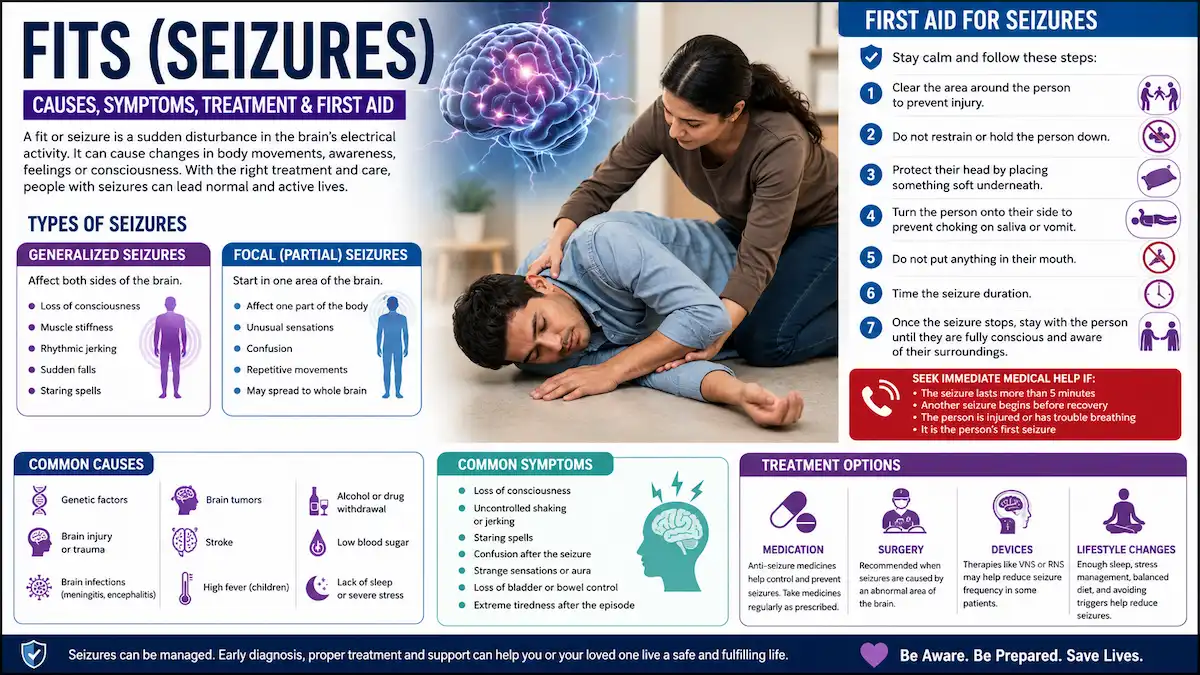
Fits, medically known as seizures, occur when there is a sudden surge of abnormal electrical activity in the brain. A seizure can affect movement, awareness, behavior, emotions, or consciousness. While witnessing a seizure can be frightening, many people with epilepsy or other seizure disorders live healthy, active lives with proper diagnosis and treatment.
This guide explains the causes of fits, common symptoms, treatment options, emergency first aid, and prevention tips to help you understand this condition better.
What Are Fits (Seizures)?
A fit or seizure is a temporary disturbance in brain activity that causes changes in body movements, sensations, awareness, or behavior. Seizures may happen only once due to a temporary condition such as high fever or low blood sugar, or they may occur repeatedly as part of epilepsy, a neurological disorder.
Not every seizure involves violent shaking. Some may only cause staring spells, confusion, or unusual sensations.
Types of Fits (Seizures)
Seizures are mainly classified into two categories:
1. Generalized Seizures
These affect both sides of the brain from the beginning. Symptoms may include:
Loss of consciousness
Full-body muscle stiffness
Rhythmic jerking movements
Sudden falls
Brief staring episodes
2. Focal (Partial) Seizures
These begin in one specific area of the brain and may:
Affect only one part of the body
Cause unusual sensations or emotions
Result in confusion or repetitive movements
Spread to become generalized seizures
Common Causes of Fits
Several medical conditions and external factors can trigger seizures, including:
Genetic or inherited neurological disorders
Head injury or brain trauma
Brain infections such as meningitis or encephalitis
Stroke
High fever (especially in young children)
Low blood sugar (hypoglycemia)
Electrolyte imbalance
Alcohol or drug withdrawal
Certain medications or recreational drugs
Lack of sleep
Severe stress
Flashing lights (in some individuals with photosensitive epilepsy)
In many cases, doctors may not identify an exact cause.
Symptoms of Fits
Symptoms vary depending on the type of seizure. Common signs include:
Sudden loss of consciousness
Uncontrolled shaking or jerking of the arms and legs
Muscle stiffness
Blank staring
Confusion after the seizure
Temporary inability to speak
Strange smells, tastes, or sensations before the seizure (aura)
Lip smacking or repetitive movements
Loss of bladder or bowel control
Extreme tiredness after the episode
Some seizures last only a few seconds, while others may continue for several minutes.
How Are Fits Diagnosed?
Doctors diagnose seizures through medical history, physical examination, and specialized tests such as:
Neurological examination
Electroencephalogram (EEG)
CT scan
Blood tests
Genetic testing (in selected cases)
Proper diagnosis helps determine the underlying cause and the most effective treatment.
Treatment for Fits
Treatment depends on the cause, frequency, and type of seizure.
1. Anti-Seizure Medications
Doctors commonly prescribe anti-seizure medicines to prevent future seizures. Examples include:
Sodium valproate
Phenytoin
Levetiracetam
Carbamazepine
Lamotrigine
Medication should only be taken under medical supervision. Never stop anti-seizure medicine without consulting your doctor.
2. Surgery
Brain surgery may be recommended when seizures originate from a specific brain area that can be safely removed and medications are not effective.
3. Medical Devices
Some patients benefit from therapies such as:
These devices help reduce seizure frequency in selected individuals.
4. Lifestyle Changes
Healthy habits can significantly reduce seizure triggers:
Get adequate sleep every night.
Take medications exactly as prescribed.
Avoid excessive alcohol and recreational drugs.
Manage stress through relaxation techniques.
Eat a balanced diet.
Stay hydrated.
Identify and avoid personal seizure triggers.
First Aid for Someone Having a Fit
If you see someone experiencing a seizure:
Stay calm.
Move nearby dangerous objects away.
Protect their head with a folded towel or soft object.
Loosen tight clothing around the neck.
Turn the person onto their side after the jerking stops.
Time the seizure.
Stay with them until they recover fully.
Reassure them as they regain awareness.
Do NOT
Do not hold the person down.
Do not put anything into their mouth.
Do not give food, water, or medicine until they are fully awake.
Do not attempt mouth-to-mouth breathing during the seizure unless the person is not breathing after it ends.
When Is a Seizure a Medical Emergency?
Seek immediate emergency medical care if:
The seizure lasts more than 5 minutes.
Another seizure begins before the person recovers.
It is the person’s first seizure.
The person has difficulty breathing afterward.
They are injured during the seizure.
The seizure occurs in water.
The person is pregnant or has diabetes.
Recovery takes unusually long.
Can Fits Be Prevented?
Not all seizures can be prevented, but you can reduce the risk by:
Taking prescribed medication regularly.
Getting enough sleep.
Avoiding alcohol and illegal drugs.
Wearing helmets during activities with a risk of head injury.
Treating infections promptly.
Controlling blood sugar levels.
Managing stress effectively.
Living with Epilepsy and Seizures
Many people with epilepsy lead normal lives with appropriate treatment and regular follow-up. Family members, teachers, and coworkers should understand seizure first aid to provide timely assistance during an episode.
Keeping a seizure diary can help identify triggers and monitor treatment effectiveness.
Frequently Asked Questions (FAQs)
Are all fits caused by epilepsy?
No. Seizures can occur due to fever, infections, head injuries, low blood sugar, stroke, or other medical conditions. Epilepsy is diagnosed when a person has recurrent, unprovoked seizures.
Can stress cause fits?
Stress itself does not directly cause epilepsy, but it can trigger seizures in some people who already have a seizure disorder.
Can seizures be cured?
Some seizures are temporary and resolve once the underlying cause is treated. Epilepsy can often be effectively controlled with medication, and some people eventually become seizure-free.
Should I put something in a person’s mouth during a seizure?
No. This is a common myth. Putting objects in the mouth can cause choking or injury.
Conclusion
Fits (seizures) are a neurological condition that can have many different causes, ranging from temporary medical problems to epilepsy. Recognizing the symptoms, understanding the available treatments, and knowing the correct first aid steps can help protect the affected person and improve long-term outcomes.
If you or someone you know experiences recurrent or unexplained seizures, seek prompt evaluation from a qualified healthcare professional. Early diagnosis and appropriate treatment can significantly improve quality of life.