
Obsessive-Compulsive Disorder (OCD): Symptoms, Causes, and Treatment Options
Introduction
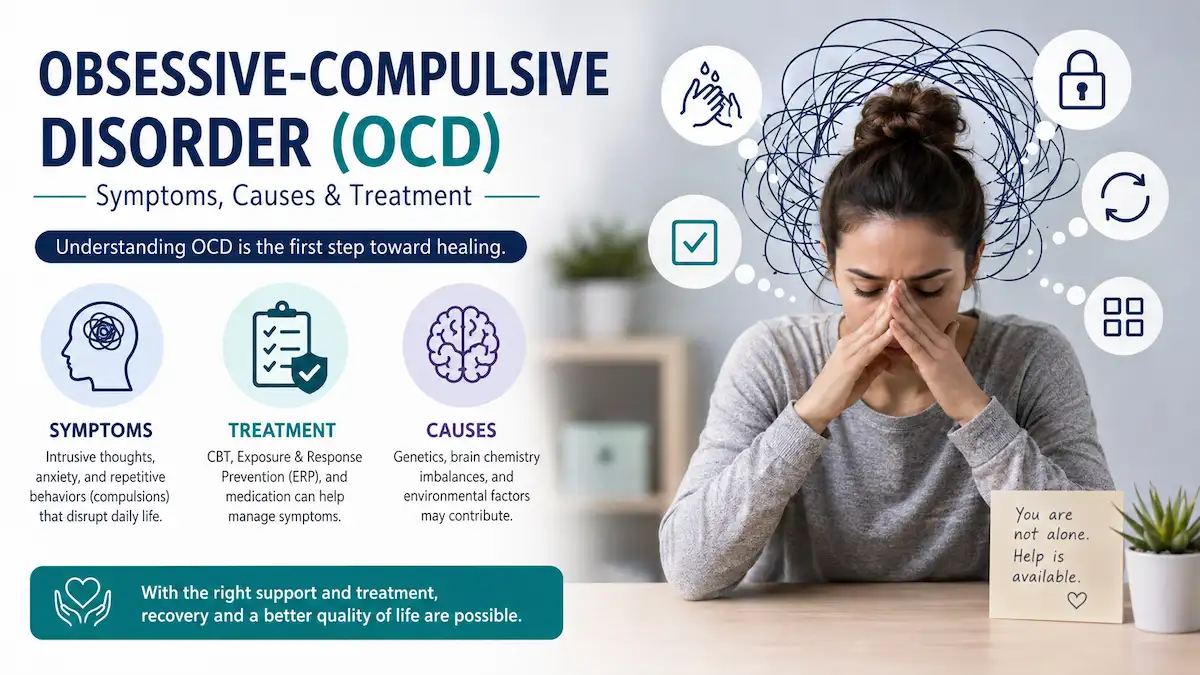
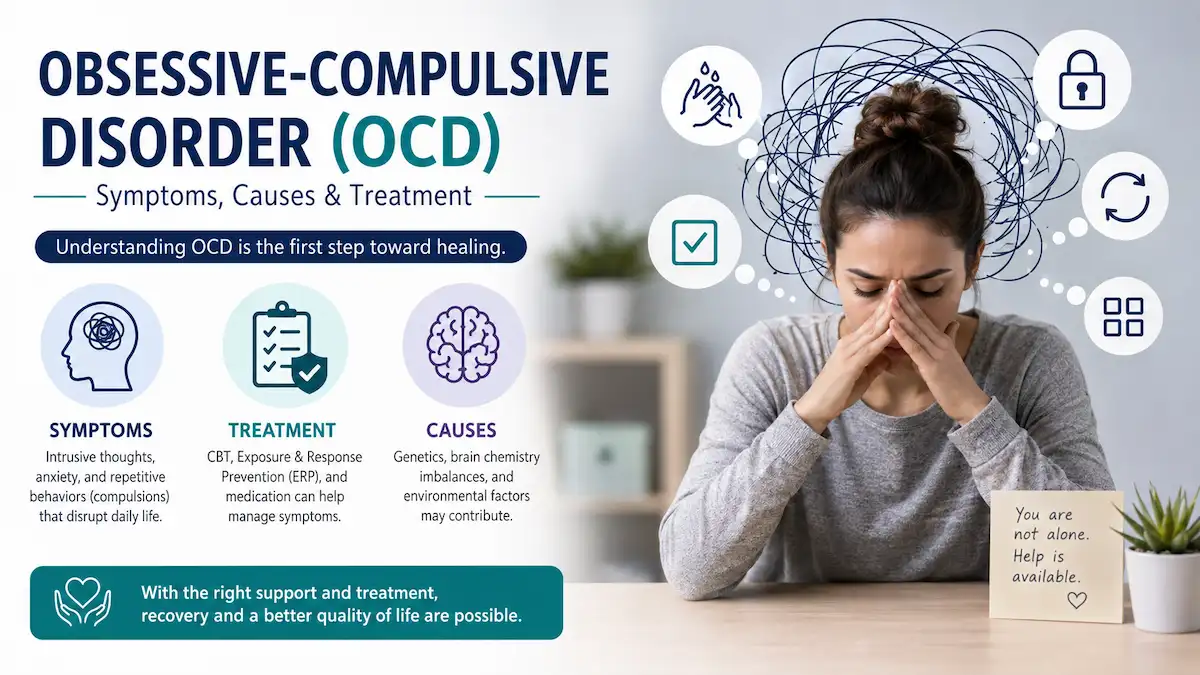
Obsessive-Compulsive Disorder (OCD) is a mental health condition characterized by persistent, unwanted thoughts and repetitive behaviors or mental rituals. These symptoms can cause significant anxiety and may interfere with work, studies, relationships, and everyday activities.
OCD can affect people of all ages and can vary considerably in severity. Fortunately, effective treatments are available, and many people with OCD can learn to manage their symptoms and improve their quality of life.
What Is Obsessive-Compulsive Disorder?
OCD generally involves two main features: obsessions and compulsions.
Obsessions are recurring and intrusive thoughts, fears, urges, or mental images that cause distress. A person may recognize that these thoughts are excessive or unreasonable but still find them difficult to control.
Compulsions are repetitive behaviors or mental acts that a person feels driven to perform in response to an obsession. These actions are often intended to reduce anxiety or prevent something feared from happening.
For example, someone with contamination-related OCD may repeatedly wash their hands because of an intense fear of germs.
Common Symptoms of OCD
OCD symptoms can differ from person to person. Common symptoms include:
1. Intrusive Thoughts and Fears
People with OCD may experience persistent fears or unwanted thoughts about contamination, illness, mistakes, accidents, safety, or causing harm.
2. Repetitive Behaviors
Compulsions may include repeatedly washing or cleaning, checking locks or appliances, counting, arranging objects, or repeatedly seeking reassurance.
3. Mental Compulsions
Not all compulsions are visible. Some people may repeatedly count, repeat words in their mind, mentally review events, or perform other mental rituals.
4. Anxiety and Distress
Obsessions can create intense anxiety, discomfort, guilt, or fear. Compulsions may provide temporary relief, but the cycle can return and become difficult to break.
5. Difficulty Controlling Symptoms
People with OCD often understand that their thoughts or behaviors may be excessive, yet they may still feel unable to stop them.
The frequency and intensity of symptoms can change over time, and OCD may affect daily functioning to different degrees.
Common Types of OCD Symptoms
OCD can appear in many forms. Some common symptom themes include:
Contamination fears: Excessive concerns about germs, dirt, chemicals, or illness.
Checking: Repeatedly checking doors, appliances, documents, or personal safety.
Symmetry and order: Feeling compelled to arrange objects or perform actions until they feel “just right.”
Unwanted intrusive thoughts: Disturbing thoughts or images that conflict with a person’s values or beliefs.
Hoarding-related symptoms: Difficulty discarding possessions; however, hoarding disorder is now considered a separate condition from OCD.
Having occasional unwanted thoughts or habits does not necessarily mean a person has OCD. OCD is diagnosed based on the nature, persistence, distress, and impact of symptoms.
Also read: Mental Disorder
Causes and Risk Factors of OCD
The exact cause of OCD is not fully understood. Researchers believe that a combination of biological, genetic, psychological, and environmental factors may contribute to its development.
Genetics
OCD can sometimes run in families. Having a close relative with OCD may increase a person’s risk, although genetics alone do not determine whether someone will develop the condition.
Brain Function and Neurochemistry
Differences in brain circuits and neurotransmitter systems may contribute to OCD. Researchers continue to study how brain function and chemical signaling are involved.
Environmental Factors
Stressful or traumatic experiences may contribute to the onset or worsening of symptoms in some individuals. However, environmental factors do not necessarily cause OCD on their own.
Other Factors
Certain childhood experiences, psychological factors, and other mental health conditions may also be associated with OCD.
Treatment for OCD
OCD is treatable, and professional treatment can significantly reduce symptoms.
Cognitive Behavioral Therapy (CBT)
Cognitive behavioral therapy is an evidence-based psychological treatment that helps people identify unhelpful patterns of thinking and behavior and develop healthier ways of responding to anxiety and intrusive thoughts.
Exposure and Response Prevention (ERP)
Exposure and Response Prevention (ERP) is a specialized form of CBT commonly used for OCD. It involves gradually facing feared thoughts, situations, or objects while learning not to perform the usual compulsive response.
With professional guidance, ERP can help reduce the anxiety associated with obsessions and weaken the cycle between obsessions and compulsions.
Medication
Doctors may prescribe medications such as selective serotonin reuptake inhibitors (SSRIs) for some people with OCD. Medication decisions should be made with a qualified healthcare professional because the appropriate treatment depends on the individual’s symptoms, medical history, and other factors.
Combination Treatment
For some people, a combination of psychological therapy and medication may provide better symptom control than either approach alone.
When Should You Seek Professional Help?
Consider speaking with a mental health professional if unwanted thoughts or repetitive behaviors:
Take up significant amounts of time.
Cause considerable anxiety or distress.
Interfere with work, education, relationships, or daily activities.
Feel difficult or impossible to control.
Lead you to avoid everyday situations.
A psychiatrist, psychologist, or other qualified mental health professional can evaluate symptoms and recommend an appropriate treatment plan.
Living With OCD
OCD can be challenging, but having the condition does not mean that a person cannot lead a fulfilling life. Following a treatment plan, attending therapy sessions, taking prescribed medication as directed, and learning strategies to manage anxiety can help many people cope with symptoms.
Support from family and friends can also be valuable. Understanding that OCD symptoms are not simply a matter of “overthinking” or a lack of willpower can help reduce stigma and encourage people to seek appropriate care.
Conclusion
Obsessive-Compulsive Disorder is a treatable mental health condition involving persistent obsessions and compulsions that can interfere with everyday life. Although the exact causes of OCD are not completely understood, genetics, brain function, psychological factors, and environmental influences may contribute to its development.
Treatments such as cognitive behavioral therapy, exposure and response prevention, and medication can help reduce symptoms and improve quality of life. If OCD symptoms are interfering with daily activities, seeking help from a qualified mental health professional is an important step toward effective management.
This article is for general educational purposes and should not replace professional medical or mental health advice.