
Pancreatic Cysts: Causes, Symptoms, Diagnosis & Treatment
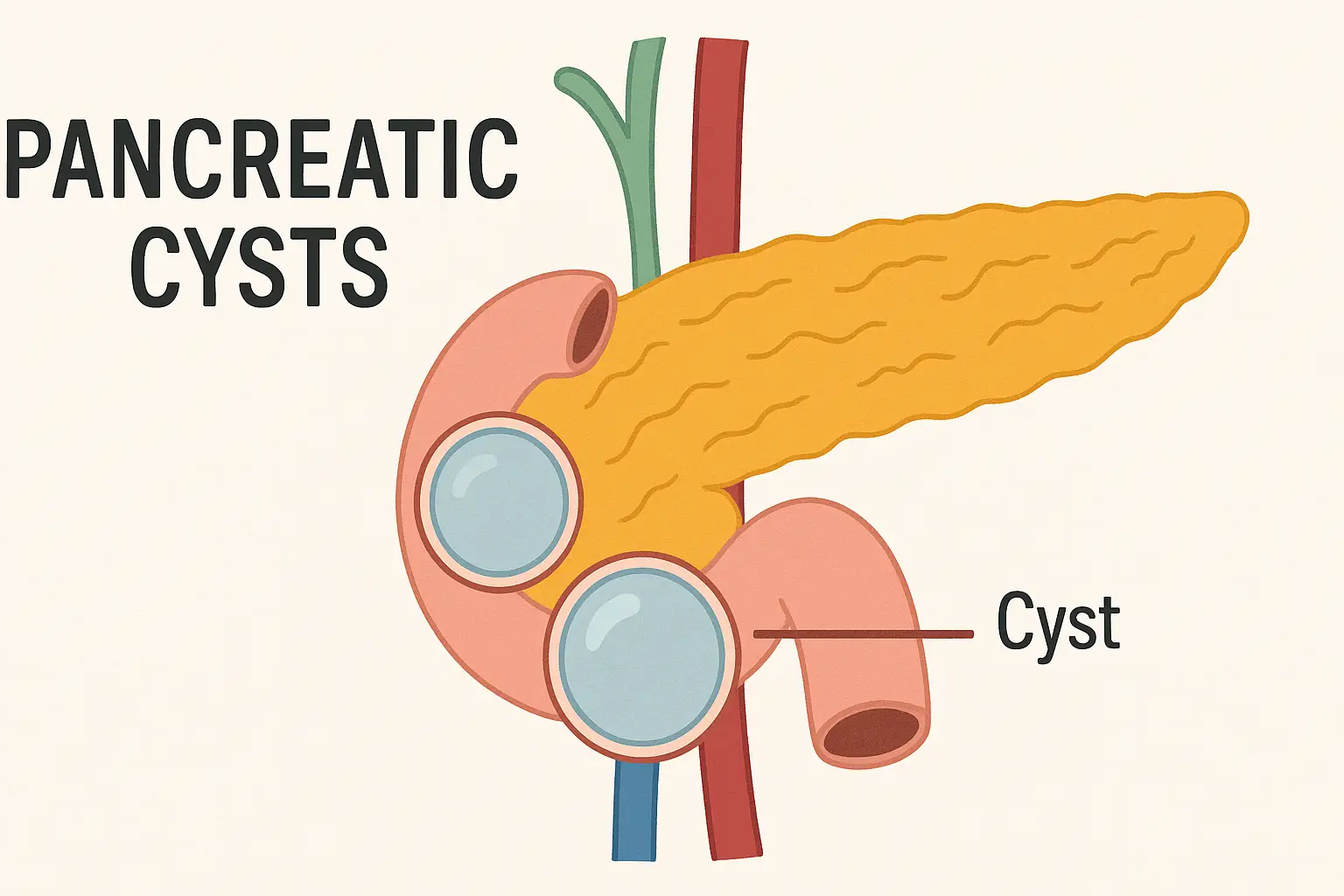
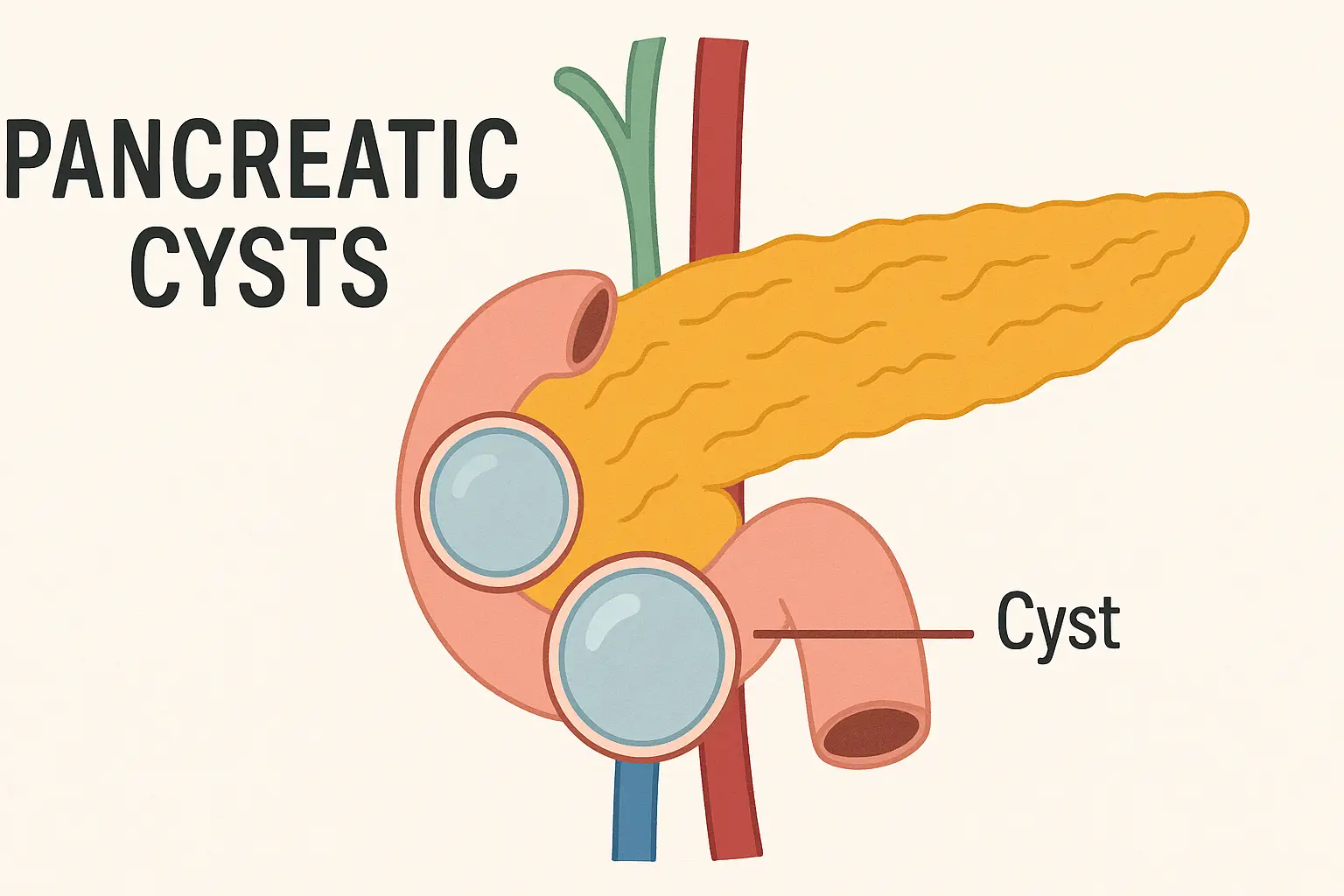
The pancreas is a critical organ that supports digestion and helps regulate blood sugar levels. Like other organs, it can develop structural issues—including pancreatic cysts, which are fluid-filled sacs that form within or on the pancreas. While many pancreatic cysts are harmless, some can indicate serious conditions like pancreatic cancer. Understanding their causes, symptoms, and treatment options is essential for early detection and effective management.
What Are Pancreatic Cysts?
Pancreatic cysts are abnormal fluid collections that form inside or on the pancreas. They are generally categorized into two main types:
- Non-neoplastic (non-cancerous) cysts:These include pseudocysts, which often occur after episodes of pancreatitis, and serous cystadenomas, which are usually benign and low-risk.Neoplastic (pre-cancerous or cancerous) cysts:These include mucinous cystic neoplasms (MCNs) and intraductal papillary mucinous neoplasms (IPMNs), both of which can potentially become malignant if left untreated.
Chronic pancreatitis – Ongoing inflammation can lead to pseudocyst development.
Pancreatic trauma – Injury to the pancreas may result in fluid accumulation.
Genetic conditions – Disorders like von Hippel-Lindau disease increase cyst risk.
Pancreatic duct blockage – Obstruction in the ducts can trigger cyst growth.
Aging – The risk of neoplastic cysts increases with age.
Abdominal pain (dull or sharp, often radiating to the back)
Nausea and vomiting
Unexplained weight loss
Jaundice (yellowing of the skin and eyes)
A palpable abdominal mass in the case of larger cysts
CT Scan – Offers detailed visuals of the pancreas and helps assess cyst size and structure.
MRI/MRCP – High-resolution imaging that differentiates cyst types and examines duct connections.
Endoscopic Ultrasound (EUS) – Provides close-up views and allows for fluid sampling.
Fine-Needle Aspiration (FNA) – Extracts cyst fluid to test for infection or cancer cells.
Cyst Resection – Removal of just the cyst.
Distal Pancreatectomy – Removal of the tail portion of the pancreas.
Whipple Procedure – A complex operation involving the head of the pancreas, used for high-risk cases.
Avoid alcohol and smoking
Eat a low-fat, balanced diet
Stay hydrated
Manage chronic conditions like diabetes
Infection – Resulting in fever and abdominal pain
Pancreatic fistula – Leaking of pancreatic fluid
Internal bleeding – Hemorrhage within the cyst
Malignant transformation – Especially in IPMNs and MCNs, which can become pancreatic cancer
Ongoing upper abdominal pain
Jaundice
Unexplained weight loss
Symptoms that worsen over time
Often, pancreatic cysts are discovered incidentally during imaging for unrelated health issues. Some require only monitoring, while others may necessitate surgical removal.
Causes of Pancreatic Cysts
The exact cause of pancreatic cyst formation isn’t always clear, but several factors and conditions may contribute:
Symptoms of Pancreatic Cysts
Many pancreatic cysts cause no symptoms and are only detected during scans. However, when symptoms do occur, they may include:
Symptoms typically depend on the cyst’s size, location, and whether it’s pressing on other abdominal structures.
Diagnosis of Pancreatic Cysts
Diagnosing pancreatic cysts usually involves advanced imaging and testing:
Accurate diagnosis is crucial to determine the cancer risk and appropriate treatment plan.
Treatment Options for Pancreatic Cysts
Treatment depends on several factors, including the cyst type, size, symptoms, and cancer potential:
1. Observation and Monitoring
Small, asymptomatic, benign cysts often require no immediate treatment. Doctors recommend regular follow-up with imaging (every 6–12 months) to watch for changes.
2. Cyst Drainage
If a cyst is causing pain or infection risk, endoscopic drainage using a fine-needle aspiration technique may be performed. However, this is usually a temporary solution, as some cysts can refill.
3. Surgical Removal
Surgery is typically advised for large, symptomatic, or suspicious cysts. Common procedures include:
4. Lifestyle and Dietary Changes
While they may not treat cysts directly, healthy lifestyle choices can reduce inflammation and support pancreatic health:
Potential Complications of Pancreatic Cysts
Without treatment or monitoring, pancreatic cysts can lead to complications such as:
When to See a Doctor
Seek medical advice if you experience:
Even if the cyst is discovered by chance, regular follow-up is key to prevent complications or detect cancer early.
Conclusion
Pancreatic cysts are relatively common and, in most cases, harmless. However, some carry a risk of becoming cancerous if not diagnosed or monitored properly. Advances in imaging, minimally invasive procedures, and surgical techniques have made it easier to detect and treat these cysts. If you or someone you know has been diagnosed with a pancreatic cyst, consult a gastroenterologist or pancreatic specialist to determine the best course of action.