
Paralysis: Symptoms, Types, Causes, and Natural Ways to Support Recovery
What Is Paralysis?
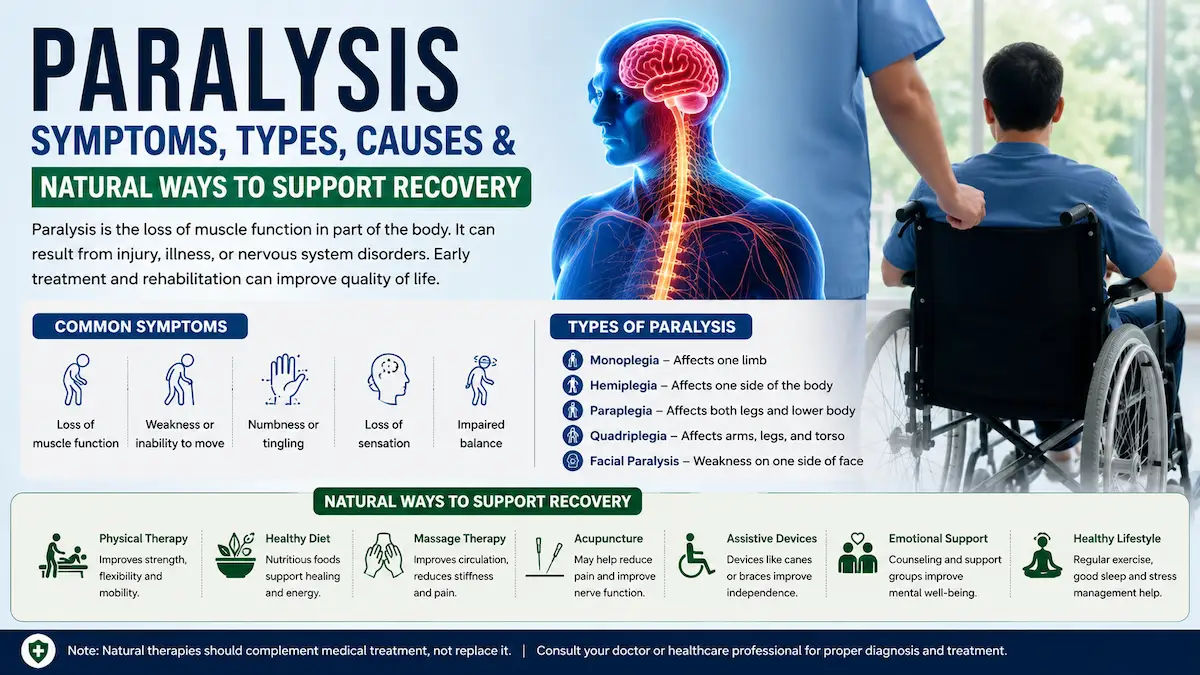
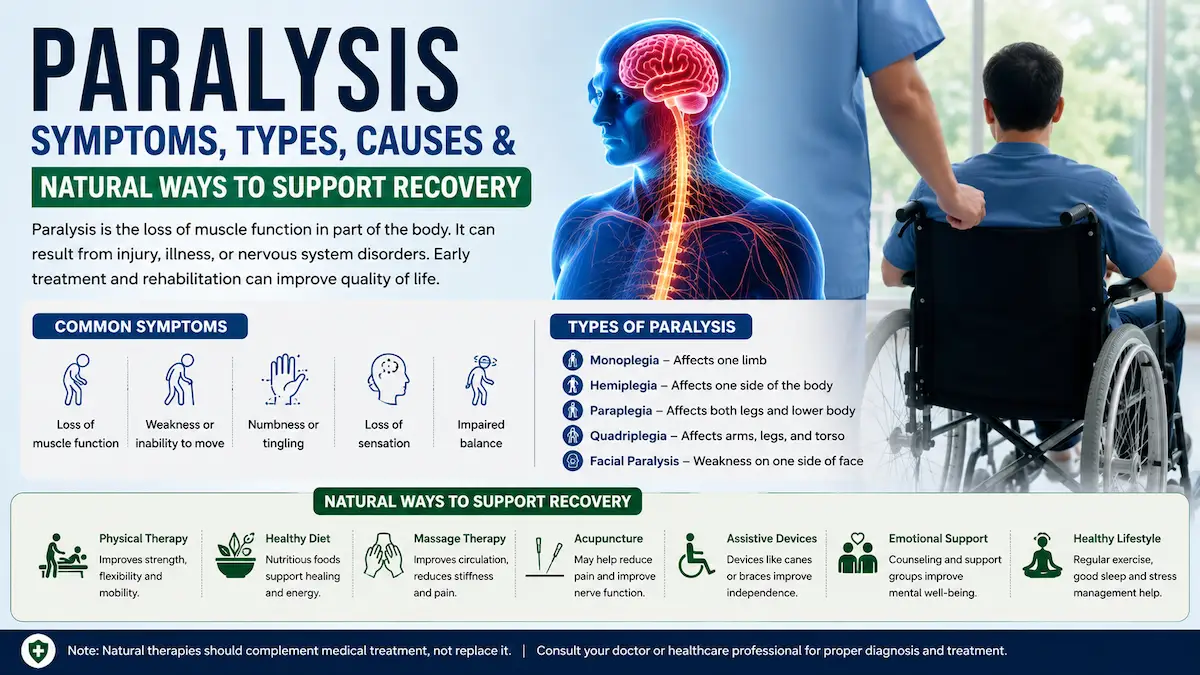
Paralysis is a condition in which a person loses the ability to move one or more parts of the body due to damage to the nervous system. It may occur suddenly after a stroke or spinal cord injury, or it can develop gradually because of neurological disorders or certain diseases.
The severity of paralysis varies from mild muscle weakness to complete loss of movement. Depending on the underlying cause, paralysis may be temporary or permanent. Early diagnosis, proper treatment, and rehabilitation play an important role in improving mobility and quality of life.
Common Symptoms of Paralysis
The symptoms of paralysis depend on the affected nerves and the severity of the condition. Common signs include:
Loss of movement in one or more body parts
Muscle weakness or inability to control muscles
Numbness or tingling sensations
Loss of sensation or reduced feeling
Difficulty maintaining balance and coordination
Muscle stiffness or spasms
Trouble speaking or swallowing in some neurological conditions
Changes in bladder or bowel control (in certain cases)
If paralysis develops suddenly—especially with facial drooping, speech problems, or weakness on one side of the body—it is a medical emergency and requires immediate medical attention, as it may be a sign of a stroke.
Types of Paralysis
Paralysis is classified based on the area of the body affected.
1. Monoplegia
Monoplegia affects only one limb, such as one arm or one leg. It is often caused by nerve injuries or certain neurological disorders.
2. Hemiplegia
Hemiplegia affects one entire side of the body. It commonly occurs after a stroke or traumatic brain injury.
3. Paraplegia
Paraplegia involves paralysis of both legs and sometimes the lower part of the body. It is usually caused by spinal cord injuries affecting the lower spine.
4. Quadriplegia (Tetraplegia)
Quadriplegia affects both arms, both legs, and the torso. This is typically caused by severe cervical spinal cord injuries and often requires long-term rehabilitation and supportive care.
5. Facial Paralysis
Facial paralysis causes weakness or loss of movement in one or both sides of the face. Conditions such as Bell’s palsy, stroke, infections, or nerve damage can lead to facial paralysis.
Common Causes of Paralysis
Paralysis can result from several medical conditions, including:
Stroke
Spinal cord injuries
Traumatic brain injuries
Multiple sclerosis (MS)
Parkinson’s disease
Amyotrophic lateral sclerosis (ALS)
Bell’s palsy
Cerebral palsy
Brain or spinal tumors
Certain infections affecting the nervous system
Identifying the underlying cause is essential for selecting the most appropriate treatment.
Natural Ways to Support Paralysis Recovery
Natural therapies should be used only as supportive measures alongside medical treatment and rehabilitation. They should never replace professional medical care.
1. Physical Therapy
Physical therapy is one of the most important treatments for paralysis. Regular exercises help improve:
Muscle strength
Joint flexibility
Blood circulation
Balance
Mobility
A licensed physical therapist creates a personalized rehabilitation program based on the patient’s condition.
2. Occupational Therapy
Occupational therapy helps patients regain independence in daily activities such as:
Dressing
Bathing
Eating
Writing
Household tasks
Therapists also recommend adaptive equipment to improve safety and mobility.
3. Healthy Nutrition
A balanced diet supports overall health and recovery. Focus on foods rich in:
Protein for muscle maintenance
Fruits and vegetables for antioxidants
Whole grains for energy
Healthy fats for brain health
Adequate water to stay hydrated
Proper nutrition also helps prevent complications associated with reduced mobility.
4. Massage Therapy
Massage may help:
Improve blood circulation
Reduce muscle stiffness
Promote relaxation
Ease discomfort in some individuals
Massage should only be performed by trained professionals familiar with neurological conditions.
5. Acupuncture
Some research suggests acupuncture may help reduce pain and improve certain symptoms in some people. However, evidence regarding improvements in paralysis itself is limited, and results vary from person to person. Always consult your healthcare provider before starting acupuncture.
6. Assistive Devices
Mobility aids can greatly improve independence and safety. Common devices include:
Wheelchairs
Walkers
Walking canes
Orthopedic braces
Standing frames
A rehabilitation specialist can recommend the most suitable device.
7. Emotional and Mental Health Support
Living with paralysis can affect emotional well-being. Support may include:
Counseling
Support groups
Family involvement
Stress management techniques
Mindfulness or meditation
Maintaining good mental health is an important part of the recovery process.
8. Preventing Complications
People living with paralysis should also focus on preventing complications such as:
Pressure sores
Muscle contractures
Blood clots
Urinary tract infections
Respiratory infections
Regular medical follow-ups and proper caregiving can significantly reduce these risks.
Can Paralysis Be Reversed?
Recovery depends on the underlying cause and the extent of nerve damage.
Some people experience significant improvement after rehabilitation, while others may have permanent disability. Early medical treatment, consistent physical therapy, and ongoing rehabilitation provide the best chance for improved function.
When Should You See a Doctor?
Seek immediate medical care if paralysis occurs suddenly or is accompanied by:
Difficulty speaking
Facial drooping
Sudden confusion
Severe headache
Loss of consciousness
Difficulty breathing
Weakness on one side of the body
Prompt treatment can be life-saving, particularly in cases of stroke.
Conclusion
Paralysis is a serious neurological condition that can affect movement, independence, and quality of life. Although recovery varies depending on the cause, early diagnosis, medical treatment, physical rehabilitation, and healthy lifestyle habits can greatly improve outcomes. Natural therapies such as massage, good nutrition, and emotional support may complement standard medical care but should always be discussed with a qualified healthcare professional.
With the right treatment plan and ongoing rehabilitation, many individuals with paralysis can improve their mobility, maintain independence, and enjoy a better quality of life.