
7 Best Yoga Poses for Stress Relief and Better Mental Health
Introduction
In today’s busy and demanding lifestyle, stress, anxiety, and mental fatigue have become increasingly common. Whether caused by work pressure, personal responsibilities, or digital overload, chronic stress can negatively affect both physical and mental health. Fortunately, yoga offers a natural and effective way to manage stress while promoting overall well-being.
Yoga is an ancient mind-body practice that combines physical postures, controlled breathing, and mindfulness. Regular yoga practice can help calm the nervous system, reduce anxiety, improve mood, and enhance mental clarity. In this article, we’ll explore seven of the best yoga poses for stress relief and better mental health that you can easily incorporate into your daily routine.
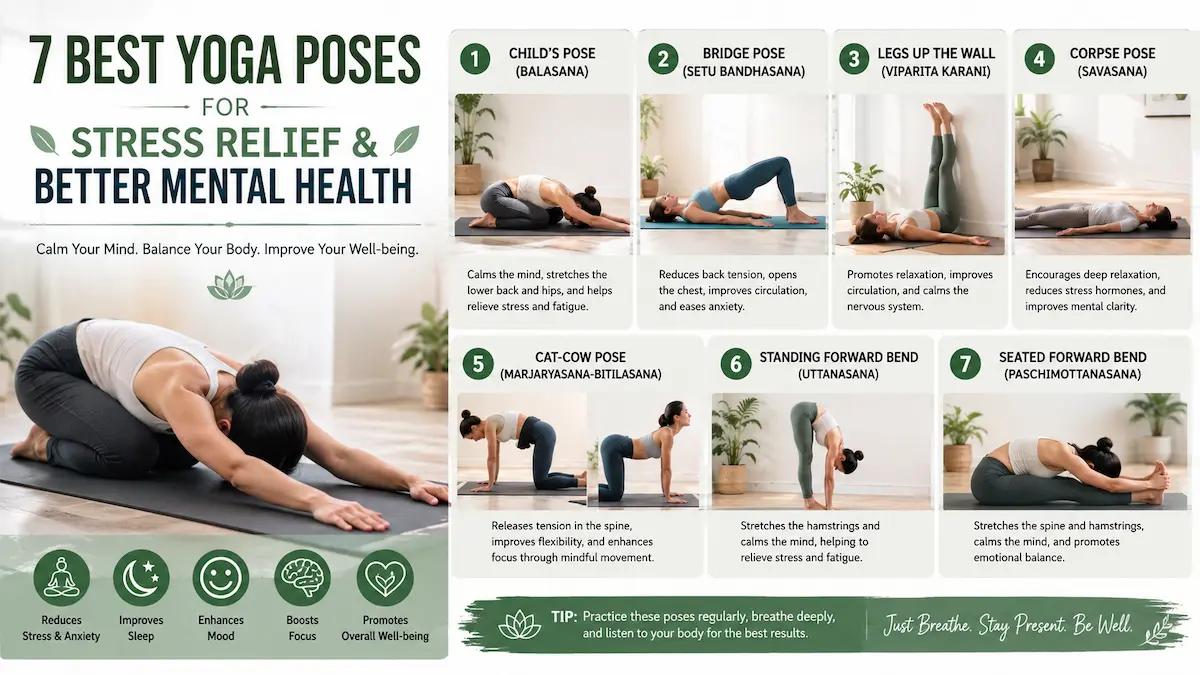
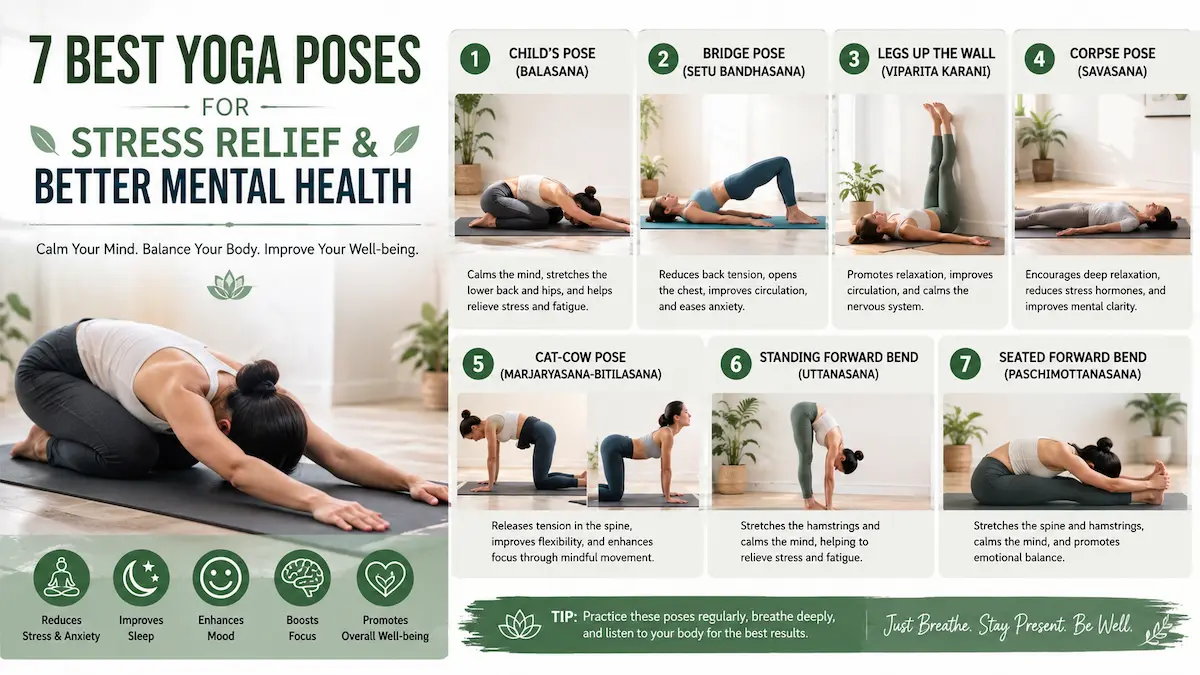
1. Child’s Pose (Balasana)
Child’s Pose is one of the most relaxing yoga postures for reducing stress and anxiety. This gentle resting pose helps release tension in the back, shoulders, and hips while encouraging deep breathing and relaxation.
How to Perform Child’s Pose
Kneel on the floor with your big toes touching.
Sit back on your heels and spread your knees apart.
Stretch your arms forward and lower your forehead to the mat.
Take slow, deep breaths and hold the pose for 1–3 minutes.
Benefits
Calms the mind and nervous system
Relieves stress and fatigue
Stretches the lower back and hips
Encourages mindfulness and relaxation
2. Bridge Pose (Setu Bandhasana)
Bridge Pose is an excellent yoga posture for relieving tension in the body and boosting mood. It gently opens the chest, improves circulation, and helps reduce symptoms of anxiety and mild depression.
How to Perform Bridge Pose
Lie on your back with knees bent and feet flat on the floor.
Place your feet hip-width apart.
Press your feet into the mat and lift your hips toward the ceiling.
Keep your shoulders relaxed and hold for 30–60 seconds.
Benefits
Reduces tension in the spine and back muscles
Improves blood circulation
Opens the chest and lungs
Helps combat stress and anxiety
3. Legs Up the Wall Pose (Viparita Karani)
Legs Up the Wall is a restorative yoga pose that promotes deep relaxation and stress relief. It is particularly beneficial after a long day of work or physical activity.
How to Perform Legs Up the Wall
Sit close to a wall.
Gently swing your legs up the wall while lying on your back.
Allow your arms to rest comfortably by your sides.
Close your eyes and remain in the pose for 5–10 minutes.
Benefits
Reduces stress and anxiety
Improves blood circulation
Relieves tired legs and feet
Calms the nervous system
4. Corpse Pose (Savasana)
Despite its simplicity, Corpse Pose is one of the most powerful yoga poses for mental relaxation. It allows the body and mind to fully absorb the benefits of a yoga session.
How to Perform Corpse Pose
Lie flat on your back with your legs slightly apart.
Rest your arms beside your body with palms facing upward.
Close your eyes and focus on your breathing.
Stay in the pose for 5–10 minutes.
Benefits
Promotes deep relaxation
Reduces stress hormones
Improves concentration and focus
Enhances mental clarity
5. Cat-Cow Pose (Marjaryasana-Bitilasana)
Cat-Cow Pose is a gentle flowing movement that helps release tension stored in the spine and improves body awareness. It also encourages mindful breathing, which can significantly reduce stress levels.
How to Perform Cat-Cow Pose
Begin on your hands and knees in a tabletop position.
Inhale and arch your back while lifting your head and tailbone (Cow Pose).
Exhale and round your spine while tucking your chin (Cat Pose).
Continue flowing between the two positions for 1–2 minutes.
Benefits
Releases spinal tension
Improves posture and flexibility
Reduces mental fatigue
Enhances focus and mindfulness
6. Standing Forward Bend (Uttanasana)
Standing Forward Bend is a calming yoga pose that helps quiet the mind while stretching the entire back of the body. The inversion effect increases blood flow to the brain, promoting relaxation.
How to Perform Standing Forward Bend
Stand with your feet hip-width apart.
Slowly bend forward from the hips.
Let your head and neck relax completely.
Hold the position for 30–60 seconds while breathing deeply.
Benefits
Relieves stress and anxiety
Stretches hamstrings and lower back
Promotes mental calmness
Improves circulation to the brain
7. Seated Forward Bend (Paschimottanasana)
Seated Forward Bend is a soothing yoga posture that helps calm the nervous system and release physical tension. It is often recommended for reducing anxiety and improving emotional balance.
How to Perform Seated Forward Bend
Sit with your legs extended straight in front of you.
Inhale and lengthen your spine.
Exhale and bend forward from the hips.
Reach toward your feet and hold for several breaths.
Benefits
Reduces stress and mental tension
Stretches the spine and hamstrings
Encourages relaxation
Improves focus and emotional well-being
Additional Tips for Using Yoga to Reduce Stress
To maximize the mental health benefits of yoga:
Practice yoga consistently, even if only for 10–15 minutes daily.
Focus on deep, mindful breathing during each pose.
Create a quiet and comfortable environment for practice.
Combine yoga with meditation for enhanced stress relief.
Listen to your body and avoid pushing beyond your limits.
Conclusion
Yoga is a powerful and natural tool for managing stress, anxiety, and emotional challenges. By incorporating these seven yoga poses into your daily wellness routine, you can improve mental clarity, promote relaxation, and support long-term emotional well-being. Whether you’re a beginner or an experienced practitioner, regular yoga practice can help you develop a healthier mind-body connection and lead a more balanced life.
Start with just a few minutes each day, and you’ll soon experience the calming and restorative benefits that yoga has to offer.