
Fever: Types, Causes, Risk Factors, Symptoms, and When to See a Doctor
Introduction
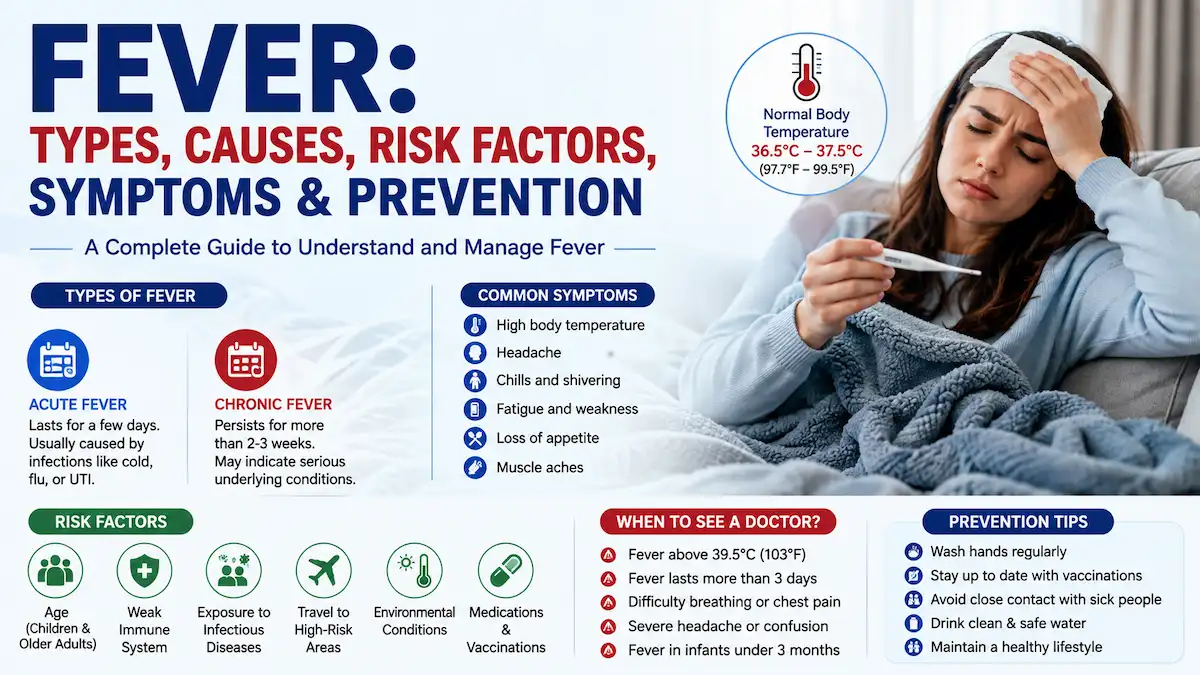
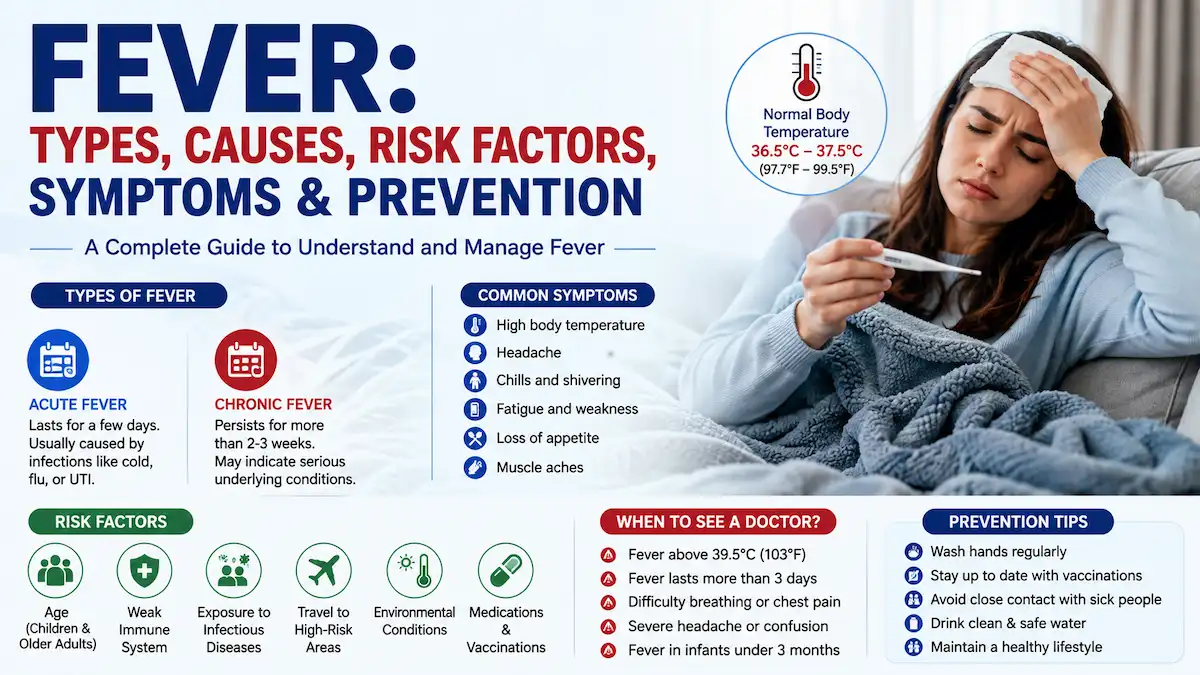
Fever is one of the body’s natural defense mechanisms against infections and illnesses. It occurs when your body temperature rises above the normal range, usually due to an infection, inflammation, or another underlying medical condition. While most fevers are mild and disappear within a few days, some may indicate a serious health problem that requires immediate medical attention.
Understanding the different types of fever, their causes, risk factors, and warning signs can help you take the right steps for timely treatment and recovery.
What Is a Fever?
A fever is generally defined as a body temperature higher than 38°C (100.4°F). It is not a disease itself but rather a symptom that signals your immune system is actively fighting an infection or another health condition.
Common symptoms accompanying fever include:
Chills and shivering
Sweating
Headache
Muscle aches
Weakness or fatigue
Loss of appetite
Dehydration
Increased heart rate
Types of Fever
Depending on its duration and underlying cause, fever can be categorized into the following types.
1. Acute Fever
Acute fever develops suddenly and usually lasts for less than 7 days. It is the most common type and is often associated with viral or bacterial infections.
Common Causes
Common cold
Influenza (flu)
COVID-19
Dengue
Urinary tract infections (UTIs)
Ear infections
Throat infections
Pneumonia
Most cases improve with adequate rest, hydration, and proper medical care.
2. Chronic (Persistent) Fever
A chronic fever continues for more than two to three weeks or repeatedly returns over time. This type of fever may indicate a more serious underlying health condition.
Possible Causes
Tuberculosis (TB)
HIV/AIDS
Autoimmune diseases
Certain cancers such as lymphoma or leukemia
Chronic bacterial infections
Inflammatory disorders
Persistent fever should never be ignored and requires medical evaluation.
Common Causes of Fever
Several medical conditions can trigger fever, including:
Viral infections
Bacterial infections
Fungal infections
Parasitic diseases
Autoimmune disorders
Heat-related illnesses
Medication reactions
Recent vaccinations
Inflammatory diseases
Risk Factors for Developing Fever
Certain individuals are more likely to experience fever due to increased exposure or reduced immunity.
1. Young Children and Older Adults
Infants, young children, and elderly individuals have weaker immune systems, making them more vulnerable to infections that cause fever. High fever in babies under three months requires immediate medical attention.
2. Weak Immune System
People with weakened immunity are at greater risk of frequent or severe fevers. This includes individuals with:
HIV/AIDS
Cancer
Organ transplants
Chronic kidney disease
Autoimmune disorders
Chemotherapy treatment
3. Exposure to Infectious Diseases
Close contact with infected individuals significantly increases the chance of developing fever.
Risk increases in:
Schools
Hospitals
Public transportation
Crowded workplaces
Nursing homes
Maintaining proper hygiene and regular handwashing helps reduce this risk.
4. Travel to High-Risk Areas
Traveling to regions where infectious diseases are common increases the likelihood of developing fever.
Travel-related illnesses include:
Malaria
Dengue fever
Yellow fever
Chikungunya
Vaccinations and preventive medications can lower these risks.
5. Environmental Conditions
Extreme weather conditions can also lead to elevated body temperature.
Examples include:
Heatstroke
Heat exhaustion
Severe dehydration
Hypothermia-related complications
Drinking enough water and avoiding prolonged exposure to extreme temperatures are important preventive measures.
6. Medications and Vaccinations
Some medications and vaccines may temporarily raise body temperature as part of the body’s normal immune response.
Examples include:
Childhood immunizations
COVID-19 vaccines
Influenza vaccine
Certain antibiotics
Cancer medications
These fevers are usually mild and short-lived.
When Should You See a Doctor?
Seek immediate medical attention if fever is accompanied by:
Temperature above 39.5°C (103°F) in adults
Fever lasting more than three days
Difficulty breathing
Persistent vomiting
Severe headache
Confusion or seizures
Chest pain
Rash
Stiff neck
Severe dehydration
Fever in infants younger than three months
Prompt diagnosis can help prevent serious complications.
Tips to Manage Fever at Home
Most mild fevers can be managed safely at home by following these simple measures:
Drink plenty of water and fluids.
Get adequate rest.
Wear lightweight clothing.
Eat nutritious, easy-to-digest foods.
Use fever-reducing medicines only as advised by a healthcare professional.
Monitor your body temperature regularly.
Avoid self-medicating with antibiotics unless prescribed by a doctor.
How to Prevent Fever
Although not all fevers can be prevented, you can reduce your risk by:
Washing your hands frequently.
Maintaining good personal hygiene.
Staying up to date with vaccinations.
Avoiding close contact with sick individuals.
Drinking clean and safe water.
Eating properly cooked food.
Managing chronic health conditions effectively.
Conclusion
Fever is a common symptom that usually indicates your body’s immune system is fighting an infection. While most fevers resolve without complications, persistent or very high fever may signal a serious medical condition that requires professional care. Understanding the different types of fever, recognizing the associated risk factors, and knowing when to seek medical attention can help ensure timely treatment and faster recovery. If a fever is severe, lasts for several days, or is accompanied by alarming symptoms, consult a healthcare provider without delay.
Disclaimer: This article is intended for educational purposes only and should not replace professional medical advice, diagnosis, or treatment. Always consult a qualified healthcare provider if you have concerns about fever or other medical symptoms.