
Tuberculosis (TB): Symptoms, Causes, Treatment, Prevention, and Diagnosis
Introduction
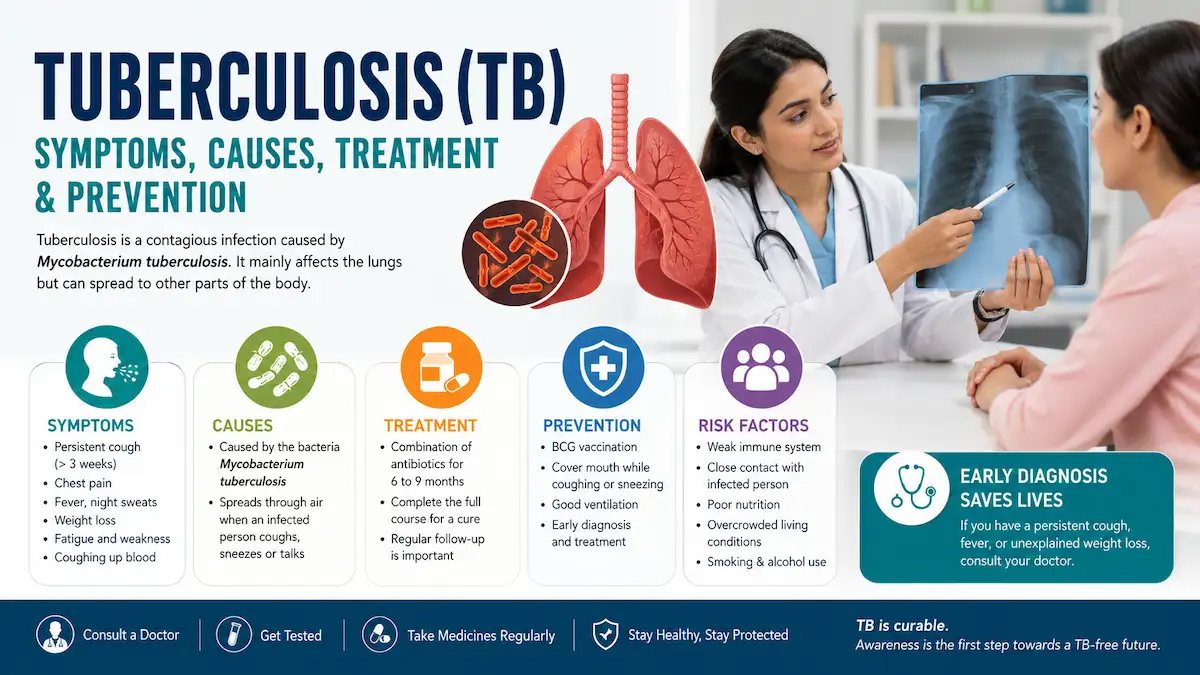
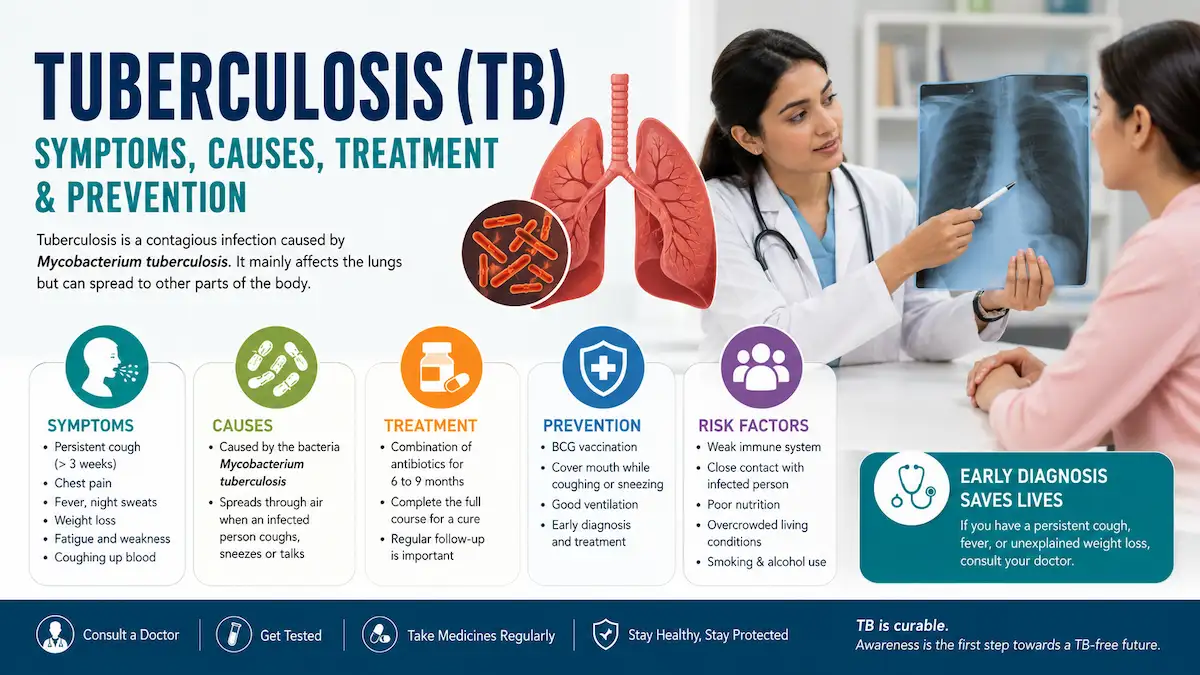
Tuberculosis (TB) is a serious bacterial infection caused by Mycobacterium tuberculosis. Although it primarily affects the lungs (pulmonary tuberculosis), the infection can also spread to other parts of the body, including the brain, kidneys, spine, and lymph nodes. Despite being preventable and curable, tuberculosis remains one of the leading infectious diseases worldwide, especially in developing countries.
Early diagnosis and proper treatment play a crucial role in preventing complications and reducing the spread of the disease. This guide explains the symptoms, causes, diagnosis, treatment, prevention, and risk factors of tuberculosis.
What Is Tuberculosis?
Tuberculosis is an airborne infectious disease that spreads when a person with active TB of the lungs coughs, sneezes, laughs, or talks, releasing tiny droplets containing the bacteria into the air. People who inhale these bacteria may become infected.
There are two main types of tuberculosis:
Latent Tuberculosis Infection (LTBI)
In latent TB, the bacteria remain inactive inside the body. People do not experience symptoms and cannot spread the infection. However, the bacteria may become active later, especially if the immune system weakens.
Active Tuberculosis Disease
Active TB occurs when the bacteria multiply and cause illness. Individuals with active pulmonary TB can transmit the disease to others and require immediate medical treatment.
Tuberculosis Symptoms
The symptoms of tuberculosis vary depending on the organs affected. Lung tuberculosis is the most common form.
Common Tuberculosis Symptoms
Persistent cough lasting more than three weeks
Chest pain or discomfort
Coughing up blood or blood-stained mucus
Excessive mucus production
Night sweats
Unexplained weight loss
Loss of appetite
Constant fatigue and weakness
Chills
Symptoms of Tuberculosis Outside the Lungs
When TB affects other organs, symptoms may include:
Swollen lymph nodes
Persistent back pain (spinal TB)
Severe headaches or confusion (brain TB)
Blood in urine (kidney TB)
Joint pain and swelling
Abdominal pain and digestive problems
If you experience persistent cough, unexplained weight loss, or prolonged fever, consult a healthcare provider promptly for evaluation.
Causes of Tuberculosis
Tuberculosis is caused by the bacterium Mycobacterium tuberculosis.
The infection spreads through the air when a person with active TB coughs, sneezes, speaks, or sings. People nearby may inhale the bacteria and become infected.
It is important to understand that TB does not spread through:
Handshakes
Hugging
Sharing food or utensils
Touching common surfaces
Kissing in most everyday situations
The disease usually requires prolonged close contact with an infected individual for transmission.
Risk Factors for Tuberculosis
Although anyone can develop tuberculosis, certain factors increase the risk.
Weak Immune System
People with weakened immunity have a higher chance of developing active TB, including those with:
HIV/AIDS
Chronic kidney disease
Organ transplants
Autoimmune disorders
Long-term steroid therapy
Close Contact
Living or working closely with someone who has active tuberculosis significantly increases exposure.
Malnutrition
Poor nutrition weakens the immune system, making it harder for the body to fight infection.
Overcrowded Living Conditions
Crowded housing, prisons, refugee camps, and homeless shelters increase the risk of transmission.
Smoking and Alcohol Use
Smoking damages the lungs, while excessive alcohol consumption weakens immunity, increasing susceptibility to TB.
How Tuberculosis Is Diagnosed
Doctors use several tests to diagnose tuberculosis accurately.
Medical History and Physical Examination
The doctor evaluates symptoms, medical history, and possible exposure to TB.
Tuberculin Skin Test (Mantoux Test)
A small amount of testing solution is injected under the skin to determine if the body has been exposed to TB bacteria.
TB Blood Tests
Blood tests help identify latent tuberculosis infection and are commonly used when skin testing is unsuitable.
Chest X-ray
Chest imaging helps detect lung damage or abnormalities associated with pulmonary TB.
Sputum Examination
Laboratory testing of mucus coughed up from the lungs can confirm active tuberculosis and determine drug sensitivity.
Tuberculosis Treatment
Tuberculosis is both treatable and curable when medications are taken exactly as prescribed.
The standard treatment usually involves a combination of antibiotics taken for 6 to 9 months.
Common anti-tuberculosis medicines include:
Isoniazid
Rifampicin (Rifampin)
Ethambutol
Pyrazinamide
Patients should never stop treatment early, even if symptoms improve. Completing the full course is essential to eliminate the bacteria completely and reduce the risk of relapse and drug resistance.
Drug-Resistant Tuberculosis
Drug-resistant tuberculosis develops when TB bacteria become resistant to one or more medications.
This often occurs because of:
Incomplete treatment
Skipping medication doses
Incorrect medication use
Previous TB treatment failure
Drug-resistant TB requires specialized treatment with second-line medications and often lasts 9 to 24 months, depending on the type and severity of resistance.
Tuberculosis Prevention
Several measures can reduce the spread of tuberculosis.
BCG Vaccination
The Bacillus Calmette-Guérin (BCG) vaccine provides protection against severe forms of TB in children and is included in immunization programs in many countries.
Good Respiratory Hygiene
Cover your mouth and nose while coughing or sneezing.
Wear a mask if diagnosed with active TB.
Dispose of tissues properly.
Wash your hands regularly.
Early Diagnosis
Prompt testing and treatment reduce the spread of tuberculosis within families and communities.
Treating Latent TB
Individuals with latent TB infection may receive preventive medication to lower the risk of developing active disease.
Improve Ventilation
Fresh air and proper ventilation help reduce the concentration of airborne bacteria in indoor environments.
Possible Complications of Tuberculosis
Without treatment, tuberculosis can lead to serious health problems, including:
Permanent lung damage
Respiratory failure
Spinal deformities
Kidney damage
Meningitis
Heart complications
Widespread infection affecting multiple organs
Early treatment greatly reduces the risk of these complications.
When to See a Doctor
Seek medical attention immediately if you experience:
A cough lasting longer than three weeks
Coughing up blood
Persistent fever
Night sweats
Unexplained weight loss
Difficulty breathing
Chest pain that does not improve
People who have been exposed to someone with active tuberculosis should also undergo medical screening, even if they have no symptoms.
Frequently Asked Questions (FAQs)
Is tuberculosis contagious?
Yes. Active pulmonary tuberculosis spreads through the air when an infected person coughs, sneezes, or speaks. Latent TB is not contagious.
Can tuberculosis be cured?
Yes. Most cases of tuberculosis can be completely cured with the correct combination of antibiotics taken for the full prescribed duration.
How long does TB treatment last?
Standard treatment generally lasts between 6 and 9 months, although drug-resistant TB may require much longer treatment.
Can tuberculosis come back?
Yes. TB can recur if treatment is not completed properly or if a person becomes infected again.
Who is most at risk for tuberculosis?
People with weakened immune systems, healthcare workers, close contacts of TB patients, older adults, individuals with diabetes, smokers, and those living in overcrowded environments have a higher risk.
Conclusion
Tuberculosis is a potentially serious but preventable and curable infectious disease. Recognizing the symptoms of tuberculosis, understanding its causes, and seeking early medical care can significantly improve treatment outcomes. Completing the full course of prescribed medication, maintaining good respiratory hygiene, and following preventive measures are essential for controlling the spread of TB. With timely diagnosis and proper treatment, most people recover fully and can return to healthy, active lives.
Disclaimer: This article is for educational purposes only and should not replace professional medical advice. If you suspect tuberculosis or have persistent respiratory symptoms, consult a qualified healthcare professional for diagnosis and treatment.