
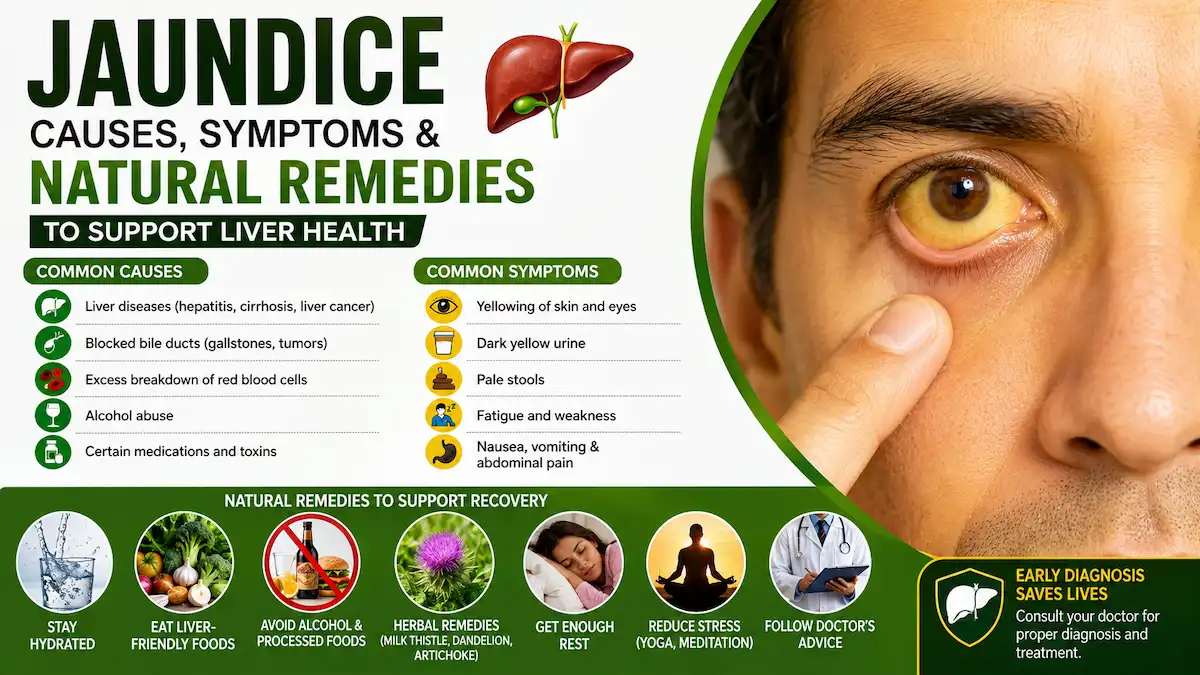
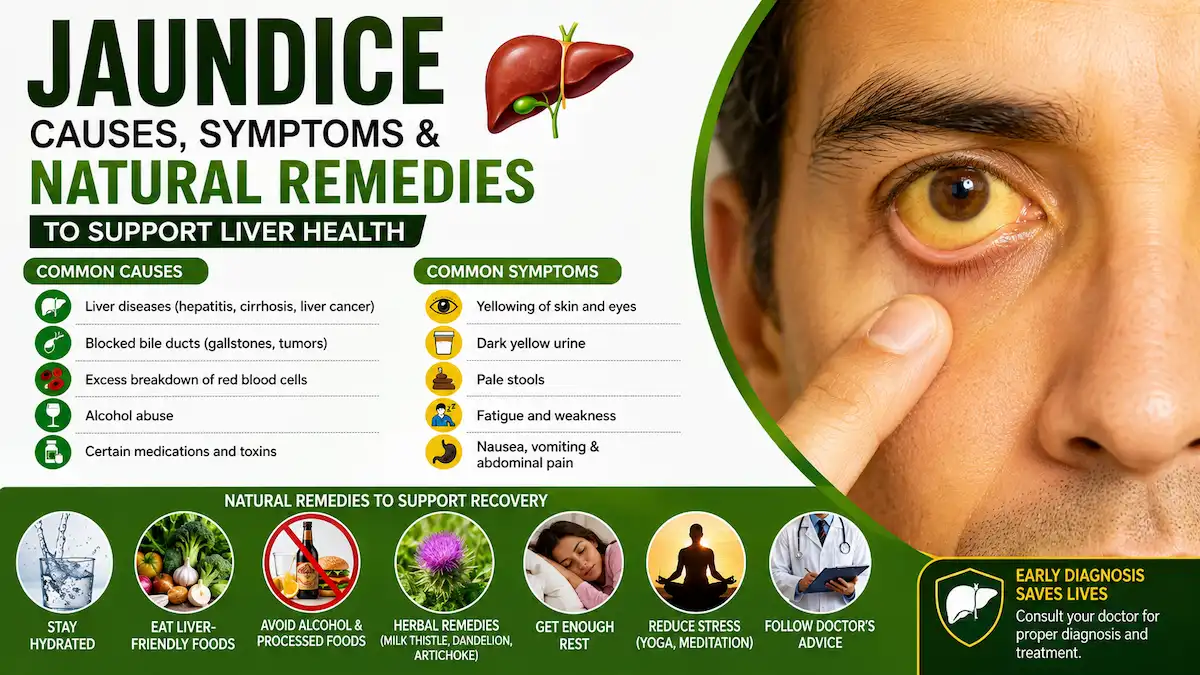
Jaundice: Causes, Symptoms, and 7 Natural Remedies to Support Liver Health
What Is Jaundice?
Jaundice is a common medical condition that causes the skin, eyes, and mucous membranes to turn yellow due to a buildup of bilirubin, a yellow pigment produced during the normal breakdown of red blood cells.
Under normal conditions, the liver filters bilirubin from the bloodstream and removes it through bile. However, when the liver is damaged or the flow of bile is blocked, bilirubin accumulates in the body, leading to jaundice.
Jaundice is not a disease itself but a symptom of an underlying health condition. Identifying the cause early is essential to prevent serious complications and protect liver health.
Common Causes of Jaundice
Several medical conditions can interfere with the body’s ability to process bilirubin. The most common causes include:
1. Liver Diseases
Liver disorders such as hepatitis, cirrhosis, and liver cancer reduce the liver’s ability to remove bilirubin efficiently.
2. Blocked Bile Ducts
Gallstones, tumors, or inflammation may block the bile ducts, preventing bilirubin from leaving the liver.
3. Excessive Breakdown of Red Blood Cells
Conditions like hemolytic anemia destroy red blood cells faster than normal, producing more bilirubin than the liver can process.
4. Alcohol Abuse
Long-term alcohol consumption damages liver cells and increases the risk of jaundice and other liver diseases.
5. Certain Medications and Toxins
Some medications, herbal supplements, and toxic chemicals may affect liver function and contribute to jaundice.
Symptoms of Jaundice
The symptoms of jaundice vary depending on the underlying cause, but the most common signs include:
Yellowing of the skin and the whites of the eyes
Dark yellow or brown urine
Pale or clay-colored stools
Fatigue and weakness
Abdominal pain or swelling
Nausea and vomiting
Loss of appetite
Itchy skin (common in liver and bile duct disorders)
If these symptoms appear suddenly or worsen, seek medical attention immediately.
7 Natural Remedies to Help Support Recovery from Jaundice
While medical treatment is the primary approach for managing jaundice, certain lifestyle changes and natural remedies may support liver function during recovery. Always consult your healthcare provider before trying any home remedy.
1. Stay Well Hydrated
Drink plenty of water throughout the day to help the body eliminate toxins and maintain healthy liver function. Coconut water, fresh fruit juices, and herbal teas can also help maintain hydration.
2. Eat Liver-Friendly Foods
A balanced diet rich in nutrients supports liver repair. Include foods such as:
These foods contain antioxidants and compounds that promote healthy liver function.
3. Avoid Alcohol and Processed Foods
Alcohol places extra stress on the liver and should be completely avoided during recovery. Limit processed foods, sugary snacks, fried foods, and beverages containing artificial additives.
4. Consider Herbal Supplements Carefully
Some herbs have traditionally been used to support liver health, including:
Milk thistle
Dandelion root
Artichoke leaf
Although these herbs may offer benefits, scientific evidence is mixed. Always speak with a healthcare professional before taking herbal supplements, especially if you are on medication.
5. Get Enough Rest
Adequate sleep allows the liver and the rest of the body to recover more efficiently. Aim for 7–9 hours of quality sleep each night.
6. Reduce Stress
Chronic stress can affect overall health, including liver function. Practice stress-management techniques such as:
Yoga
Meditation
Deep breathing exercises
Gentle walking
Mindfulness
These activities can improve both physical and mental well-being.
7. Follow Your Doctor’s Treatment Plan
Natural remedies should never replace medical care. A healthcare provider can determine the exact cause of jaundice through blood tests and imaging studies, then recommend the most effective treatment.
Follow prescribed medications, attend follow-up appointments, and report any worsening symptoms immediately.
Tips to Prevent Jaundice
You can reduce your risk of jaundice by following healthy lifestyle habits:
Eat a nutritious, balanced diet.
Avoid excessive alcohol consumption.
Maintain a healthy body weight.
Get vaccinated against hepatitis A and B when recommended.
Practice good hygiene and consume clean food and water.
Avoid sharing needles and practice safe sex to reduce the risk of viral hepatitis.
Use medications only as directed.
When Should You See a Doctor?
Seek immediate medical attention if jaundice is accompanied by:
Severe abdominal pain
High fever
Persistent vomiting
Confusion or difficulty staying awake
Bleeding or easy bruising
Rapid worsening of yellow skin or eyes
Prompt diagnosis can help prevent serious liver complications.
Conclusion
Jaundice is a warning sign that something may be affecting your liver or bile ducts. While staying hydrated, eating a liver-friendly diet, getting enough rest, and managing stress can support recovery, proper medical evaluation is essential to identify and treat the underlying cause.
By combining professional medical care with healthy lifestyle habits, most people can improve liver function, recover more effectively, and reduce the risk of future liver problems.