
Gallstones: Symptoms, Causes, Treatment, Prevention & Best Yoga Poses
Learn about gallstones, including symptoms, causes, risk factors, treatment options, prevention tips, and yoga poses that may support digestive health and relief.
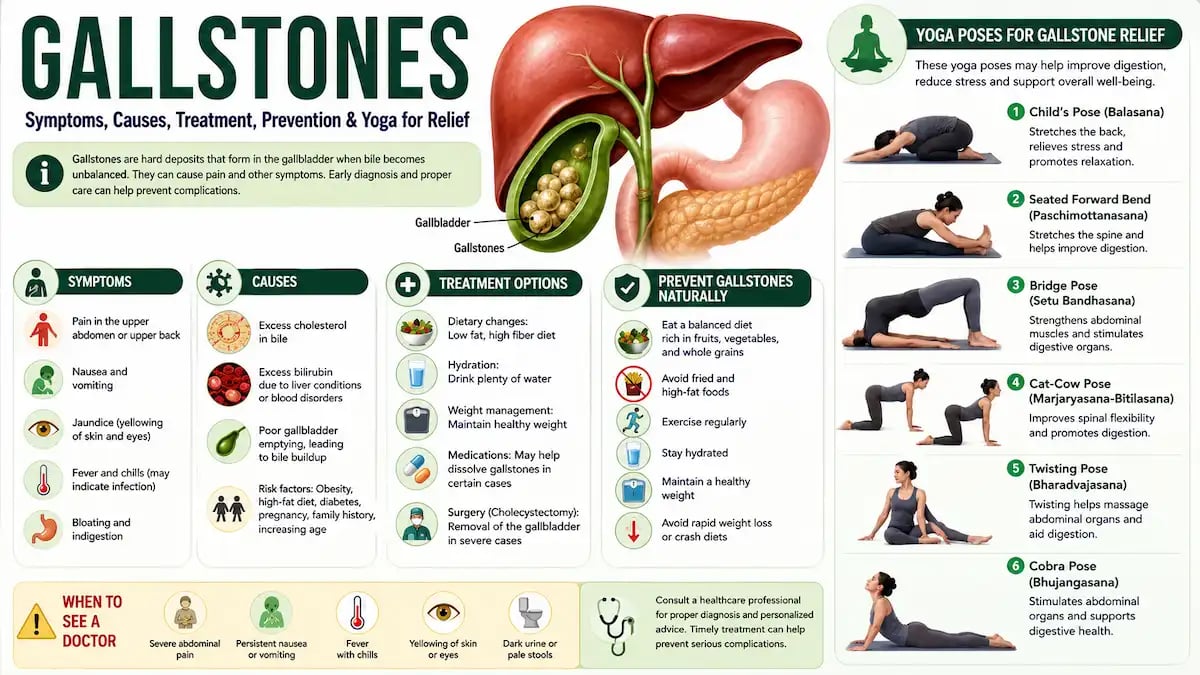
Gallstones: Symptoms, Causes, Treatment, Prevention, and Yoga for Relief
What Are Gallstones?
Gallstones are hard, stone-like deposits that form inside the gallbladder, a small pear-shaped organ located beneath the liver. The gallbladder stores bile, a digestive fluid produced by the liver that helps break down fats in the small intestine.
When the chemical composition of bile becomes unbalanced, substances such as cholesterol or bilirubin can crystallize and form gallstones. These stones may be as tiny as a grain of sand or as large as a golf ball. While some people have gallstones without symptoms, others may experience severe pain and complications that require medical treatment.
Gallstones typically do not disappear on their own. In many cases, doctors recommend gallbladder removal surgery, known as a cholecystectomy, especially when gallstones cause recurring symptoms or complications. It is one of the most commonly performed surgical procedures worldwide.
Common Symptoms of Gallstones
Many people with gallstones experience no symptoms. However, when a gallstone blocks a bile duct, symptoms can appear suddenly and may include:
1. Abdominal Pain
Sharp pain in the upper right abdomen
Pain in the center of the stomach
Pain that may spread to the upper back or right shoulder
2. Nausea and Vomiting
Digestive discomfort often accompanies gallstone attacks.
3. Jaundice
A blocked bile duct can cause yellowing of the skin and eyes due to a buildup of bilirubin.
4. Fever and Chills
These symptoms may indicate an infection of the gallbladder and require immediate medical attention.
5. Indigestion and Bloating
Some individuals experience gas, bloating, and difficulty digesting fatty foods.
What Causes Gallstones?
Gallstones develop when substances in bile become imbalanced. Common causes include:
Excess Cholesterol
Too much cholesterol in bile can form cholesterol crystals, which gradually grow into stones.
Excess Bilirubin
Certain liver disorders, infections, and blood-related conditions can increase bilirubin production and contribute to gallstone formation.
Poor Gallbladder Function
If the gallbladder does not empty completely, bile can become concentrated and form stones.
Additional Risk Factors
Gallstone Treatment Options
Treatment depends on the severity of symptoms and the size of the gallstones.
Dietary Changes
A healthy diet low in saturated fats and high in fiber may help reduce the risk of gallstone formation.
Stay Hydrated
Drinking sufficient water supports healthy digestion and bile flow.
Weight Management
Gradual and healthy weight loss can lower the risk of developing gallstones.
Medications
Doctors may prescribe medications that help dissolve certain types of gallstones, although this process can take months or years.
Gallbladder Removal Surgery (Cholecystectomy)
For recurrent pain or complications, surgical removal of the gallbladder is considered the most effective treatment. Most people can live normally without a gallbladder.
How to Prevent Gallstones Naturally
Following healthy lifestyle habits can help reduce the risk of gallstones:
Eat a balanced diet rich in fruits, vegetables, and whole grains
Avoid excessive consumption of fried and fatty foods
Maintain a healthy body weight
Exercise regularly
Stay properly hydrated
Avoid rapid crash diets and sudden weight loss
Best Yoga Poses for Gallstone Relief
Yoga cannot cure gallstones, but it may help improve digestion, reduce stress, and support overall digestive health. Always consult your healthcare provider before starting any exercise routine.
1. Child's Pose (Balasana)
This relaxing pose gently stretches the back and abdomen while reducing stress and tension.
2. Seated Forward Bend (Paschimottanasana)
Helps improve digestive function and stretches the spine and abdominal area.
3. Bridge Pose (Setu Bandhasana)
Strengthens abdominal muscles and stimulates digestive organs.
4. Cat-Cow Pose (Marjaryasana-Bitilasana)
Improves spinal flexibility and promotes healthy digestion through gentle abdominal movement.
5. Twisting Poses (Bharadvajasana)
Twisting movements massage abdominal organs and may support digestive processes.
6. Cobra Pose (Bhujangasana)
Stimulates abdominal organs, improves posture, and enhances circulation in the digestive region.
When to See a Doctor
Seek immediate medical attention if you experience:
Severe abdominal pain
Persistent nausea or vomiting
Fever with chills
Yellowing of the skin or eyes
Dark urine or pale stools
Early diagnosis and treatment can help prevent serious complications such as gallbladder infection, pancreatitis, or bile duct blockage.
Conclusion
Gallstones are a common digestive condition that can range from symptom-free to extremely painful. Understanding the symptoms, causes, treatment options, and preventive measures can help protect your digestive health. While lifestyle changes and yoga may support overall well-being, medical evaluation is essential for proper diagnosis and treatment. If gallstone symptoms occur, consult a healthcare professional promptly to avoid complications and receive appropriate care.
Related Stories
MicroNews © 2025
MicroNews empowers the generation of tomorrow for a brighter future and hope for every individual.
Thanks For Touch with us
We care about your data in our privacy policy.
Popular Post
Top 10 Calcium-Rich Vegetables for Strong Bones & Better Health
Patala Garuda (Rauvolfia serpentina): Health Benefits, Ayurvedic Uses
Ganga Siuli (Parijata Tree): Benefits, Uses, and Medicinal Properties
Freelancing Explained: How to Start, Earn, and Succeed as a Freelancer
Turmeric Benefits: Uses, Nutrition, Ayurveda Importance & Side Effects
Science of Longevity: New Research Reveals How Diet May Shape Lifespan