
Constipation: Causes, Symptoms, Natural Remedies, and Effective Treatment
Introduction
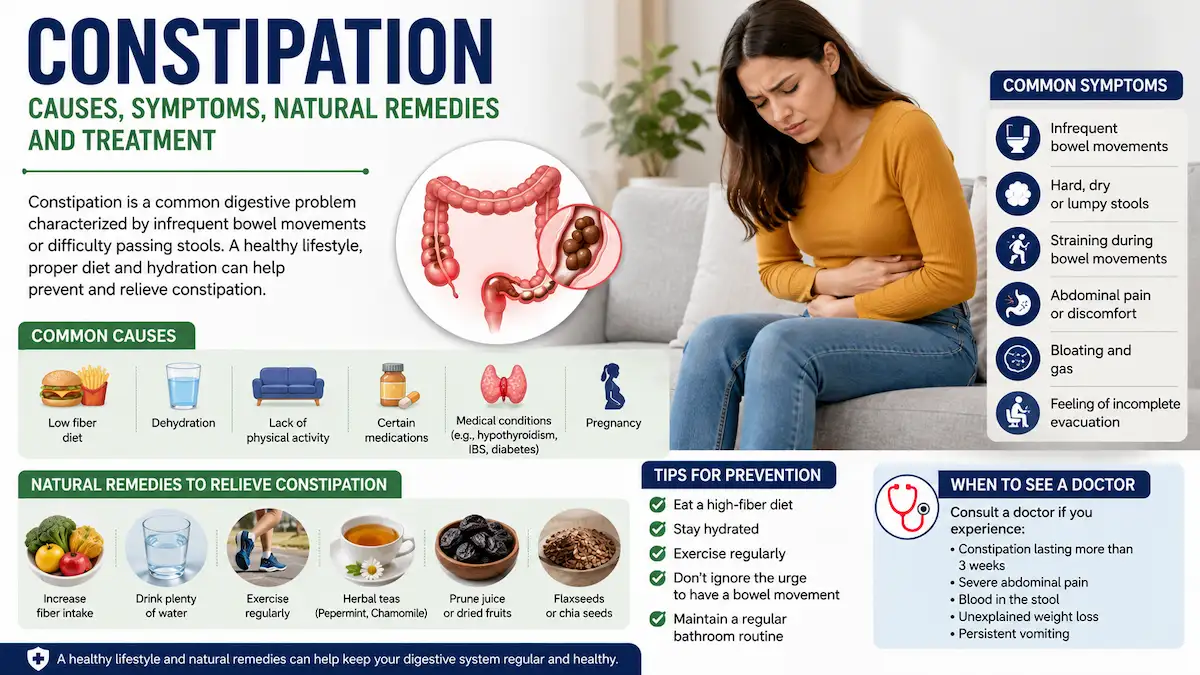
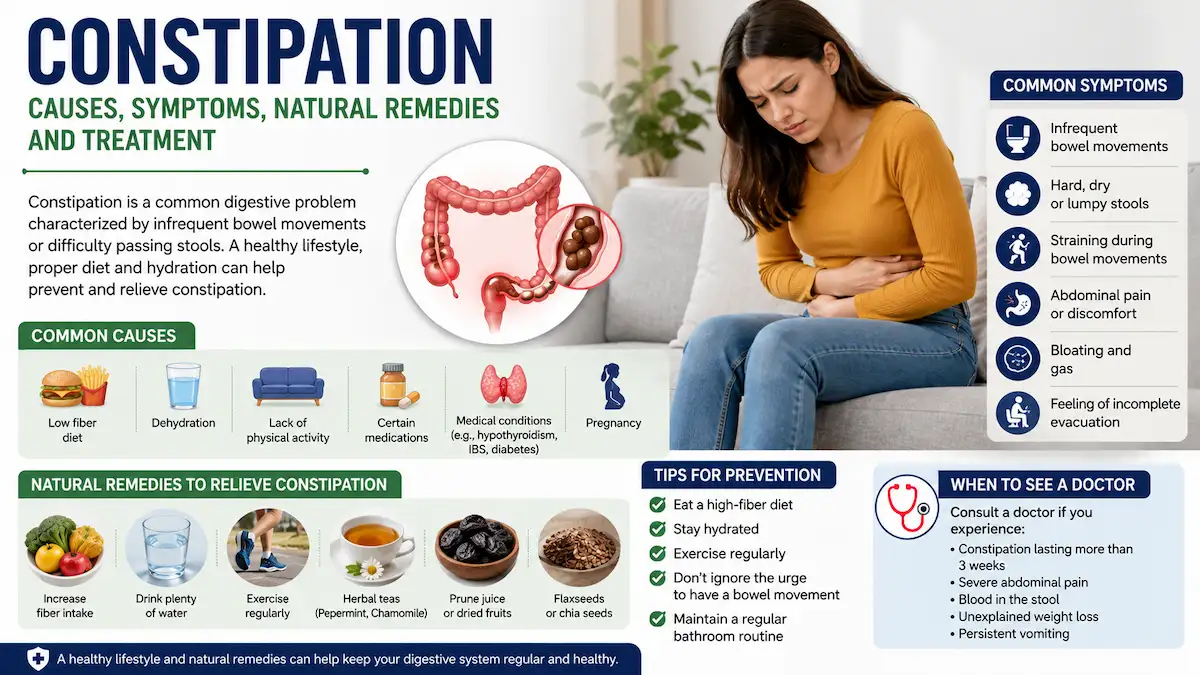
Constipation is one of the most common digestive problems, affecting people of all ages. It occurs when bowel movements become infrequent or stools are difficult to pass. While occasional constipation is usually not a cause for concern, chronic constipation can interfere with your daily life and may indicate an underlying health condition.
Fortunately, simple lifestyle changes, a balanced diet, and proper hydration can often provide effective constipation relief. Understanding the causes, symptoms, and treatment options can help you maintain a healthy digestive system.
What Is Constipation?
Constipation is a condition in which a person has fewer than three bowel movements per week or experiences hard, dry stools that are difficult or painful to pass. It may also cause a feeling that the bowel has not emptied completely after a movement.
Although constipation is common, it should not be ignored if it becomes persistent or is accompanied by severe symptoms.
Constipation Symptoms
The signs and symptoms of constipation can vary from person to person but commonly include:
Infrequent bowel movements
Hard, dry, or lumpy stools
Difficulty or straining during bowel movements
A feeling of incomplete bowel emptying
Abdominal pain or discomfort
Bloating and excessive gas
A feeling of fullness or heaviness in the stomach
If constipation lasts for several weeks or is accompanied by blood in the stool, unexplained weight loss, or severe abdominal pain, consult a healthcare provider immediately.
What Causes Constipation?
Constipation can result from a variety of lifestyle, dietary, and medical factors. Common causes include:
Low Fiber Diet
A diet lacking fruits, vegetables, whole grains, and legumes reduces stool bulk, making bowel movements more difficult.
Dehydration
Not drinking enough water can cause stools to become hard and dry, making them difficult to pass.
Lack of Physical Activity
A sedentary lifestyle slows intestinal movement, increasing the risk of constipation.
Ignoring the Urge to Have a Bowel Movement
Regularly delaying bathroom visits can lead to stool becoming harder and more difficult to pass.
Certain Medications
Some medications, including pain relievers, iron supplements, antidepressants, and antacids containing calcium or aluminum, may contribute to constipation.
Medical Conditions
Constipation may also be associated with health conditions such as:
Hypothyroidism
Irritable Bowel Syndrome (IBS)
Neurological disorders
Pregnancy
Colon or rectal disorders
Natural Remedies for Constipation
Many people find relief through natural lifestyle changes before needing medication. Here are some effective ways to relieve constipation naturally.
1. Increase Your Fiber Intake
Fiber adds bulk to stool and helps it move more easily through the digestive tract. Adults should aim for approximately 25–38 grams of fiber each day.
Good sources of fiber include:
Apples and pears
Berries
Leafy green vegetables
Broccoli
Oats
Brown rice
Whole wheat bread
Beans
Increase fiber gradually and drink plenty of water to avoid bloating.
2. Drink Plenty of Water
Staying hydrated is essential for healthy digestion. Drinking enough water softens stools and supports regular bowel movements.
Aim for at least 2–3 liters of fluids daily unless advised otherwise by your healthcare provider.
3. Exercise Regularly
Physical activity stimulates the muscles of the digestive tract and encourages regular bowel movements.
Helpful exercises include:
Walking
Jogging
Cycling
Yoga
Stretching exercises
Even a 20–30 minute walk each day can improve digestive health.
4. Develop Healthy Bathroom Habits
Never ignore the urge to have a bowel movement. Try using the bathroom at the same time each day, especially after meals, to establish a healthy routine.
Avoid prolonged straining, and allow yourself enough time without rushing.
5. Try Natural Laxatives
Certain natural remedies may provide temporary constipation relief, including:
Warm water with lemon
Prune juice
Aloe vera juice (only when recommended by a healthcare professional)
Flaxseed
Psyllium husk
Herbal teas such as peppermint or chamomile
Always consult a healthcare provider before using herbal supplements regularly.
Medical Treatment for Constipation
If lifestyle changes are not effective, your healthcare provider may recommend:
Fiber supplements
Stool softeners
Osmotic laxatives
Stimulant laxatives
Prescription medications for chronic constipation
Treatment depends on the underlying cause and should only be used under medical guidance.
When Should You See a Doctor?
Seek medical attention if you experience:
Constipation lasting longer than three weeks
Severe abdominal pain
Blood in the stool
Unexplained weight loss
Persistent vomiting
Pencil-thin stools
Constipation that repeatedly returns despite lifestyle changes
Early diagnosis can help identify any underlying medical condition requiring treatment.
Tips to Prevent Constipation
You can reduce your risk of constipation by following these healthy habits:
Eat a high-fiber diet every day
Drink plenty of water
Exercise regularly
Avoid processed and low-fiber foods
Respond promptly to the urge to have a bowel movement
Maintain a healthy daily routine
Conclusion
Constipation is a common but manageable digestive condition. In many cases, increasing fiber intake, staying hydrated, exercising regularly, and developing healthy bathroom habits can provide significant relief. However, persistent or severe constipation should always be evaluated by a healthcare professional to rule out underlying medical conditions. Taking proactive steps toward digestive health can improve bowel regularity and enhance your overall well-being.