
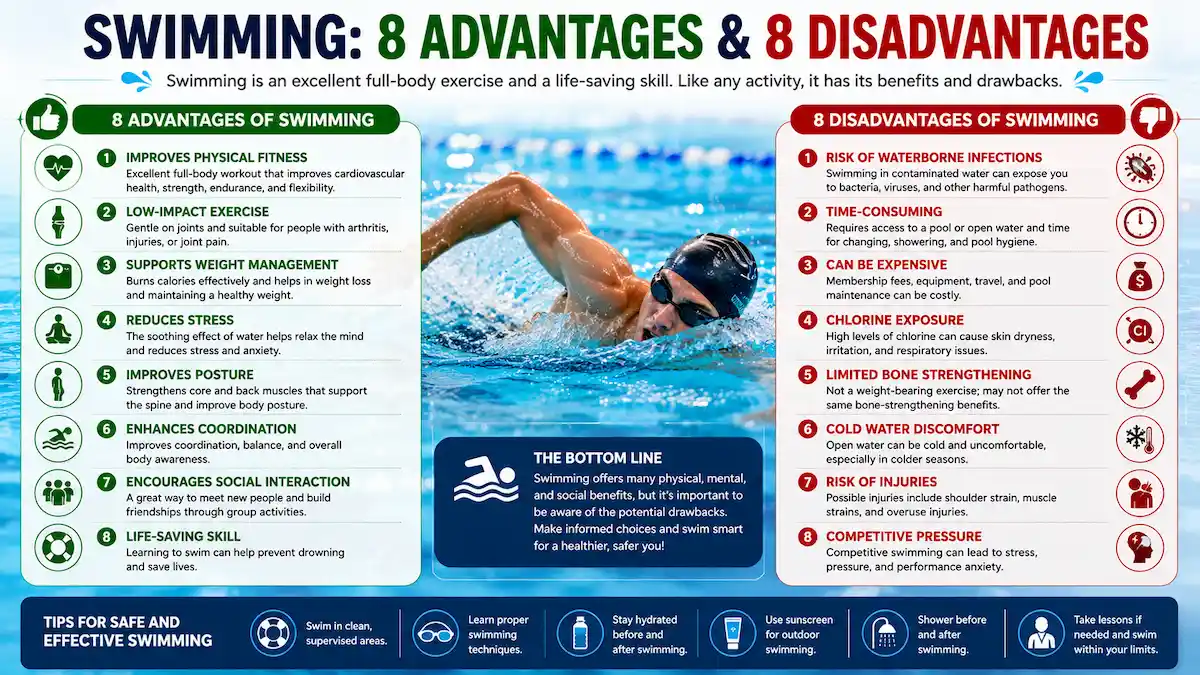
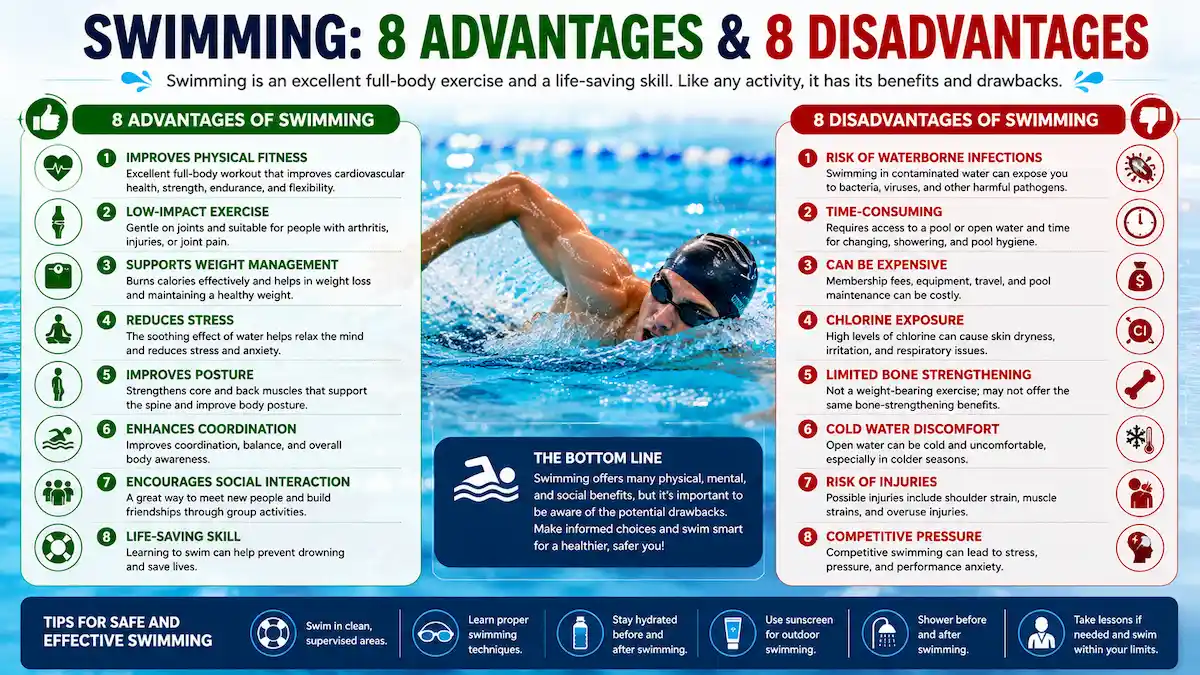
Swimming: 8 Advantages and 8 Disadvantages You Should Know
Swimming is one of the most popular forms of exercise and recreation worldwide. Whether you’re swimming for fitness, relaxation, competition, or fun, this water-based activity offers numerous physical and mental health benefits. However, like any sport or exercise, swimming also has certain drawbacks that should be considered.
In this article, we’ll explore the top advantages and disadvantages of swimming to help you decide whether it’s the right activity for your lifestyle and fitness goals.
What Is Swimming?
Swimming is a full-body physical activity that involves moving through water using different strokes such as freestyle, breaststroke, backstroke, and butterfly. It is widely recognized as one of the best cardiovascular exercises because it engages multiple muscle groups while putting minimal stress on the joints.
8 Major Advantages of Swimming
1. Improves Overall Physical Fitness
Swimming provides a complete body workout that targets almost every major muscle group. It helps improve cardiovascular health, muscular strength, endurance, flexibility, and balance.
Benefits:
Strengthens muscles
Improves heart health
Increases stamina
Enhances flexibility
Regular swimming can significantly boost your overall fitness levels.
2. Low-Impact Exercise
One of the biggest benefits of swimming is that it is a low-impact activity. The buoyancy of water reduces pressure on joints, bones, and muscles.
Ideal For:
People with arthritis
Seniors
Individuals recovering from injuries
Those with joint pain
Swimming allows people to stay active without putting excessive strain on their bodies.
3. Supports Weight Loss and Weight Management
Swimming burns a significant number of calories, making it an excellent exercise for weight management. The number of calories burned depends on factors such as intensity, stroke type, and body weight.
Benefits:
Promotes fat loss
Boosts metabolism
Helps maintain a healthy weight
Combined with a balanced diet, swimming can be an effective weight-loss strategy.
4. Reduces Stress and Improves Mental Health
Swimming is known for its calming and therapeutic effects. The rhythmic movement and soothing sensation of water help reduce stress and anxiety.
Mental Health Benefits:
Reduces stress hormones
Improves mood
Promotes relaxation
Enhances mental well-being
Many people use swimming as a natural way to unwind after a busy day.
5. Improves Posture
Swimming strengthens the muscles that support the spine, shoulders, and core. This can help improve posture and reduce discomfort caused by prolonged sitting.
Benefits:
Better spinal alignment
Stronger core muscles
Reduced back pain
Good posture contributes to overall physical health and confidence.
6. Enhances Coordination and Balance
Swimming requires synchronized movements between the arms, legs, and breathing patterns. This helps improve coordination, balance, and body awareness.
Benefits:
Better motor skills
Improved balance
Enhanced body control
These improvements can also support performance in other sports and physical activities.
7. Encourages Social Interaction
Swimming can be both an individual and social activity. Joining swimming clubs, classes, or teams provides opportunities to meet new people and build friendships.
Social Benefits:
Teamwork opportunities
Increased motivation
Stronger social connections
Social engagement can positively impact mental health and overall happiness.
8. Provides a Valuable Life-Saving Skill
Learning how to swim is an essential life skill that can significantly reduce the risk of drowning.
Importance:
Increases water safety
Builds confidence in aquatic environments
Helps protect yourself and others in emergencies
Swimming is a skill that can benefit people throughout their lives.
8 Disadvantages of Swimming
While swimming offers many benefits, there are some disadvantages to consider.
1. Risk of Waterborne Infections
Swimming in contaminated pools, lakes, rivers, or oceans can expose individuals to bacteria, viruses, and parasites.
Common Issues:
Ear infections
Skin infections
Proper hygiene and choosing clean swimming facilities can help reduce these risks.
2. Can Be Time-Consuming
Swimming often requires travel to a pool or suitable swimming area. Additional time may be needed for changing clothes, showering, and pool maintenance procedures.
Challenges:
Limited availability of pools
Extra preparation time
Scheduling difficulties
This may be inconvenient for people with busy lifestyles.
3. Cost Can Be Expensive
Swimming may involve expenses such as pool memberships, lessons, equipment, swimwear, and travel costs.
Potential Costs:
Membership fees
Goggles and swim gear
Coaching or training fees
These expenses can add up over time.
4. Chlorine Exposure
Most public swimming pools use chlorine to maintain water cleanliness. Some people may experience skin or respiratory irritation from prolonged exposure.
Possible Effects:
Dry skin
Eye irritation
Respiratory discomfort
Showering after swimming can help minimize irritation.
5. Limited Bone Strengthening Benefits
Although swimming is excellent for cardiovascular fitness, it is not a weight-bearing exercise.
Compared to Activities Like:
Running
Walking
Strength training
Swimming may provide fewer benefits for bone density and osteoporosis prevention.
6. Cold Water Discomfort
Open-water swimming in lakes, rivers, or oceans can be challenging due to low water temperatures.
Possible Issues:
Discomfort
Muscle stiffness
Increased fatigue
Proper gear and gradual adaptation can help manage cold-water conditions.
7. Risk of Swimming-Related Injuries
Despite being low impact, swimming can still cause injuries, especially among competitive swimmers.
Common Injuries:
Swimmer’s shoulder
Muscle strains
Neck pain
Using proper technique and allowing adequate recovery time can help prevent injuries.
8. Competitive Pressure and Stress
Competitive swimmers often face significant pressure to perform at high levels.
Challenges:
Performance anxiety
Intense training schedules
Balancing competition with mental well-being is essential for long-term success.
Tips for Safe Swimming
To maximize the benefits of swimming while minimizing risks, follow these safety tips:
Always swim in supervised areas.
Learn proper swimming techniques.
Stay hydrated.
Wear appropriate swim gear.
Follow pool hygiene rules.
Use sunscreen for outdoor swimming.
Avoid swimming alone in unfamiliar waters.
Take swimming lessons if needed.
Conclusion
Swimming is one of the most effective and enjoyable forms of exercise available. It improves cardiovascular fitness, strengthens muscles, supports weight loss, reduces stress, and teaches an important life-saving skill. However, factors such as chlorine exposure, potential injuries, costs, and waterborne infections should also be considered.
By understanding both the advantages and disadvantages of swimming, you can make informed decisions and enjoy a safer, healthier, and more rewarding swimming experience.