
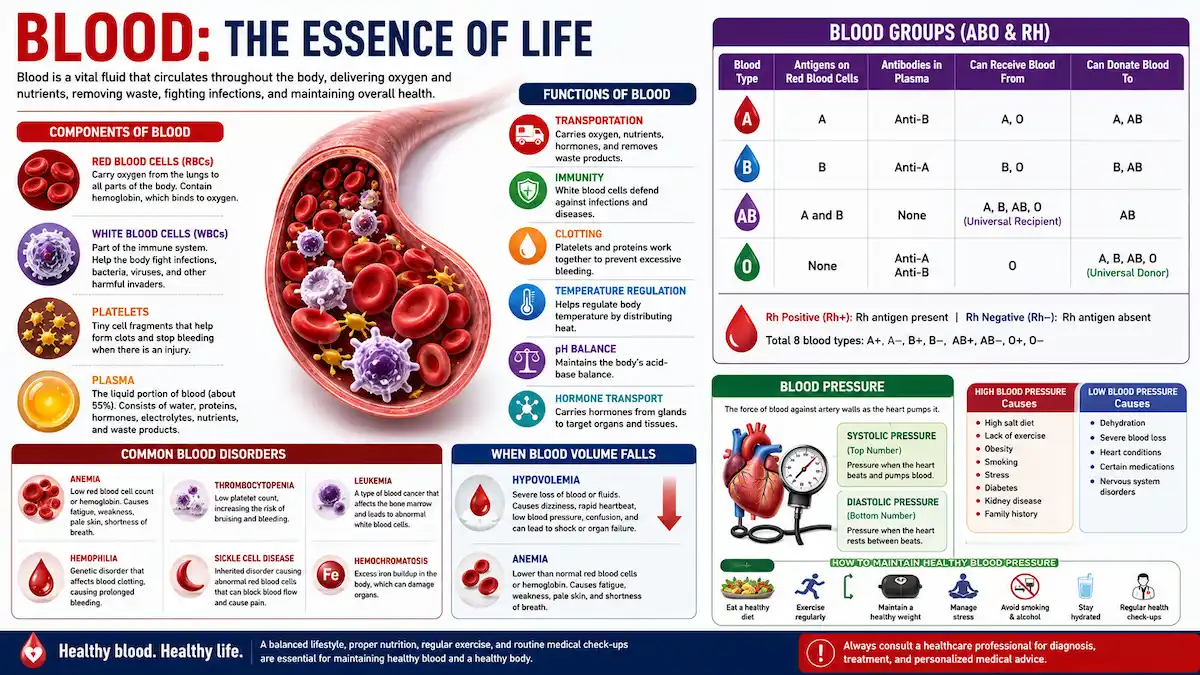
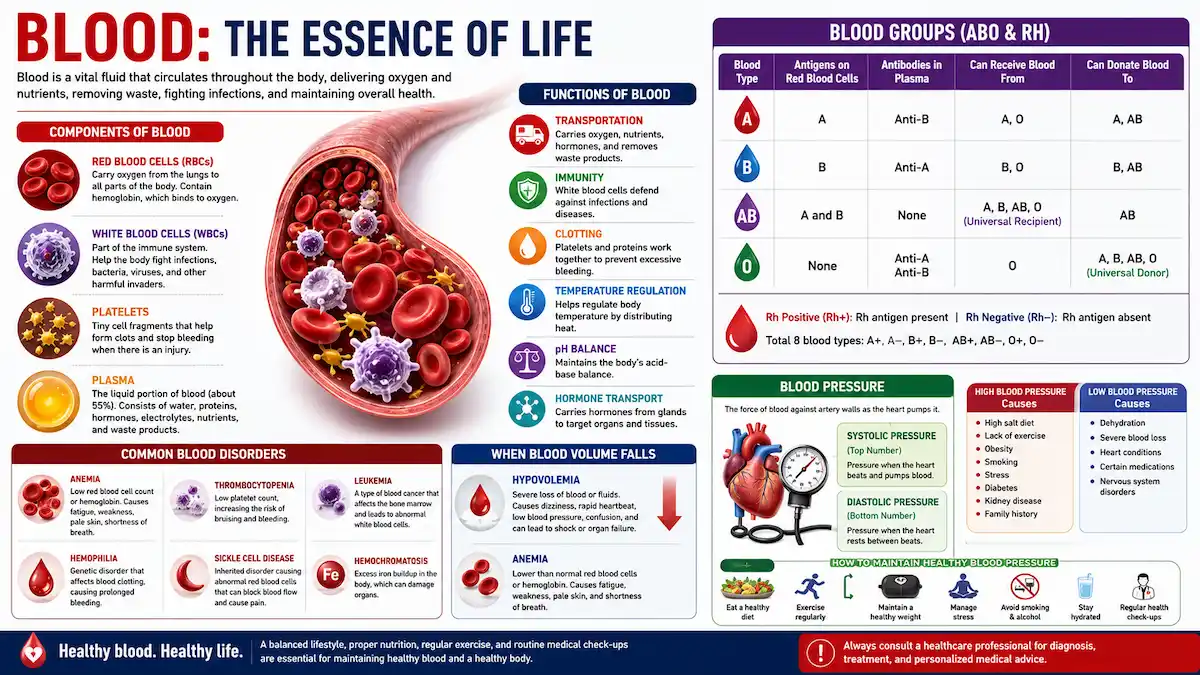
Blood: Functions, Components, Blood Groups, Blood Pressure, and Common Blood Disorders
Blood is one of the most important fluids in the human body. It transports oxygen, nutrients, hormones, and essential substances to cells while removing waste products. Without blood, the body’s organs and tissues would not receive the oxygen and nutrients needed for survival.
This article explains the components of blood, its functions, blood groups, common blood disorders, and the importance of maintaining healthy blood pressure.
What Is Blood?
Blood is a specialized connective tissue that circulates throughout the body via blood vessels. An average adult has approximately 5–6 liters (10–12 pints) of blood.
Blood consists of four major components:
Red Blood Cells (RBCs)
White Blood Cells (WBCs)
Platelets
Plasma
Components of Blood and Their Functions
1. Red Blood Cells (RBCs)
Red blood cells are the most abundant cells in the bloodstream. They contain hemoglobin, a protein responsible for carrying oxygen from the lungs to the body’s tissues and transporting carbon dioxide back to the lungs for removal.
Functions of RBCs
Carry oxygen throughout the body
Remove carbon dioxide from tissues
Support energy production in cells
2. White Blood Cells (WBCs)
White blood cells are an essential part of the immune system. They protect the body from infections, bacteria, viruses, and other harmful invaders.
Functions of WBCs
Fight infections
Destroy harmful microorganisms
Support immune system health
3. Platelets
Platelets are tiny blood cell fragments that help stop bleeding by forming blood clots when an injury occurs.
Functions of Platelets
Prevent excessive bleeding
Assist in wound healing
Support blood clot formation
4. Plasma
Plasma is the liquid portion of blood and makes up about 55% of total blood volume. It consists mainly of water, proteins, electrolytes, hormones, nutrients, and waste products.
Functions of Plasma
Transports nutrients and hormones
Carries waste products to excretory organs
Maintains fluid balance
Supports blood clotting and immunity
Major Functions of Blood
Blood performs several life-sustaining functions throughout the body.
Transportation
Blood delivers oxygen and nutrients to cells and removes waste products such as carbon dioxide.
Immune Protection
White blood cells help protect the body from infections and diseases.
Blood Clotting
Platelets and clotting proteins work together to prevent excessive blood loss during injuries.
Body Temperature Regulation
Blood helps distribute heat throughout the body and maintains a stable body temperature.
pH Balance
Blood helps maintain the body’s acid-base balance, which is crucial for normal cellular function.
Hormone Transport
Hormones released by glands travel through the bloodstream to target organs and tissues.
What Happens When Blood Volume Decreases?
A significant decrease in blood volume can cause serious health problems.
Hypovolemia
Hypovolemia occurs when the body loses a large amount of blood or fluids.
Common Causes
Severe injuries
Internal bleeding
Surgical complications
Gastrointestinal bleeding
Symptoms
Dizziness
Rapid heartbeat
Low blood pressure
Confusion
Weakness
If left untreated, hypovolemia can lead to shock, organ failure, and death.
What Is Anemia?
Anemia is a condition in which the body lacks enough healthy red blood cells or hemoglobin to carry adequate oxygen.
Symptoms of Anemia
Fatigue
Weakness
Pale skin
Shortness of breath
Dizziness
Common Causes
Iron deficiency
Vitamin B12 deficiency
Chronic diseases
Genetic disorders
Common Blood Disorders and Diseases
Hemophilia
Hemophilia is a genetic disorder that affects the blood’s ability to clot properly, resulting in prolonged bleeding.
Thrombocytopenia
This condition occurs when platelet levels are too low, increasing the risk of bruising and bleeding.
Leukemia
Leukemia is a type of blood cancer that affects the bone marrow and blood-forming tissues, causing abnormal white blood cell production.
Sickle Cell Disease
Sickle cell disease is an inherited blood disorder that causes red blood cells to become crescent-shaped, leading to pain, anemia, and circulation problems.
Hemochromatosis
Hemochromatosis is a hereditary condition that causes excessive iron accumulation in the body, potentially damaging organs.
Understanding Blood Groups
Blood groups are classified according to the presence or absence of specific antigens on red blood cells.
The ABO blood group system includes:
Blood Group A
Blood Group B
Blood Group AB
Blood Group O
Blood Group A
Contains A antigens
Produces Anti-B antibodies
Can receive blood from A and O donors
Blood Group B
Contains B antigens
Produces Anti-A antibodies
Can receive blood from B and O donors
Blood Group AB
Contains both A and B antigens
No Anti-A or Anti-B antibodies
Known as the Universal Recipient
Blood Group O
Contains no A or B antigens
Produces both Anti-A and Anti-B antibodies
Known as the Universal Donor (especially O-negative)
What Is the Rh Factor?
The Rh factor is another blood classification marker.
Rh Positive (Rh+)
The Rh antigen is present on red blood cells.
Rh Negative (Rh-)
The Rh antigen is absent on red blood cells.
Examples include:
A+
A-
B+
B-
AB+
AB-
O+
O-
Knowing your blood type is important for blood transfusions, pregnancy care, organ transplantation, and emergency medical treatment.
What Is Blood Pressure?
Blood pressure is the force exerted by circulating blood against artery walls.
Blood pressure readings contain two numbers:
Systolic Pressure
The upper number measures pressure when the heart contracts and pumps blood.
Diastolic Pressure
The lower number measures pressure when the heart rests between beats.
A normal blood pressure reading is generally around 120/80 mmHg.
Causes of High Blood Pressure (Hypertension)
High blood pressure can result from:
Excessive salt intake
Lack of exercise
Obesity
Smoking
Excessive alcohol consumption
Chronic stress
Diabetes
Kidney disease
Family history
Causes of Low Blood Pressure (Hypotension)
Low blood pressure may occur due to:
Dehydration
Severe blood loss
Heart problems
Certain medications
Nervous system disorders
How to Maintain Healthy Blood Pressure
Follow a Healthy Diet
Eat plenty of:
Fruits
Vegetables
Whole grains
Lean proteins
Reduce sodium and processed foods.
Exercise Regularly
Physical activity improves circulation and supports heart health.
Maintain a Healthy Weight
Weight management can significantly reduce blood pressure risks.
Manage Stress
Practice yoga, meditation, and deep breathing exercises.
Avoid Smoking and Excessive Alcohol
Both can negatively affect blood pressure and cardiovascular health.
Stay Hydrated
Proper hydration helps maintain stable blood pressure levels.
Schedule Regular Health Check-Ups
Routine monitoring can help detect and manage blood pressure issues early.
Conclusion
Blood is essential for life. It transports oxygen and nutrients, supports immunity, regulates body temperature, and helps maintain overall health. Understanding blood components, blood groups, blood disorders, and blood pressure can help individuals make informed health decisions.
Maintaining a healthy lifestyle, eating a balanced diet rich in iron and vitamins, exercising regularly, and attending routine medical check-ups can significantly improve blood health and reduce the risk of blood-related diseases.
Always consult a healthcare professional for diagnosis and treatment of blood disorders, anemia, abnormal blood pressure, or any other blood-related condition.