
Modi Norway Visit Sparks Press Freedom Debate After Journalist Questions
Prime Minister Narendra Modi Norway visit sparked controversy after Norwegian journalist Helle Lyng questioned him on press freedom and media transparency in India.
PM Narendra Modi’s Norway Visit Sparks Debate Over Press Freedom in India
Modi’s Norway Visit and Its Diplomatic Importance
Prime Minister Narendra Modi’s recent visit to Norway marked an important step in strengthening India’s ties with Scandinavian countries. The visit, which was part of a broader European diplomatic tour, focused on boosting cooperation in areas such as trade, renewable energy, climate change, technology, and sustainable development.
Norway is globally recognized for its progressive environmental policies and leadership in green energy solutions. For India, collaboration with Norway presents opportunities to expand investments, improve clean energy partnerships, and enhance innovation-driven economic growth. High-level meetings between officials from both nations highlighted the growing importance of India-Norway relations in today’s evolving geopolitical environment.
However, despite the positive diplomatic agenda, Modi’s Norway visit attracted controversy after the Prime Minister reportedly avoided direct interaction with Norwegian journalists and media outlets. This decision triggered widespread discussions about transparency, democratic accountability, and the condition of press freedom in India.
The incident quickly shifted international attention from diplomatic achievements to concerns surrounding media independence and freedom of expression. Critics argued that avoiding media engagement during an international visit raised serious questions about the government’s willingness to face scrutiny on sensitive domestic and global issues.
Modi Avoids Norwegian Media During Official Visit
During Prime Minister Modi’s stay in Norway, expectations among local journalists were high. Norwegian media organizations had anticipated a press conference or formal interaction where they could ask questions regarding India’s policies on human rights, climate action, economic development, and international diplomacy.
However, as the visit progressed, it became clear that no official media interaction would take place. Modi’s decision to avoid direct questioning from the Norwegian press surprised many observers and quickly became a major talking point in both Indian and international media circles.
Media experts noted that press engagement is considered a key component of modern diplomacy. Open communication with journalists helps governments project transparency and democratic values while strengthening trust between nations.
The absence of media interaction led several Norwegian commentators and journalists to criticize the move. Some argued that avoiding difficult questions could create the perception that the Indian government is reluctant to engage with independent scrutiny regarding domestic and international issues.
This development not only impacted public discussions around the visit itself but also influenced broader conversations regarding India’s image as the world’s largest democracy.
Norwegian Journalist Questions Modi Over Press Freedom
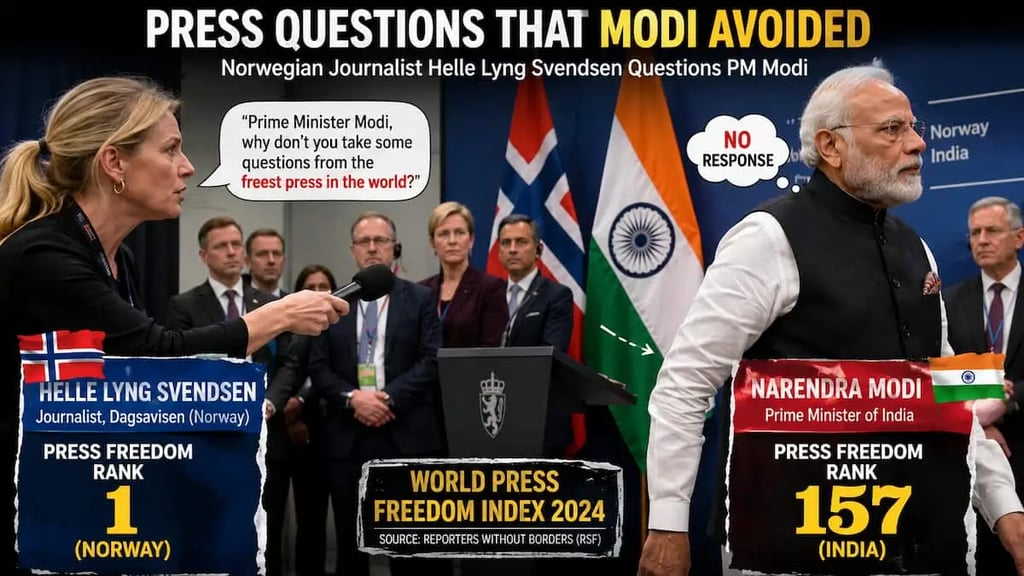
The controversy intensified when Norwegian journalist Helle Lyng Svendsen from the Norwegian newspaper Dagsavisen attempted to question Prime Minister Narendra Modi during the media event.
As Modi was leaving the conference room, Svendsen reportedly asked:
“Prime Minister Modi, why don’t you take some questions from the freest press in the world?”
However, the Indian Prime Minister did not respond and continued walking out of the venue. It remains unclear whether he heard the question. The journalist followed him and asked another question regarding whether he deserved the trust of the Norwegian government, but again received no reply.
Following the incident, Svendsen shared her criticism on social media platform X. She wrote that in Norway, foreign leaders typically answer at least a few questions from the press during official visits, but no such opportunity was provided during Modi’s visit.
In an interview with Al Jazeera, Svendsen stated that she was not surprised by the lack of response, as Modi is known for rarely taking unscripted media questions. However, she emphasized that journalists have a responsibility to ask difficult questions regardless of the outcome.
She further highlighted the contrast between press freedom conditions in Norway and India, noting that Norway consistently ranks among the top countries in the global press freedom index, while India has faced criticism over declining media freedom rankings in recent years.
Svendsen said:
“If I do not dare to ask questions, who will? I know the situation is alarming for my journalist colleagues in India.”
Her comments quickly gained international attention and fueled broader discussions about media freedom, government transparency, and the relationship between political leadership and independent journalism in India.
Norway Media Controversy Raises Questions About Press Freedom in India
The controversy surrounding Modi’s Norway visit quickly evolved into a larger debate on press freedom in India. Journalists, political analysts, and human rights organizations highlighted the incident as part of a wider pattern involving increasing pressure on independent media voices.
Several media associations criticized the lack of engagement, arguing that democratic leaders should remain open to questioning by both domestic and international journalists. According to critics, avoiding the media weakens democratic dialogue and reduces governmental accountability.
Organizations advocating for freedom of expression also expressed concern about the state of journalism in India. International watchdog groups have repeatedly pointed to declining press freedom rankings and growing challenges faced by journalists covering sensitive political topics.
Political analysts suggested that limiting media exposure during foreign visits may be part of a broader communication strategy designed to maintain tighter control over public narratives. Critics argue that such strategies could discourage investigative journalism and reduce opportunities for critical public debate.
At the same time, supporters of the government defended the decision, stating that diplomatic visits should prioritize bilateral discussions and strategic cooperation rather than political controversies.
The incident therefore reflects a growing divide between supporters who view media management as a political necessity and critics who see it as a threat to democratic values.
also read: Nepal Protests 2025
Impact on India-Norway Relations and Global Perception
While the Norway visit successfully strengthened diplomatic and economic cooperation between India and Norway, the media controversy created an additional layer of complexity in international perceptions.
Global diplomacy today extends beyond official meetings and trade agreements. Public communication, transparency, and media accessibility increasingly shape how nations are viewed worldwide. When leaders avoid press engagement, it often attracts international attention and fuels discussions about democratic openness.
For India, which frequently positions itself as a democratic global leader, such incidents can influence international opinion regarding civil liberties and institutional freedom. Analysts believe that maintaining open communication with the press is essential for preserving India’s democratic credibility on the global stage.
The Norway episode also demonstrated how media-related controversies can quickly overshadow diplomatic achievements in the digital age, where global news cycles move rapidly and public scrutiny remains constant.
also read: Vote Chori Exposé
The Future of Press Freedom in India
The debate sparked by Modi’s Norway visit highlights broader concerns about the future of press freedom in India. Over the years, journalists and media organizations have faced increasing challenges ranging from political pressure and censorship concerns to legal restrictions and online harassment.
Supporters of press freedom argue that independent journalism plays a vital role in any democracy by ensuring accountability, transparency, and informed public discourse. They stress that governments must remain open to criticism and media questioning, even during international diplomatic engagements.
At the same time, technological advancements and digital media platforms continue to create new opportunities for journalists to reach audiences despite institutional challenges. Independent news portals, social media platforms, and global media collaborations are helping maintain diverse voices within India’s media landscape.
Moving forward, the relationship between the Indian government and the press will likely remain a central issue in discussions about democracy and civil liberties in the country. The actions of political leaders, including their willingness to engage openly with journalists, will continue to shape both domestic public opinion and international perceptions of India’s democratic institutions.
Conclusion
Prime Minister Narendra Modi’s Norway visit was intended to strengthen India’s partnership with Norway in areas such as trade, sustainability, and clean energy cooperation. However, the controversy surrounding his decision to avoid media interaction shifted global attention toward concerns about press freedom and democratic accountability in India.
The incident serves as a reminder that diplomacy today is closely connected with transparency and media engagement. As debates around press freedom continue to grow, the future of independent journalism in India will remain an important issue for policymakers, journalists, and citizens alike.
MicroNews © 2025
MicroNews empowers the generation of tomorrow for a brighter future and hope for every individual.
Thanks For Touch with us
We care about your data in our privacy policy.
Popular Post
Top 10 Calcium-Rich Vegetables for Strong Bones & Better Health
Patala Garuda (Rauvolfia serpentina): Health Benefits, Ayurvedic Uses
Ganga Siuli (Parijata Tree): Benefits, Uses, and Medicinal Properties
Freelancing Explained: How to Start, Earn, and Succeed as a Freelancer
Turmeric Benefits: Uses, Nutrition, Ayurveda Importance & Side Effects
Science of Longevity: New Research Reveals How Diet May Shape Lifespan