
Breast Cancer: Symptoms, Causes, Risk Factors, Treatment & Prevention
Learn about breast cancer symptoms, causes, risk factors, diagnosis, treatment options, and prevention tips. Discover how early detection can improve survival rates and overall outcomes.
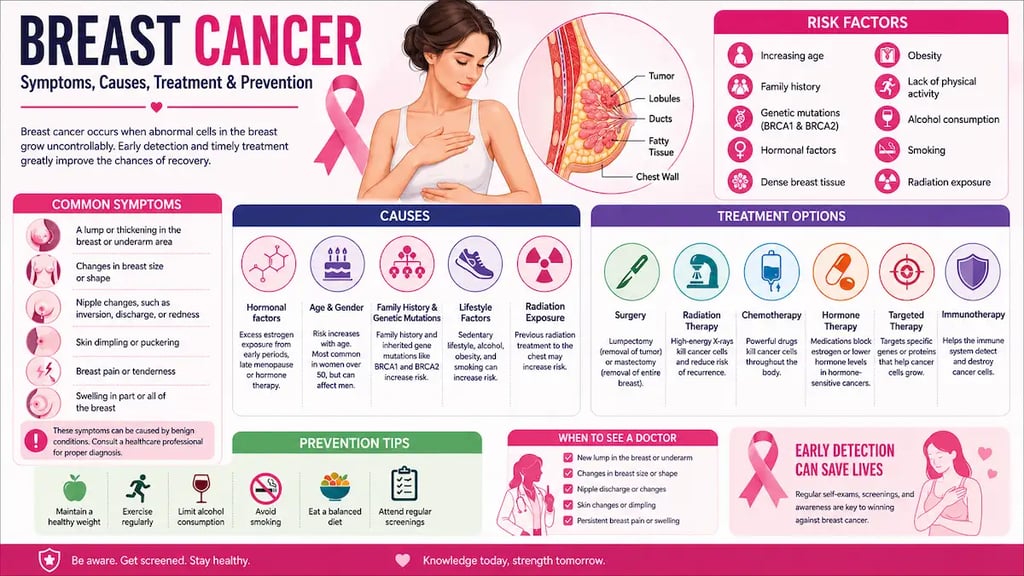
Breast Cancer: Symptoms, Causes, Risk Factors, Treatment, and Prevention
Introduction
Breast cancer is one of the most common types of cancer affecting women worldwide, although it can also occur in men. It develops when abnormal cells in the breast grow uncontrollably and form a tumor. If left untreated, these cancerous cells can spread to other parts of the body, making early detection and treatment crucial.
Advances in medical research, screening methods, and treatment options have significantly improved survival rates. Understanding the causes, symptoms, risk factors, and available treatments can help individuals take proactive steps toward protecting their health.
In this comprehensive guide, we'll explore everything you need to know about breast cancer, including its warning signs, treatment options, and prevention strategies.
What Is Breast Cancer?
Breast cancer occurs when cells in the breast tissue undergo abnormal changes and begin multiplying uncontrollably. These cancer cells can form a lump or mass and may eventually spread to nearby lymph nodes and other organs.
Breast cancer can develop in different parts of the breast, including:
Milk ducts (ductal carcinoma)
Milk-producing glands (lobular carcinoma)
Connective tissues of the breast
Early diagnosis greatly increases the chances of successful treatment and recovery.
Causes of Breast Cancer
While the exact cause of breast cancer remains unclear, researchers have identified several factors that may increase the risk of developing the disease.
1. Hormonal Factors
Hormones, particularly estrogen and progesterone, play an important role in breast development. Prolonged exposure to estrogen may increase breast cancer risk.
Factors that increase estrogen exposure include:
Early onset of menstruation
Late menopause
Having no children or having children later in life
2. Age and Gender
The risk of breast cancer increases with age. Most cases are diagnosed in women over 50 years old. However, younger women and men can also develop breast cancer.
3. Family History and Genetic Mutations
Women with close relatives who have had breast cancer may face a higher risk.
Inherited gene mutations such as:
BRCA1
significantly increase the likelihood of developing breast and ovarian cancers.
4. Lifestyle Factors
Certain lifestyle habits can contribute to breast cancer risk, including:
Physical inactivity
Excessive alcohol consumption
Smoking
Poor dietary habits
5. Previous Radiation Exposure
Individuals who received radiation therapy to the chest during childhood or early adulthood may have an increased risk of breast cancer later in life.
Common Symptoms of Breast Cancer
Recognizing the early signs of breast cancer can lead to quicker diagnosis and better treatment outcomes.
Lump in the Breast or Underarm
A painless lump is often the first noticeable symptom. Any new lump should be evaluated by a healthcare professional.
Changes in Breast Size or Shape
Unexplained changes in the appearance of one or both breasts may indicate an underlying issue.
Nipple Changes
Warning signs include:
Nipple inversion (turning inward)
Unusual discharge
Redness or irritation
Crusting around the nipple
Skin Changes
The skin over the breast may become:
Dimpled
Thickened
Puckered
Similar in appearance to an orange peel
Breast Pain
Although breast cancer is not always painful, persistent breast discomfort or tenderness should not be ignored.
Swelling Around the Breast
Swelling in part or all of the breast, even without a noticeable lump, can sometimes indicate cancer.
Breast Cancer Risk Factors
Several factors can increase the likelihood of developing breast cancer:
Being female
Increasing age
Family history of breast cancer
Genetic mutations (BRCA1 and BRCA2)
Dense breast tissue
Obesity
Smoking
Lack of physical activity
Hormonal therapy after menopause
Having one or more risk factors does not necessarily mean a person will develop breast cancer, but awareness is important.
How Is Breast Cancer Diagnosed?
Doctors use several tests and procedures to diagnose breast cancer.
Clinical Breast Examination
A healthcare provider checks for lumps and abnormal changes in the breast and surrounding lymph nodes.
Mammogram
A mammogram is a specialized X-ray that can detect breast abnormalities before symptoms appear.
Ultrasound
Breast ultrasound helps determine whether a lump is solid or fluid-filled.
MRI Scan
Magnetic Resonance Imaging (MRI) may be used for individuals at high risk or when additional imaging is needed.
Biopsy
A biopsy involves removing a small sample of tissue for laboratory testing and is the only way to confirm a breast cancer diagnosis.
Breast Cancer Treatment Options
Treatment depends on several factors, including the stage of cancer, tumor type, overall health, and patient preferences.
1. Surgery
Surgery is often the first treatment option.
Common procedures include:
Lumpectomy
Removal of the tumor and a small amount of surrounding tissue while preserving most of the breast.
Mastectomy
Removal of the entire breast to eliminate cancerous tissue.
2. Radiation Therapy
Radiation therapy uses high-energy beams to destroy cancer cells and reduce the risk of recurrence after surgery.
3. Chemotherapy
Chemotherapy uses powerful drugs to kill cancer cells throughout the body.
It may be administered:
Before surgery (neoadjuvant therapy)
After surgery (adjuvant therapy)
4. Hormone Therapy
Hormone-sensitive breast cancers may respond to treatments that block estrogen or reduce hormone levels in the body.
5. Targeted Therapy
Targeted therapies focus on specific proteins or genetic changes that help cancer cells grow and spread.
These treatments often have fewer side effects than traditional chemotherapy.
6. Immunotherapy
In some cases, immunotherapy helps the body's immune system identify and destroy cancer cells more effectively.
Can Breast Cancer Be Prevented?
Although breast cancer cannot always be prevented, several healthy lifestyle choices may reduce the risk.
Maintain a Healthy Weight
Excess body fat can increase hormone levels associated with breast cancer.
Exercise Regularly
Aim for at least 150 minutes of moderate physical activity each week.
Limit Alcohol Consumption
Reducing alcohol intake can significantly lower breast cancer risk.
Avoid Smoking
Smoking is linked to multiple cancers and negatively affects overall health.
Eat a Balanced Diet
Focus on:
Fruits and vegetables
Whole grains
Lean proteins
Healthy fats
Attend Regular Screenings
Routine mammograms and breast examinations help detect cancer early when treatment is most effective.
When to See a Doctor
Seek medical attention if you notice:
A new breast lump
Changes in breast shape or size
Persistent breast pain
Nipple discharge
Skin changes on the breast
Swelling under the arm
Prompt evaluation can help identify potential problems before they become more serious.
Conclusion
Breast cancer is a complex disease that affects millions of people worldwide. While factors such as age, genetics, hormones, and lifestyle choices can influence risk, early detection remains one of the most effective ways to improve treatment outcomes.
Understanding the symptoms, risk factors, and treatment options empowers individuals to make informed healthcare decisions. Regular screenings, healthy lifestyle habits, and awareness of breast changes can play a crucial role in reducing the impact of breast cancer.
If you notice any unusual breast symptoms or have concerns about your risk, consult a healthcare professional as soon as possible. Early diagnosis and treatment can save lives.
MicroNews © 2025
MicroNews empowers the generation of tomorrow for a brighter future and hope for every individual.
Thanks For Touch with us
We care about your data in our privacy policy.
Popular Post
Top 10 Calcium-Rich Vegetables for Strong Bones & Better Health
Patala Garuda (Rauvolfia serpentina): Health Benefits, Ayurvedic Uses
Ganga Siuli (Parijata Tree): Benefits, Uses, and Medicinal Properties
Freelancing Explained: How to Start, Earn, and Succeed as a Freelancer
Turmeric Benefits: Uses, Nutrition, Ayurveda Importance & Side Effects
Science of Longevity: New Research Reveals How Diet May Shape Lifespan