
Cybersecurity: Importance, Benefits, Threats & Best Practices
Learn what cybersecurity is, why it is important, common cyber threats, key benefits, best practices, and emerging cybersecurity trends to stay safe in the digital world.
Cybersecurity: Importance, Benefits, Threats, and Best Practices in the Digital Age
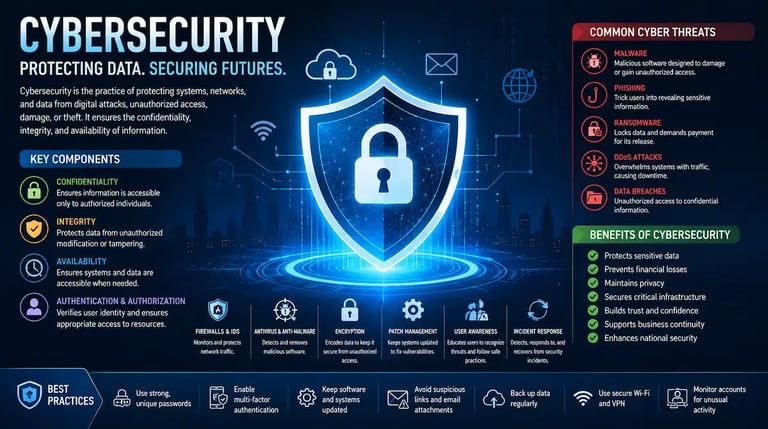
In today's digital world, cybersecurity has become one of the most important aspects of technology. As individuals, businesses, and governments increasingly rely on the internet and digital systems, protecting sensitive information from cyber threats is essential. Cybersecurity refers to the practice of safeguarding computer systems, networks, applications, and data from unauthorized access, cyberattacks, and digital threats.
The primary objective of cybersecurity is to ensure the confidentiality, integrity, and availability of digital information while minimizing the risk of data breaches, financial losses, and service disruptions.
What is Cybersecurity?
Cybersecurity is a collection of technologies, processes, and practices designed to protect digital devices, networks, and data from cybercriminals. It helps defend against threats such as malware, ransomware, phishing attacks, hacking attempts, and identity theft.
With the rapid growth of cloud computing, remote work, and online transactions, cybersecurity has become a critical requirement for individuals and organizations worldwide.
Key Components of Cybersecurity
1. Confidentiality
Confidentiality ensures that sensitive information remains accessible only to authorized users. Cybersecurity measures prevent unauthorized access to personal, financial, and business data.
2. Integrity
Integrity focuses on maintaining the accuracy, consistency, and reliability of data. Security controls help prevent unauthorized modifications, corruption, or tampering of information.
3. Availability
Availability ensures that systems, applications, and data remain accessible whenever authorized users need them. Effective cybersecurity protects against disruptions caused by cyberattacks such as Denial-of-Service (DoS) attacks.
4. Authentication and Authorization
Authentication verifies the identity of users, while authorization determines the level of access granted. Together, they help secure sensitive resources and prevent unauthorized activities.
5. Encryption
Encryption converts readable data into coded information that can only be accessed using the correct decryption key. It is one of the most effective methods for protecting sensitive data during storage and transmission.
6. Firewalls and Intrusion Detection Systems (IDS)
Firewalls monitor and control incoming and outgoing network traffic, acting as a protective barrier between trusted and untrusted networks. Intrusion Detection Systems identify suspicious activities and alert administrators to potential threats.
7. Antivirus and Anti-Malware Software
These security tools detect, block, and remove harmful software such as viruses, worms, Trojans, spyware, and ransomware from computer systems.
8. Patch Management
Regular software updates and security patches help eliminate vulnerabilities that cybercriminals can exploit. Keeping systems updated is a fundamental cybersecurity practice.
9. User Awareness and Training
Human error remains one of the leading causes of security breaches. Educating users about safe online behavior, phishing scams, and password security significantly reduces cyber risks.
10. Incident Response and Recovery
Organizations develop incident response plans to quickly identify, contain, and recover from cybersecurity incidents. Effective response strategies help minimize downtime and financial losses.
Common Types of Cyber Threats
Understanding cyber threats is essential for improving online security. Some of the most common threats include:
Malware
Malware is malicious software designed to damage, disrupt, or gain unauthorized access to systems.
Phishing Attacks
Phishing involves fraudulent emails, messages, or websites that trick users into revealing sensitive information such as passwords and banking details.
Ransomware
Ransomware encrypts a victim's files and demands payment in exchange for restoring access to the data.
Distributed Denial-of-Service (DDoS) Attacks
DDoS attacks overwhelm servers or networks with excessive traffic, causing websites and services to become unavailable.
Data Breaches
Data breaches occur when unauthorized individuals gain access to confidential information, potentially resulting in identity theft and financial losses.
Importance of Cybersecurity
Cybersecurity is crucial because cyberattacks continue to increase in frequency and sophistication. A successful cyberattack can lead to severe consequences, including financial damage, legal issues, operational disruptions, and reputational harm.
Strong cybersecurity measures help organizations and individuals maintain trust, protect sensitive information, and ensure safe digital interactions.
Top Benefits of Cybersecurity
1. Protects Sensitive Data
Cybersecurity safeguards personal information, financial records, customer data, and intellectual property from unauthorized access.
2. Prevents Financial Losses
Effective security measures reduce the risk of costly cyberattacks, fraud, and data recovery expenses.
3. Maintains Privacy
Cybersecurity helps individuals and organizations protect confidential information and maintain privacy in the digital age.
4. Secures Critical Infrastructure
Essential services such as healthcare systems, power grids, transportation networks, and communication systems rely heavily on cybersecurity protection.
5. Builds Trust and Confidence
Customers and business partners are more likely to trust organizations that prioritize data security and privacy.
6. Enhances National Security
Governments use cybersecurity to protect critical national infrastructure, military systems, and public services from cyber threats.
7. Supports Business Continuity
Strong cybersecurity strategies help organizations continue operations even during security incidents or cyberattacks.
Cybersecurity Best Practices
To stay safe online, consider following these cybersecurity best practices:
Use strong and unique passwords for every account.
Enable multi-factor authentication (MFA).
Keep operating systems and software updated.
Install reputable antivirus and anti-malware software.
Avoid clicking suspicious links or downloading unknown attachments.
Regularly back up important data.
Use secure Wi-Fi networks and VPNs when necessary.
Monitor accounts for unusual activity.
Career Opportunities in Cybersecurity
The demand for cybersecurity professionals continues to grow worldwide. Popular cybersecurity career paths include:
Cybersecurity Analyst
Ethical Hacker (Penetration Tester)
Security Consultant
Information Security Manager
Network Security Engineer
Incident Response Specialist
Cybersecurity Architect
These roles offer excellent career prospects and opportunities to contribute to protecting digital systems and information.
Emerging Cybersecurity Trends
Artificial Intelligence (AI) in Security
AI-powered security tools can detect threats faster and respond to attacks more effectively.
Zero Trust Security Model
The Zero Trust approach assumes that no user or device should be trusted automatically, even within a secure network.
Cloud Security
As businesses migrate to cloud environments, protecting cloud-based data and applications has become a top priority.
Remote Work Security
The rise of remote work has increased the need for secure access controls, endpoint protection, and employee cybersecurity training.
Conclusion
Cybersecurity is an essential component of modern technology and digital transformation. It protects individuals, businesses, governments, and critical infrastructure from evolving cyber threats. By implementing strong cybersecurity practices, organizations can safeguard sensitive data, maintain customer trust, ensure business continuity, and contribute to a safer digital environment.
As cyber threats continue to evolve, staying informed about cybersecurity trends, best practices, and emerging technologies is more important than ever. Investing in cybersecurity today helps create a secure and resilient digital future for everyone.
also read: Urgent Attention: Recent CrowdStrike Outage and Its Impacts
Related Stories
MicroNews © 2025
MicroNews empowers the generation of tomorrow for a brighter future and hope for every individual.
Thanks For Touch with us
We care about your data in our privacy policy.
Popular Post
Top 10 Calcium-Rich Vegetables for Strong Bones & Better Health
Patala Garuda (Rauvolfia serpentina): Health Benefits, Ayurvedic Uses
Ganga Siuli (Parijata Tree): Benefits, Uses, and Medicinal Properties
Freelancing Explained: How to Start, Earn, and Succeed as a Freelancer
Turmeric Benefits: Uses, Nutrition, Ayurveda Importance & Side Effects
Science of Longevity: New Research Reveals How Diet May Shape Lifespan