
Human Skin Structure: Layers, Functions, Skin Diseases & Natural Care Tips
Learn about the three layers of human skin, their functions, common skin diseases, infections, and the best natural skincare tips for healthy, glowing skin.
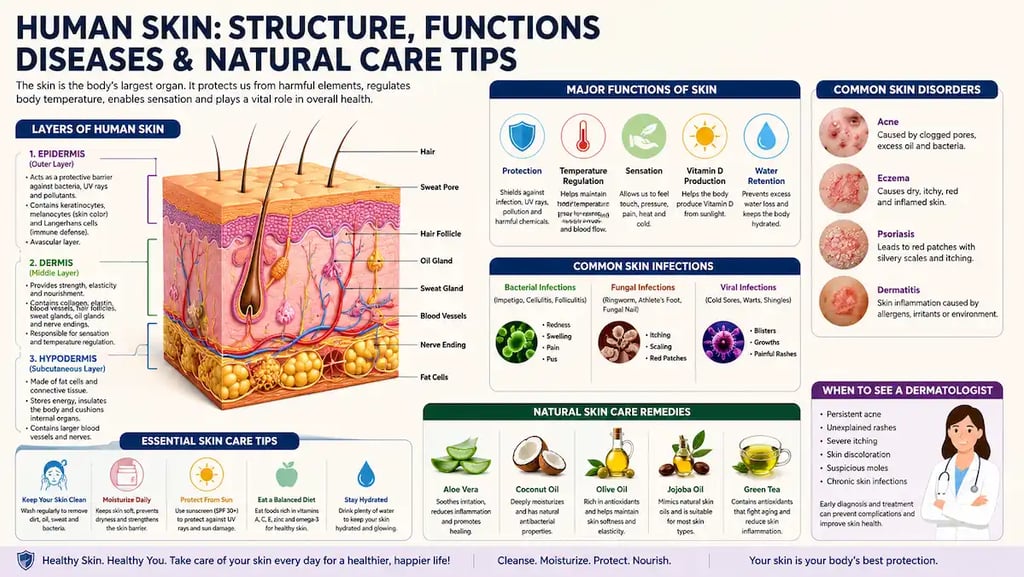
Human Skin: Structure, Functions, Common Skin Diseases, and Natural Skin Care Tips
What Is Human Skin?
Human skin is the largest organ of the body and serves as the first line of defense against harmful environmental factors. It protects the body from infections, regulates temperature, prevents excessive water loss, and helps us experience sensations such as touch, pressure, pain, and temperature.
Understanding the structure of the skin and following a proper skincare routine can help maintain healthy, glowing skin and prevent various skin conditions.
Layers of Human Skin
The skin consists of three main layers, each with unique functions that contribute to overall health and protection.
1. Epidermis – The Outer Protective Layer
The epidermis is the outermost layer of the skin and acts as a protective shield against environmental damage, bacteria, viruses, and harmful chemicals.
Key Features of the Epidermis:
Forms a barrier against germs and pollutants.
Contains keratinocytes, which produce keratin to strengthen the skin.
Contains melanocytes, which produce melanin and determine skin color.
Includes Langerhans cells, which support the body's immune defense.
Does not contain blood vessels (avascular layer).
Constantly renews itself by shedding dead skin cells and generating new ones.
Functions of the Epidermis:
Protects against infection.
Prevents moisture loss.
Shields the body from UV radiation.
Contributes to skin tone and pigmentation.
2. Dermis – The Supportive Middle Layer
The dermis lies beneath the epidermis and provides strength, flexibility, and nourishment to the skin.
Components of the Dermis:
Collagen fibers
Elastin fibers
Blood vessels
Hair follicles
Sweat glands
Oil glands (sebaceous glands)
Nerve endings
Functions of the Dermis:
Maintains skin elasticity and firmness.
Supplies nutrients to the epidermis.
Regulates body temperature through sweat production.
Supports wound healing.
Enables sensations such as touch, pain, heat, and cold.
A healthy dermis is essential for youthful, smooth, and resilient skin.
3. Hypodermis (Subcutaneous Tissue) – The Inner Layer
The hypodermis, also known as subcutaneous tissue, is the deepest layer of the skin.
Composition:
Connective tissue
Fat (adipose) cells
Large blood vessels
Nerves
Functions of the Hypodermis:
Stores energy in the form of fat.
Provides insulation against cold temperatures.
Cushions internal organs and muscles.
Helps absorb shocks and injuries.
Connects the skin to underlying muscles and bones.
This layer plays an important role in maintaining body temperature and protecting internal structures.
Major Functions of Human Skin
The skin performs several essential functions that are vital for survival.
Protection
The skin acts as a barrier against:
Bacteria
Fungi
Pollution
Harmful UV radiation
Temperature Regulation
The body maintains a stable temperature through:
Sweating
Blood vessel dilation and constriction
Sensory Function
Millions of nerve endings allow us to detect:
Touch
Pressure
Pain
Heat
Cold
Vitamin D Production
When exposed to sunlight, the skin helps produce Vitamin D, which supports bone health and immune function.
Water Retention
Healthy skin prevents excessive water loss and keeps the body hydrated.
Common Skin Infections
Skin infections occur when harmful microorganisms invade the skin.
Bacterial Skin Infections
Common examples include:
Impetigo
Cellulitis
Folliculitis
Symptoms:
Redness
Swelling
Pain
Pus formation
Fungal Skin Infections
Fungal infections thrive in warm, moist environments.
Common examples include:
Ringworm
Athlete's Foot
Fungal Nail Infection
Symptoms:
Itching
Scaling
Red patches
Viral Skin Infections
Viruses can also affect the skin.
Examples include:
Cold Sores
Warts
Shingles
Symptoms:
Blisters
Growths
Painful rashes
Common Skin Disorders
Acne
Acne develops when pores become clogged with oil, dead skin cells, and bacteria.
Causes:
Hormonal changes
Excess oil production
Certain medications
Eczema
Eczema is a chronic inflammatory skin condition that causes:
Dry skin
Itching
Redness
Irritation
Psoriasis
Psoriasis is an autoimmune disorder that speeds up skin cell growth.
Symptoms:
Thick red patches
Silvery scales
Itching and discomfort
Dermatitis
Dermatitis refers to skin inflammation caused by:
Allergies
Irritants
Environmental factors
Essential Skin Care Tips for Healthy Skin
Maintaining a proper skincare routine can significantly improve skin health.
1. Keep Your Skin Clean
Wash your face and body regularly to remove:
Dirt
Excess oil
Sweat
Bacteria
Use a gentle cleanser suitable for your skin type.
2. Moisturize Daily
Moisturizing helps:
Prevent dryness
Maintain the skin barrier
Improve skin texture
3. Protect Your Skin from the Sun
Use sunscreen with SPF 30 or higher to:
Prevent sunburn
Reduce premature aging
Lower the risk of skin cancer
4. Eat a Balanced Diet
Consume foods rich in:
Vitamin A
Vitamin C
Vitamin E
Zinc
These nutrients support skin repair and regeneration.
5. Stay Hydrated
Drinking enough water helps maintain skin elasticity and hydration.
Natural Skin Care Remedies
Many natural ingredients can support healthy skin when used correctly.
Aloe Vera
Benefits:
Soothes irritation
Reduces inflammation
Promotes healing
Coconut Oil
Benefits:
Deep moisturization
Improved skin barrier
Natural antibacterial properties
Olive Oil
Benefits:
Rich in antioxidants
Helps maintain skin softness
Jojoba Oil
Benefits:
Mimics natural skin oils
Suitable for most skin types
Green Tea
Benefits:
Contains powerful antioxidants
Helps combat skin aging
Reduces inflammation
When Should You See a Dermatologist?
Consult a dermatologist if you experience:
Persistent acne
Unexplained rashes
Severe itching
Skin discoloration
Suspicious moles
Chronic skin infections
Early diagnosis and treatment can prevent complications and improve outcomes.
Conclusion
Human skin is a remarkable organ composed of three essential layers: the epidermis, dermis, and hypodermis. Together, these layers protect the body, regulate temperature, enable sensation, and support overall health. Proper skincare, a healthy diet, hydration, sun protection, and timely medical attention can help maintain healthy and beautiful skin for years to come.
Understanding your skin's structure and needs is the first step toward achieving long-term skin health and preventing common skin problems.
Related Stories
MicroNews © 2025
MicroNews empowers the generation of tomorrow for a brighter future and hope for every individual.
Thanks For Touch with us
We care about your data in our privacy policy.
Popular Post
Top 10 Calcium-Rich Vegetables for Strong Bones & Better Health
Patala Garuda (Rauvolfia serpentina): Health Benefits, Ayurvedic Uses
Ganga Siuli (Parijata Tree): Benefits, Uses, and Medicinal Properties
Freelancing Explained: How to Start, Earn, and Succeed as a Freelancer
Turmeric Benefits: Uses, Nutrition, Ayurveda Importance & Side Effects
Science of Longevity: New Research Reveals How Diet May Shape Lifespan