
US-Israel-Iran proxy attacks Day 24: Proxy Attacks on US Bases Surge – March 12-23 Updates
Iran proxy attacks unleash 291 attacks on US bases since Mar 12, killing 13 US troops amid US-Israel strikes on Iran oil/gas. Day 24 updates: Trump deadline, Hormuz threats. Full timeline & analysis.
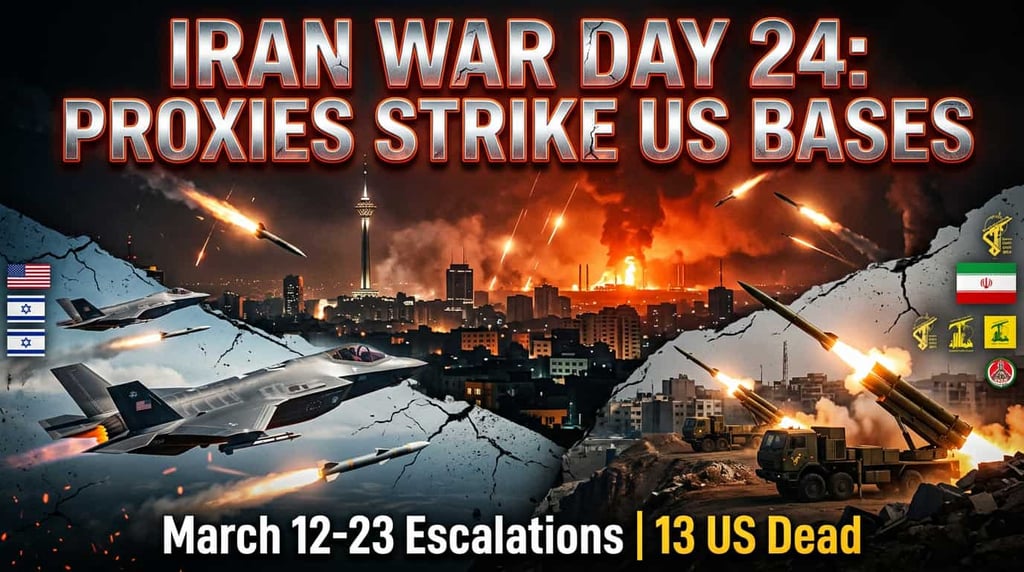
US-Israel-Iran War: Comprehensive Updates from March 12 to March 23, 2026
The US-Israel-Iran conflict, now in its fourth week as of March 23, 2026, has seen intense escalations with sustained airstrikes, missile barrages, and diverging strategic goals between allies. Since March 12, over 1,000 deaths have been reported in Iran alone from joint US-Israeli operations targeting military, nuclear, and energy sites. President Donald Trump has issued ultimatums on reopening the Strait of Hormuz while hinting at talks, amid rising global oil prices and regional spillover.
Timeline of Key Events Post-March 12
March 12-13: Intensified Strikes and Retaliation
On March 12, US forces struck Kharg Island, Iran's key oil export hub, focusing on military targets while sparing oil facilities to avoid spiking energy prices further, as announced by President Trump. Iranian missile strikes hit central Israel, causing fires from shrapnel and prompting evacuations. By Day 13 (March 16 update), Iran denied hits on Supreme Leader Ali Khamenei (killed earlier), a cargo vessel was struck in the Strait of Hormuz, and Trump vowed, "we're not leaving until that job is finished."
March 14-19: Energy Targets and Missile Barrages
US and Israel hit South Pars gas field on March 18, one of the world's largest, escalating energy warfare despite prior US restraint on oil sites. Iran retaliated with multiple missile barrages on Israel, including cluster munitions, killing four including a foreign worker, with sirens across Jerusalem and Tel Aviv. Over 90 Iranian strikes on Israel since late February, 20 hitting civilians, represent 60% more than the prior June war. Hezbollah intensified northern front attacks, losing commanders.
March 20-23: Diverging Goals and Diplomatic Signals
By March 20, US and Israeli objectives diverged: Trump eyed a "Venezuela model" for pragmatic regime insiders and oil access, while Netanyahu pursued "mowing the grass" via sustained weakening. Strikes expanded to Iranian naval assets in Caspian Sea and desalination plants, worsening Iran's water crisis. On March 22, over 100 injured in escalations; Trump claimed "major points of agreement" after talks but postponed energy strikes by five days without ceasefire promise. Rhetoric peaked with Iran vowing Hormuz closure if power plants hit.
Military Developments and Strategies
Joint US-Israeli air dominance was achieved early by degrading 200+ Iranian air defenses, enabling strikes across 26 provinces. Focus shifted to ballistic missiles, IRGC bases, and nuclear sites, with unconfirmed Mossad ops inside Iran. US B-1/B-2 bombers destroyed 17 warships; Israel hit broadcasting and detention centers, sparking jailbreaks.
Iran's responses strained its 2,500+ missile stockpile, with declining launches due to destroyed launchers. Gulf-wide attacks hit UAE airports, Saudi oil fields, Kuwait US bases—first all-GCC targeting. Hezbollah joined reluctantly, weakened post-2024 losses.
Trump's goals evolved: from regime change to nuclear/missile dismantlement, now seeking moderates like Pezeshkian despite assassinations of Khamenei and Larijani. Netanyahu prioritizes endless attrition, risking isolation. Iraq saw limited PMF strikes; Houthis threatened but held back.
Casualties and Humanitarian Impact
Iran reports 1,444 deaths (200 women, 168 children), 18,551 injured by March 1, rising to 2,400+ estimates; includes 170+ children in Minab school strike. Israel: 18+ killed, 3,730 injured. US: 8-13 service members; Gulf: 21 civilians. Healthcare hit: 55 workers injured, 11 dead.
Civilian sites struck: Tehran squares, schools, hospitals—1,354 civilians per some tallies. Iran's water/energy crisis worsened by desalination/oil depot hits. Jailbreaks in Kurdish areas signal unrest.
Statements from Key Leaders
Donald Trump: "Iran about to surrender" (Day 14); war lasts 4-5 weeks or longer; ultimatum on Hormuz; seeks "complete resolution" via talks. Requested $200B more funding.
Benjamin Netanyahu/Israel Officials: Strikes "increase significantly"; acted alone on South Pars. Defense Minister: Pre-emptive necessity.
Iranian Regime: Denies Khamenei hit; Mojtaba Khamenei new leader; vows Hormuz blockade. IRGC: Evacuations near borders.
Economic and Global Repercussions
Oil prices surged post-Hormuz threats, Strait closure (20% global oil), tanker hits; IEA released 400M barrels. Iran exports via Russia continue tacitly. Gulf markets crashed; war-risk surcharges up.
US inflation hit by $200B war cost; Europe isolated, Russia sanctions lifted temporarily. Fertilizer disruptions loom for global planting. Semiconductors, neighbors (Armenia/Azerbaijan) affected.
Regional Spillover Effects
Gulf States: UAE Abu Dhabi airport, Bahrain Manama hit; Saudi Ras Tanura shutdown. Security umbrella shattered.
Lebanon: 250+ Israeli strikes, 50 killed; Hezbollah intel chief dead.
Iraq: US hits PMF; Kurdish ops vs Iran border.
Yemen: Houthis mobilize but no Red Sea restart yet.
Protests in Iran unlikely to topple regime sans arms.
Analysis: Prospects and Risks Ahead
Regime survival hinges on IRGC hardliners; no mass defections seen. Israel eyes regime change but air campaign insufficient; ground risks chaos. Trump's model falters on defiance, oil costs.
Escalation risks: Ground ops, proxy surges, Hormuz full closure. Diplomacy: Trump's "talks" vs Iranian dismissal; Europe abstains.
For content creators tracking geopolitics, this war underscores energy as weapon, proxy limits, and US-Israel tensions—key for SEO on "Iran war economic impact 2026."
Iran proxy attacks on US bases since March 12
Iran-backed proxies, primarily Iraqi militias like the Islamic Resistance in Iraq and Kataib Hezbollah, have conducted over 291 attacks on US bases in Iraq and the region since early March, with many occurring after March 12 amid the broader US-Israel-Iran war. These include drone and missile strikes targeting sites in Iraq, Syria, and Gulf states, claiming 13 US soldiers killed and dozens wounded, though US verification is limited. Houthis in Yemen have threatened but not confirmed post-March 12 base strikes, focusing on Red Sea shipping escalation.Key Attacks and Claims (March 12-23)
Islamic Resistance in Iraq (umbrella group): Claimed 291 operations over 12 days ending ~March 11-23, including 31 in one 24-hour period; targeted US bases in Iraq/Syria with drones/missiles; downed MQ-9 Reaper.
Saraya Awliya al Dam: 7 attacks on US bases in past 24 hours as of March 11, likely continuing into period.
Kataib Hezbollah: Announced conditional 5-day halt on US embassy Baghdad attacks ~March 19, after prior strikes; lost spokesperson Abu Ali al Askari in US strike March 14.
PMF militias: US conducted 32 counterstrikes on PMF bases since war start (Feb 28), killing 27 PMF members by March 12; one PMF killed, three wounded at Camp Saqr March 12.
US and Regional Responses
US airstrikes hit PMF sites in Diyala, Kirkuk, Anbar, etc., killing dozens of militants. Kataib Hezbollah paused attacks conditionally (e.g., Israel halts Beirut strikes). No major Houthi base attacks confirmed post-March 12; threats target US naval groups in Red Sea.
Broader Context
Attacks surged with war escalation, using front groups to mask Iran ties. Iranian direct strikes hit Gulf US bases (Al Udeid Qatar, Al Dhafra UAE) earlier, with proxies amplifying. Casualty claims unverified by Pentagon; focus on communication/radar damage noted March 3.
Sources: acleddata, nytimes, jpost, aljazeera, cnn, npr, criticalthreats, wikipedia,
MicroNews © 2025
MicroNews empowers the generation of tomorrow for a brighter future and hope for every individual.
Thanks For Touch with us
We care about your data in our privacy policy.
Popular Post
Top 10 Calcium-Rich Vegetables for Strong Bones & Better Health
Patala Garuda (Rauvolfia serpentina): Health Benefits, Ayurvedic Uses
Ganga Siuli (Parijata Tree): Benefits, Uses, and Medicinal Properties
Freelancing Explained: How to Start, Earn, and Succeed as a Freelancer
Turmeric Benefits: Uses, Nutrition, Ayurveda Importance & Side Effects
Science of Longevity: New Research Reveals How Diet May Shape Lifespan