
Kidneys: Functions, Symptoms, Diseases, and Best Diet for Kidney Health
Learn about kidney functions, common kidney diseases, symptoms of kidney problems, diagnosis, treatment options, and the best diet for maintaining healthy kidneys.
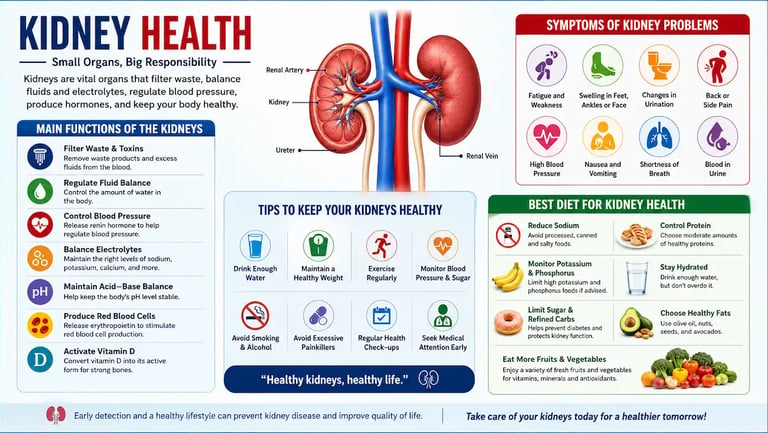
Kidneys: Functions, Symptoms of Kidney Problems, and Best Diet for Kidney Health
Introduction
The kidneys are among the most important organs in the human body. These bean-shaped organs work continuously to filter waste products, remove excess fluids, regulate blood pressure, balance electrolytes, and support overall health. Healthy kidneys are essential for maintaining the body's internal balance and preventing the buildup of harmful toxins.
Understanding how the kidneys function, recognizing the symptoms of kidney disease, and following a kidney-friendly diet can help protect these vital organs and improve long-term health.
What Are the Kidneys?
The kidneys are two reddish-brown, bean-shaped organs located on either side of the spine in the lower back area. Each kidney measures approximately 10–12 centimeters in length and is positioned within the retroperitoneal space.
Blood enters the kidneys through the renal arteries, where it is filtered before being returned to the bloodstream through the renal veins. The waste products and excess fluids removed during filtration are converted into urine, which travels through the ureters to the bladder for storage and elimination.
Main Functions of the Kidneys
The kidneys perform several life-sustaining functions that keep the body healthy and balanced.
1. Blood Filtration and Waste Removal
The primary function of the kidneys is to filter waste products, toxins, and excess fluids from the blood. These substances are then excreted through urine, helping maintain a clean and healthy internal environment.
2. Regulation of Fluid Balance
The kidneys control the amount of water in the body by adjusting urine production. This helps prevent dehydration and fluid overload.
3. Blood Pressure Control
The kidneys produce a hormone called renin, which plays a key role in regulating blood pressure. Proper kidney function helps maintain healthy blood circulation throughout the body.
4. Electrolyte Balance
Healthy kidneys regulate important minerals such as:
Sodium
Potassium
Calcium
Phosphorus
Magnesium
Maintaining the correct balance of these electrolytes is essential for nerve, muscle, and heart function.
5. Acid-Base Balance
The kidneys help maintain the body's pH level by removing excess acids and conserving bicarbonate, ensuring proper metabolic function.
6. Red Blood Cell Production
The kidneys produce erythropoietin, a hormone that stimulates the bone marrow to produce red blood cells. This helps prevent anemia and ensures adequate oxygen delivery throughout the body.
7. Activation of Vitamin D
The kidneys convert inactive vitamin D into calcitriol, its active form, which is essential for calcium absorption and bone health.
Structure of the Kidney
The nephron is the basic structural and functional unit of the kidney. Each human kidney contains approximately one million nephrons.
Within each nephron:
The glomerulus filters blood.
Essential nutrients and water are reabsorbed.
Waste products are secreted and removed from the body.
This complex process ensures that beneficial substances remain in the bloodstream while harmful waste is eliminated.
Common Kidney Diseases
Several conditions can affect kidney function and overall health.
Chronic Kidney Disease (CKD)
Chronic Kidney Disease is a long-term condition in which kidney function gradually declines over time. If left untreated, it can progress to kidney failure.
Kidney Stones
Kidney stones are hard mineral deposits that form inside the kidneys and can cause severe pain during urination.
Acute Kidney Injury (AKI)
Acute Kidney Injury occurs when the kidneys suddenly lose their ability to filter waste effectively.
Kidney Infections
Bacterial infections can affect the kidneys and lead to symptoms such as fever, back pain, and painful urination.
Renal Cell Carcinoma
This is the most common type of kidney cancer and may require surgical treatment such as nephrectomy.
Symptoms of Kidney Problems
Kidney disease often develops slowly and may not show symptoms in its early stages. However, warning signs may include:
Fatigue and Weakness
Reduced kidney function can lead to toxin buildup in the body, causing constant tiredness and lack of energy.
Swelling (Edema)
Fluid retention can cause swelling in the:
Feet
Ankles
Hands
Face
Changes in Urination
Signs may include:
Frequent urination
Reduced urine output
Foamy urine
Dark-colored urine
Blood in the urine (hematuria)
Persistent Back or Side Pain
Pain near the lower ribs or lower back may indicate kidney infection or kidney stones.
High Blood Pressure
Kidney disease and high blood pressure are closely linked and often occur together.
Nausea and Vomiting
Waste accumulation in the bloodstream can cause digestive discomfort and loss of appetite.
Shortness of Breath
Excess fluid may build up in the lungs, making breathing difficult.
How Kidney Diseases Are Diagnosed
Doctors use several tests to evaluate kidney health, including:
Blood tests
Serum creatinine measurement
Kidney ultrasound
CT scan
Kidney biopsy
Early diagnosis can significantly improve treatment outcomes.
Treatment Options for Kidney Disease
Treatment depends on the underlying cause and severity of the condition.
Medications
Doctors may prescribe medications to:
Control blood pressure
Manage diabetes
Reduce inflammation
Prevent complications
Dialysis
When kidney function becomes severely impaired, dialysis removes waste products and excess fluids from the blood.
Kidney Transplant
For end-stage kidney disease, a kidney transplant may offer the best long-term solution.
Best Diet for Healthy Kidneys
A balanced diet plays a crucial role in maintaining kidney health.
Reduce Sodium Intake
Excess sodium can increase blood pressure and place additional stress on the kidneys.
Avoid:
Processed foods
Fast food
Packaged snacks
Canned soups
Control Protein Consumption
People with kidney disease may need to limit protein intake to reduce kidney workload.
Healthy protein sources include:
Fish
Eggs
Lean poultry
Plant-based proteins
Monitor Potassium and Phosphorus
Individuals with kidney disease may need to limit foods rich in potassium and phosphorus, such as:
Bananas
Potatoes
Dairy products
Processed foods
Stay Hydrated
Drinking enough water helps the kidneys flush out toxins and maintain proper function.
Limit Sugar and Refined Carbohydrates
Diabetes is one of the leading causes of kidney disease. Reducing sugar intake helps protect kidney health.
Choose Healthy Fats
Include healthy fats from:
Avocados
Olive oil
Nuts
Seeds
Eat More Fruits and Vegetables
Fresh fruits and vegetables provide antioxidants and nutrients that support kidney function and overall health.
Tips to Keep Your Kidneys Healthy
Follow these simple habits to protect your kidneys:
Drink adequate water daily.
Maintain a healthy body weight.
Exercise regularly.
Monitor blood pressure and blood sugar levels.
Avoid smoking and excessive alcohol consumption.
Limit unnecessary use of painkillers.
Schedule regular health check-ups.
Seek medical attention if you notice symptoms of kidney problems.
Conclusion
The kidneys are essential organs that perform numerous functions, including filtering blood, regulating blood pressure, balancing electrolytes, and supporting red blood cell production. Because kidney disease often develops without noticeable symptoms, regular health screenings and healthy lifestyle habits are crucial.
By following a balanced diet, staying hydrated, managing chronic conditions, and recognizing early warning signs, you can protect your kidneys and maintain optimal health for years to come.
Related Stories
MicroNews © 2025
MicroNews empowers the generation of tomorrow for a brighter future and hope for every individual.
Thanks For Touch with us
We care about your data in our privacy policy.
Popular Post
Top 10 Calcium-Rich Vegetables for Strong Bones & Better Health
Patala Garuda (Rauvolfia serpentina): Health Benefits, Ayurvedic Uses
Ganga Siuli (Parijata Tree): Benefits, Uses, and Medicinal Properties
Freelancing Explained: How to Start, Earn, and Succeed as a Freelancer
Turmeric Benefits: Uses, Nutrition, Ayurveda Importance & Side Effects
Science of Longevity: New Research Reveals How Diet May Shape Lifespan