
Milk Nutrition Guide: Benefits, Nutritional Value, Fortified Milk & Digestive Health
Discover the health benefits of milk, nutritional value of 1 liter of milk, breast milk benefits, fortified milk, effects of boiling milk, and whether milk can cause gas or bloating.
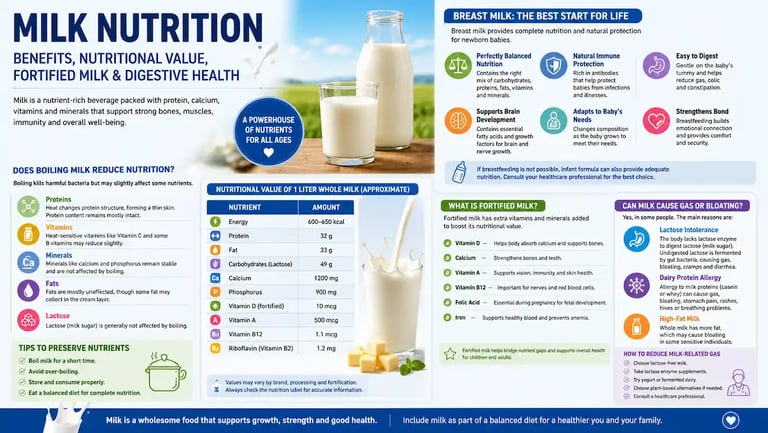
Milk Nutrition: Benefits, Nutritional Value, Fortified Milk, Boiled Milk Effects, and Digestive Concerns
What Is Milk?
Milk is one of the most nutritious beverages consumed worldwide and serves as an excellent source of essential nutrients. It contains high-quality protein, calcium, vitamin D, phosphorus, and several B vitamins that support overall health. While milk offers numerous health benefits, it should not be considered a complete source of all vitamins and minerals required by the human body.
A balanced diet that includes fruits, vegetables, whole grains, proteins, and dairy products is necessary to meet all nutritional requirements. Individuals with specific dietary needs should consult a healthcare professional or registered dietitian for personalized advice.
Why Breast Milk Is the Best Nutrition for Newborn Babies
Breast milk is often regarded as the gold standard of infant nutrition. It provides complete nourishment and supports healthy growth and development during the early stages of life.
1. Perfectly Balanced Nutrition
Breast milk contains the ideal balance of carbohydrates, proteins, healthy fats, vitamins, and minerals that a newborn requires. These nutrients support healthy growth, organ development, and immune function.
2. Natural Immune Protection
Breast milk contains antibodies, enzymes, and immune factors that help protect babies from infections, allergies, and illnesses. This natural immunity is especially important because a newborn's immune system is still developing.
3. Easy Digestion
Compared to formula, breast milk is easier for babies to digest. It helps reduce digestive problems such as constipation, gas, and colic.
4. Supports Brain Development
Breast milk contains essential fatty acids, hormones, and growth factors that contribute to healthy brain and nervous system development.
5. Adapts to Baby's Needs
The composition of breast milk changes as the baby grows, ensuring the infant receives the right nutrients at different stages of development.
6. Strengthens Mother-Baby Bond
Breastfeeding encourages skin-to-skin contact and emotional bonding between mother and child, providing comfort and security for the baby.
Breastfeeding vs Formula Feeding
While breastfeeding offers many benefits, some mothers may choose or need to use infant formula. Modern infant formulas are designed to provide adequate nutrition and support healthy growth. Parents should discuss feeding options with their healthcare provider to determine the best choice for their baby.
Does Boiling Milk Reduce Its Nutritional Value?
Boiling milk is a common practice that helps eliminate harmful bacteria and improve safety. However, excessive heating can affect certain nutrients.
Effects of Boiling on Milk Nutrients
Proteins
Boiling causes protein denaturation, which changes the protein structure. Although the protein content remains largely unchanged, a thin layer or "milk skin" may form on the surface.
Vitamins
Heat-sensitive vitamins such as Vitamin C and some B vitamins may decrease during prolonged boiling. The reduction is generally small when milk is heated briefly.
Minerals
Important minerals such as calcium, phosphorus, and magnesium remain stable and are not significantly affected by boiling.
Fats
Milk fats remain largely unchanged, although some fat may become trapped in the cream layer that forms on the surface.
Lactose
The natural milk sugar lactose is generally unaffected by boiling.
How to Preserve Milk Nutrients
Avoid prolonged boiling.
Heat milk only until it reaches a safe temperature.
Store milk properly after heating.
Consume a balanced diet to compensate for minor nutrient losses.
Even after boiling, milk remains an excellent source of essential nutrients.
Nutritional Value of 1 Liter of Whole Milk
The exact nutritional content may vary depending on the milk type, brand, and fortification process. On average, one liter of whole cow's milk contains:
Nutrient Approximate Amount
Energy 600–650 kcal
Protein 32 g
Fat 33 g
Carbohydrates 49 g
Calcium 1200 mg
Phosphorus 900 mg
Vitamin D 10 mcg (fortified milk)
Vitamin A 500 mcg
Vitamin B1 21.1 mcg
Riboflavin (Vitamin B2) 1.2 mg
Always check the nutrition label for the most accurate information about your chosen milk product.
What Is Fortified Milk?
Fortified milk is regular milk that has additional vitamins and minerals added to enhance its nutritional value. Fortification helps address nutrient deficiencies and supports better health outcomes.
Common Nutrients Added to Fortified Milk
Vitamin D
Vitamin D helps the body absorb calcium and supports healthy bones, teeth, and immune function.
Calcium
Additional calcium strengthens bones and helps prevent osteoporosis and other bone-related conditions.
Vitamin A
Vitamin A supports healthy vision, skin health, and immune system function.
Vitamin B12
Vitamin B12 plays a vital role in nerve function and red blood cell production.
Folic Acid
Folic acid is particularly important during pregnancy for healthy fetal development.
Iron
Some fortified milk products contain added iron to support healthy blood circulation and prevent anemia.
Benefits of Fortified Milk
Supports bone health
Helps prevent vitamin deficiencies
Enhances immune function
Promotes healthy growth in children
Beneficial for individuals with limited nutrient intake
Can Milk Cause Gas and Bloating?
Some individuals experience gas, bloating, or digestive discomfort after drinking milk. The most common causes include lactose intolerance and dairy allergies.
Lactose Intolerance
Lactose intolerance occurs when the body produces insufficient amounts of lactase, the enzyme needed to digest lactose.
Common Symptoms
Gas
Bloating
Abdominal cramps
Stomach discomfort
Undigested lactose is fermented by gut bacteria, producing gas and digestive symptoms.
Dairy Protein Allergy
Some people are allergic to milk proteins such as casein and whey.
Symptoms May Include
Gas and bloating
Stomach pain
Skin rashes
Hives
Breathing difficulties
Milk allergy requires medical evaluation and dietary management.
High-Fat Milk and Digestion
Whole milk contains more fat, which may slow digestion and contribute to bloating in sensitive individuals.
How to Reduce Milk-Related Gas
Choose lactose-free milk.
Use lactase enzyme supplements.
Try fermented dairy products such as yogurt.
Switch to plant-based alternatives if recommended by your doctor.
Conclusion
Milk is a highly nutritious food rich in protein, calcium, vitamins, and minerals that support overall health. Breast milk remains the ideal source of nutrition for newborns, while fortified milk can help address nutrient deficiencies in adults and children. Although boiling may slightly reduce certain vitamins, milk retains most of its nutritional benefits. Individuals experiencing gas or bloating after consuming milk should consult a healthcare professional to identify possible lactose intolerance or dairy allergies.
Including milk as part of a balanced diet can contribute significantly to bone health, muscle development, and overall well-being.
Related Stories
MicroNews © 2025
MicroNews empowers the generation of tomorrow for a brighter future and hope for every individual.
Thanks For Touch with us
We care about your data in our privacy policy.
Popular Post
Top 10 Calcium-Rich Vegetables for Strong Bones & Better Health
Patala Garuda (Rauvolfia serpentina): Health Benefits, Ayurvedic Uses
Ganga Siuli (Parijata Tree): Benefits, Uses, and Medicinal Properties
Freelancing Explained: How to Start, Earn, and Succeed as a Freelancer
Turmeric Benefits: Uses, Nutrition, Ayurveda Importance & Side Effects
Science of Longevity: New Research Reveals How Diet May Shape Lifespan