
Piles Symptoms, Causes & Treatment | Complete Guide to Hemorrhoids
Learn everything about piles (hemorrhoids), including symptoms, causes, diagnosis, treatment options, home remedies, prevention tips, and when to consult a doctor.
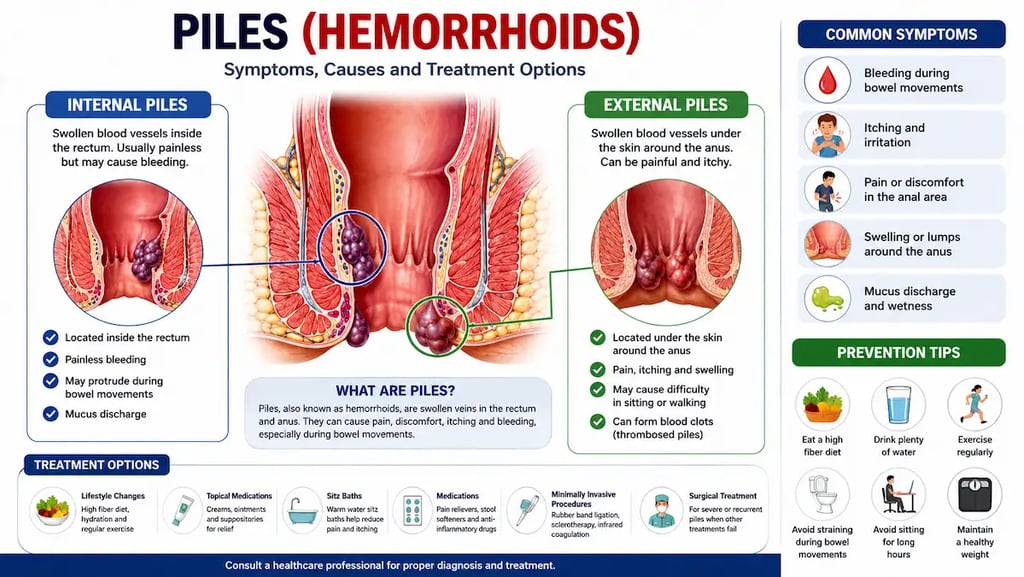
Piles (Hemorrhoids): Symptoms, Causes, Treatment, Prevention & Home Remedies
Piles, medically known as hemorrhoids, are one of the most common digestive health conditions affecting millions of people worldwide. Although many people feel embarrassed to discuss piles, it is a highly treatable condition. Early diagnosis and proper treatment can significantly reduce discomfort and prevent complications.
Piles occur when the veins around the lower rectum or anus become swollen due to increased pressure. They may develop inside the rectum (internal hemorrhoids) or under the skin around the anus (external hemorrhoids). Depending on their severity, piles can cause pain, itching, bleeding, and difficulty during bowel movements.
This guide explains the symptoms, causes, treatment options, home remedies, and preventive measures to help you manage piles effectively.
What Are Piles?
Piles are enlarged and inflamed blood vessels located in the rectum or anus. Similar to varicose veins in the legs, these swollen veins develop when excessive pressure is applied during bowel movements or due to prolonged sitting, pregnancy, obesity, or chronic constipation.
Piles are generally classified into two main types:
Internal Piles
Internal hemorrhoids develop inside the rectum and usually cannot be seen or felt. They often cause painless bleeding during bowel movements.
External Piles
External hemorrhoids develop beneath the skin surrounding the anus. These are more likely to cause pain, swelling, itching, and discomfort.
Common Symptoms of Piles
The symptoms of piles vary depending on the type and severity of the condition. Some individuals may experience only mild discomfort, while others may have severe pain.
1. Rectal Bleeding
One of the earliest signs of piles is bright red blood during or after passing stool. Blood may appear on toilet paper or in the toilet bowl.
2. Anal Itching
Persistent itching around the anus is common due to irritation caused by swollen veins and mucus discharge.
3. Pain During Bowel Movements
Pain or burning sensation while passing stool is especially common in external hemorrhoids or thrombosed piles.
4. Swelling Around the Anus
A lump or swelling near the anus may develop, making sitting or walking uncomfortable.
5. Mucus Discharge
Some people experience mucus leakage after bowel movements, leading to irritation and a feeling of incomplete evacuation.
6. Feeling of Fullness
Many patients report the sensation that the bowel is not completely empty even after using the toilet.
What Causes Piles?
Several factors increase the risk of developing piles.
Chronic Constipation
Frequent straining during bowel movements puts pressure on the veins around the rectum.
Chronic Diarrhea
Repeated bowel movements can also irritate and enlarge hemorrhoidal veins.
Low-Fiber Diet
Insufficient fiber makes stools harder, increasing the effort required during bowel movements.
Pregnancy
The growing uterus increases pressure on pelvic veins, making piles common during pregnancy.
Obesity
Excess body weight increases abdominal pressure and contributes to hemorrhoid formation.
Prolonged Sitting
Sitting for extended periods, especially on the toilet, increases pressure on rectal veins.
Aging
As people age, the tissues supporting rectal veins weaken, increasing the likelihood of piles.
Risk Factors
You may have a higher chance of developing piles if you:
Eat a low-fiber diet
Drink insufficient water
Lift heavy weights regularly
Sit for long hours
Have chronic constipation
Are overweight or obese
Are pregnant
Have a family history of hemorrhoids
How Are Piles Diagnosed?
A healthcare provider may diagnose piles through:
Physical examination
Digital rectal examination
Colonoscopy (if additional gastrointestinal conditions need to be ruled out)
Proper diagnosis helps exclude other causes of rectal bleeding, including colorectal diseases.
Effective Treatment Options for Piles
Treatment depends on the severity of symptoms.
1. Lifestyle Changes
For mild piles, lifestyle modifications often provide significant relief.
These include:
Eating more fiber-rich foods
Drinking 2–3 liters of water daily
Exercising regularly
Avoiding prolonged sitting
Avoiding excessive straining during bowel movements
2. High-Fiber Diet
Fiber softens stool and reduces pressure during bowel movements.
Include foods such as:
Whole grains
Fruits
Vegetables
Oats
Beans
Lentils
Seeds
3. Home Remedies
Simple home treatments can reduce symptoms.
These include:
Warm sitz baths for 15–20 minutes
Applying cold compresses
Maintaining proper anal hygiene
Wearing loose cotton underwear
4. Medications
Doctors may recommend:
Pain relievers
Stool softeners
Fiber supplements
Anti-inflammatory creams
Hemorrhoid ointments
Suppositories
These treatments help reduce pain, itching, and inflammation.
5. Minimally Invasive Procedures
If medications fail, doctors may recommend procedures such as:
Rubber Band Ligation
A rubber band is placed around the hemorrhoid, cutting off its blood supply until it falls off.
Sclerotherapy
A chemical solution is injected to shrink the hemorrhoid.
Infrared Coagulation
Heat energy is used to shrink internal hemorrhoids with minimal discomfort.
These procedures are usually performed without major surgery and allow faster recovery.
6. Surgery
Severe or recurrent piles may require surgical treatment.
Common surgical procedures include:
Hemorrhoidectomy
Stapled hemorrhoidopexy
Surgery is generally reserved for advanced hemorrhoids that do not respond to conservative treatment.
Foods to Eat for Piles
A healthy diet can improve bowel movements and reduce symptoms.
Recommended foods include:
Foods to Avoid
Certain foods may worsen constipation and piles symptoms.
Limit:
Spicy foods
Fried foods
Processed snacks
Fast food
Alcohol
Excess caffeine
Red meat
Sugary desserts
Tips to Prevent Piles
You can reduce your risk by following these healthy habits:
Eat a fiber-rich diet every day.
Drink enough water.
Exercise regularly.
Avoid sitting for long periods.
Do not delay bowel movements.
Avoid excessive straining.
Maintain a healthy body weight.
Practice good toilet habits.
When Should You See a Doctor?
Seek medical attention immediately if you experience:
Persistent rectal bleeding
Severe anal pain
Large painful swelling
Black-colored stool
Symptoms lasting more than one week
Recurrent hemorrhoids despite home treatment
Early diagnosis can help prevent complications and ensure appropriate treatment.
Frequently Asked Questions (FAQs)
Can piles heal without surgery?
Yes. Most mild to moderate cases improve with dietary changes, medications, and healthy lifestyle habits. Surgery is only required for severe cases.
Are piles dangerous?
Piles are generally not life-threatening but can significantly affect daily life if left untreated.
Does drinking water help piles?
Yes. Drinking plenty of water softens stools, reduces constipation, and lowers pressure during bowel movements.
Can piles return after treatment?
Yes. Without healthy lifestyle changes, piles may recur. Maintaining a high-fiber diet and avoiding constipation can reduce recurrence.
Conclusion
Piles are a common yet manageable condition that affects people of all ages. While symptoms such as bleeding, itching, pain, and swelling can be uncomfortable, early diagnosis and appropriate treatment can provide lasting relief. Adopting a fiber-rich diet, staying hydrated, exercising regularly, and following healthy bowel habits are among the most effective ways to prevent and manage hemorrhoids. If symptoms persist or worsen, consult a qualified healthcare professional for proper evaluation and treatment.
MicroNews © 2025
MicroNews empowers the generation of tomorrow for a brighter future and hope for every individual.
Thanks For Touch with us
We care about your data in our privacy policy.
Popular Post
Top 10 Calcium-Rich Vegetables for Strong Bones & Better Health
Patala Garuda (Rauvolfia serpentina): Health Benefits, Ayurvedic Uses
Ganga Siuli (Parijata Tree): Benefits, Uses, and Medicinal Properties
Freelancing Explained: How to Start, Earn, and Succeed as a Freelancer
Turmeric Benefits: Uses, Nutrition, Ayurveda Importance & Side Effects
Science of Longevity: New Research Reveals How Diet May Shape Lifespan