
Wheat Benefits, Nutrition Facts, Uses, Side Effects & Best Time to Eat
Discover the health benefits of wheat, its nutritional value, uses, side effects, global production, and the best time to eat wheat for a healthy lifestyle.
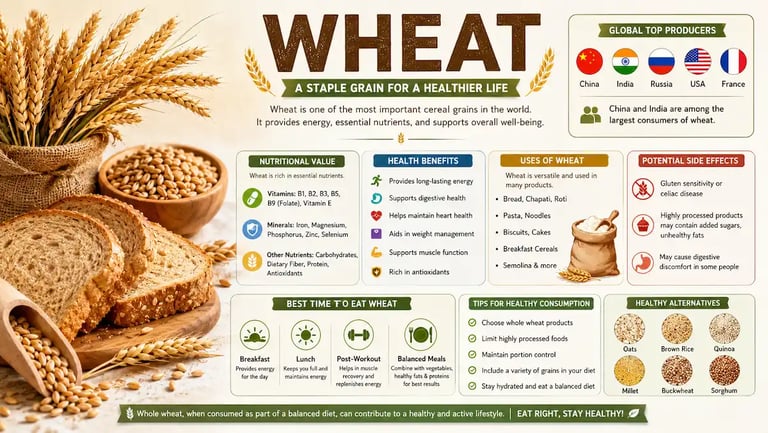
Wheat: Nutrition, Health Benefits, Uses, Side Effects, and Best Time to Eat
Introduction
Wheat is one of the most widely consumed cereal grains in the world and serves as a staple food for billions of people. It is used to make a variety of food products, including bread, chapati, pasta, noodles, biscuits, and cereals. Rich in carbohydrates, fiber, vitamins, and minerals, wheat plays an important role in providing energy and supporting overall health.
In this article, we will explore the nutritional value of wheat, its health benefits, global production, potential side effects, and the best ways to include it in a balanced diet.
What Is Wheat?
Wheat is a cereal grain belonging to the grass family and is cultivated across many countries. It is available in different forms, including whole wheat, refined wheat flour, semolina, and wheat bran.
Whole wheat contains all three parts of the grain:
Bran (outer layer rich in fiber)
Germ (nutrient-rich core)
Endosperm (starchy middle layer)
Whole wheat products are generally considered healthier because they retain more nutrients than refined wheat products.
Nutritional Value of Wheat
Wheat is packed with essential nutrients that support various bodily functions.
Vitamins Found in Wheat
Wheat contains several important vitamins, including:
Vitamin B1 (Thiamine)
Vitamin B2 (Riboflavin)
Vitamin B3 (Niacin)
Vitamin B5 (Pantothenic Acid)
Vitamin B9 (Folate)
Vitamin E (especially in whole wheat)
These vitamins help convert food into energy and support brain, nerve, and immune system functions.
Minerals Present in Wheat
Wheat is a good source of:
Magnesium
Phosphorus
Zinc
Selenium
Manganese
These minerals contribute to bone strength, oxygen transport, immune health, and metabolic processes.
Other Nutrients
Wheat also provides:
Complex carbohydrates
Dietary fiber
Antioxidants
Health Benefits of Wheat
1. Provides Long-Lasting Energy
Wheat is rich in complex carbohydrates that release energy gradually, helping maintain stamina throughout the day.
2. Supports Digestive Health
The dietary fiber in whole wheat promotes healthy digestion, improves bowel movements, and helps prevent constipation.
3. Helps Maintain Heart Health
Whole wheat may help reduce bad cholesterol levels and support cardiovascular health when consumed as part of a balanced diet.
4. Supports Weight Management
Fiber-rich wheat products increase feelings of fullness, reducing overeating and unhealthy snacking.
5. Promotes Healthy Muscle Function
Wheat contains protein that supports muscle repair and growth, especially when combined with other protein-rich foods.
6. Provides Essential Nutrients
The vitamins and minerals in wheat contribute to healthy bones, immune function, and overall well-being.
7. Contains Antioxidants
Whole wheat contains antioxidants such as phenolic acids that help protect cells from oxidative stress.
Global Wheat Production
Wheat is among the most important agricultural crops worldwide.
Top Wheat-Producing Countries
The leading wheat-producing nations include:
China
India
Russia
United States
France
These countries contribute significantly to global food security and agricultural trade.
Largest Wheat Consumers
Due to their large populations, China and India are among the world's largest consumers of wheat-based foods.
Uses of Wheat
Wheat is highly versatile and is used in the production of:
Bread
Chapati and roti
Pasta
Noodles
Biscuits
Cakes
Breakfast cereals
Semolina products
Its adaptability makes it one of the most valuable grains in the global food industry.
Advantages of Wheat
Versatile Food Ingredient
Wheat can be processed into numerous food products suitable for different cuisines and cooking methods.
Economic Importance
Wheat cultivation supports millions of farmers and contributes significantly to national economies worldwide.
Easy Availability
Wheat products are widely available and affordable in most regions.
Nutrient-Dense
Whole wheat provides essential nutrients that contribute to overall health and wellness.
Potential Side Effects of Wheat
Although wheat offers many health benefits, some individuals should consume it cautiously.
Gluten Sensitivity
People with gluten sensitivity may experience bloating, stomach discomfort, or digestive issues after consuming wheat.
Celiac Disease
Individuals diagnosed with celiac disease must avoid wheat completely because gluten triggers an immune reaction that damages the small intestine.
Refined Wheat Concerns
Highly processed wheat products may contain:
Added sugars
Excess sodium
Unhealthy fats
These products often contain less fiber and fewer nutrients than whole wheat alternatives.
Digestive Discomfort
Some individuals may experience gas, bloating, or digestive discomfort when consuming large amounts of wheat.
Best Time to Eat Wheat
Breakfast
Whole wheat bread, chapati, or cereals can provide steady energy throughout the morning.
Lunch
Wheat-based foods make an excellent part of a balanced lunch, helping maintain energy levels during the day.
Post-Workout Meals
Whole wheat pasta or bread can replenish glycogen stores and support recovery after exercise.
As Part of Balanced Meals
Including wheat with vegetables, healthy fats, and proteins helps create a nutritious and satisfying meal.
Who Should Limit Wheat Consumption?
You may need to reduce or avoid wheat if you:
Have celiac disease
Are gluten intolerant
Experience recurring digestive discomfort after consuming wheat
Have specific dietary recommendations from a healthcare professional
Healthy Alternatives to Wheat
If wheat is unsuitable for you, consider these nutritious alternatives:
Oats
Brown rice
Quinoa
Buckwheat
Sorghum
These grains can provide similar nutritional benefits while offering dietary variety.
Tips for Healthy Wheat Consumption
Choose whole wheat products whenever possible.
Limit highly processed wheat foods.
Combine wheat with vegetables and protein-rich foods.
Maintain portion control for weight management.
Include a variety of grains in your diet.
Conclusion
Wheat is one of the world's most important food crops, providing essential nutrients, dietary fiber, and long-lasting energy. Whole wheat products support digestive health, heart health, and overall wellness while offering versatility in cooking and meal preparation. However, individuals with gluten-related disorders should avoid wheat and seek suitable alternatives.
By choosing whole wheat products and consuming them as part of a balanced diet, you can enjoy the numerous health benefits this nutrient-rich grain has to offer.
Related Stories
MicroNews © 2025
MicroNews empowers the generation of tomorrow for a brighter future and hope for every individual.
Thanks For Touch with us
We care about your data in our privacy policy.
Popular Post
Top 10 Calcium-Rich Vegetables for Strong Bones & Better Health
Patala Garuda (Rauvolfia serpentina): Health Benefits, Ayurvedic Uses
Ganga Siuli (Parijata Tree): Benefits, Uses, and Medicinal Properties
Freelancing Explained: How to Start, Earn, and Succeed as a Freelancer
Turmeric Benefits: Uses, Nutrition, Ayurveda Importance & Side Effects
Science of Longevity: New Research Reveals How Diet May Shape Lifespan