
7 Best Yoga for Spondylitis Relief: Reduce Pain and Improve Flexibility
Discover 7 effective yoga for spondylitis relief. Learn how yoga can help reduce back pain, improve flexibility, and support spinal health naturally.
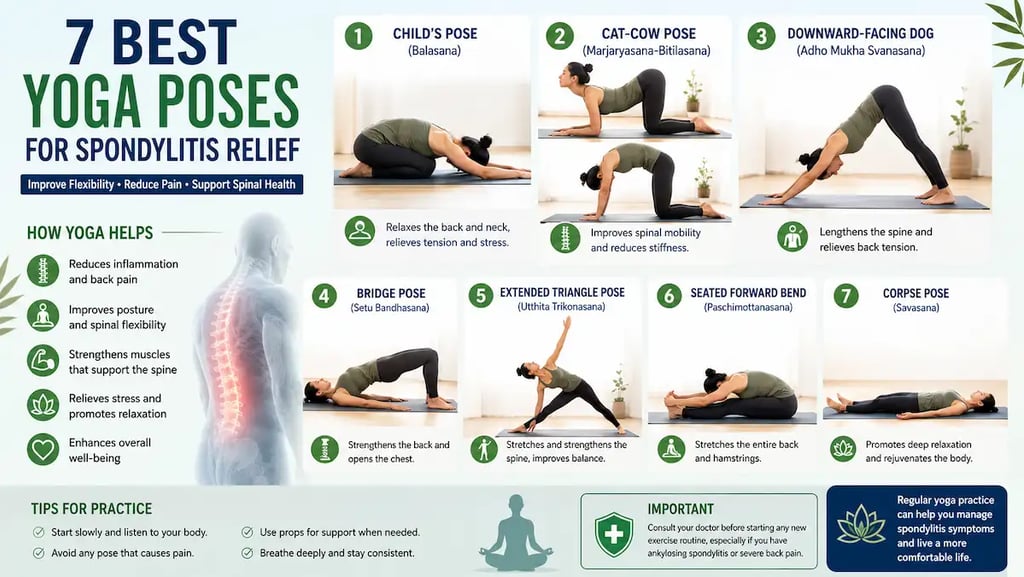
7 Best Yoga Poses for Spondylitis Relief: Improve Flexibility and Reduce Back Pain
Introduction
Spondylitis is a chronic inflammatory condition that primarily affects the spine, leading to pain, stiffness, reduced mobility, and discomfort in daily activities. While medical treatment is essential for managing the condition, practicing yoga regularly can help improve flexibility, strengthen supporting muscles, reduce stress, and promote better spinal health.
Yoga combines gentle stretching, controlled breathing, and mindful movement, making it a valuable complementary therapy for people living with spondylitis. In this guide, we'll explore seven effective yoga poses that may help relieve symptoms and support overall spinal wellness.
1. Child's Pose (Balasana)
Child's Pose is a gentle resting posture that helps stretch the lower back, hips, and spine while encouraging relaxation.
How to Perform:
Kneel on the yoga mat and sit back on your heels.
Bring your big toes together and separate your knees slightly.
Lower your torso between your thighs.
Extend your arms forward and rest your forehead on the mat.
Breathe deeply and hold for 1–2 minutes.
Benefits:
Relieves tension in the back and neck.
Promotes relaxation and stress relief.
Gently stretches the spine.
2. Cat-Cow Pose (Marjaryasana-Bitilasana)
The Cat-Cow stretch is one of the most effective yoga movements for improving spinal mobility and reducing stiffness.
How to Perform:
Start on all fours with hands under shoulders and knees under hips.
Inhale and arch your back while lifting your chest and tailbone (Cow Pose).
Exhale and round your spine while tucking your chin toward your chest (Cat Pose).
Repeat slowly for 5–10 rounds.
Benefits:
Improves spinal flexibility.
Reduces stiffness and discomfort.
Enhances posture and body awareness.
3. Downward-Facing Dog (Adho Mukha Svanasana)
This classic yoga pose provides a full-body stretch while helping decompress the spine.
How to Perform:
Begin on your hands and knees.
Tuck your toes under and lift your hips upward.
Straighten your legs as much as comfortable.
Press your palms firmly into the mat.
Hold for 30–60 seconds while breathing steadily.
Benefits:
Lengthens the spine.
Relieves tension in the shoulders and back.
Improves flexibility throughout the body.
4. Bridge Pose (Setu Bandhasana)
Bridge Pose strengthens the back muscles and opens the chest, helping support spinal alignment.
How to Perform:
Lie on your back with knees bent and feet flat on the floor.
Keep feet hip-width apart.
Press through your feet and lift your hips toward the ceiling.
Clasp your hands beneath your back if comfortable.
Hold for 30–60 seconds.
Benefits:
Strengthens the lower back.
Improves posture.
Increases spinal flexibility.
5. Extended Triangle Pose (Utthita Trikonasana)
This standing pose stretches and strengthens multiple muscle groups while improving balance and flexibility.
How to Perform:
Stand with your feet wide apart.
Turn your right foot outward.
Extend your arms parallel to the floor.
Reach your right hand toward your right ankle or shin.
Extend your left arm upward.
Hold for 30 seconds and repeat on the opposite side.
Benefits:
Stretches the spine and hips.
Improves balance and coordination.
Strengthens core and leg muscles.
6. Seated Forward Bend (Paschimottanasana)
Seated Forward Bend provides a deep stretch for the back, shoulders, and hamstrings.
How to Perform:
Sit with your legs extended in front of you.
Inhale and lengthen your spine.
Exhale and gently fold forward from the hips.
Reach for your feet, ankles, or shins.
Hold for 1–2 minutes while breathing deeply.
Benefits:
Stretches the entire back body.
Encourages relaxation.
Improves flexibility in the spine and hamstrings.
7. Corpse Pose (Savasana)
Savasana is a restorative pose that allows the body and mind to relax completely after practice.
How to Perform:
Lie flat on your back.
Extend your legs comfortably.
Relax your arms at your sides with palms facing upward.
Close your eyes and focus on slow, deep breathing.
Remain in the pose for 5–10 minutes.
Benefits:
Reduces stress and muscle tension.
Promotes mental relaxation.
Supports recovery and healing.
Tips for Practicing Yoga with Spondylitis
To maximize the benefits of yoga and avoid injury:
Start slowly and progress gradually.
Avoid forcing your body into painful positions.
Focus on proper breathing throughout each pose.
Use yoga props such as blocks, straps, or cushions when needed.
Practice consistently for long-term benefits.
Work with a certified yoga instructor familiar with spinal conditions.
Important Safety Considerations
Before beginning any exercise or yoga routine, consult your healthcare provider, especially if you have ankylosing spondylitis or another spinal condition. Some poses may need to be modified based on your symptoms and physical limitations.
Conclusion
Yoga can be a valuable addition to a comprehensive spondylitis management plan. Regular practice of gentle yoga poses may help reduce stiffness, improve flexibility, strengthen supporting muscles, and enhance overall quality of life. By combining yoga with proper medical care and a healthy lifestyle, individuals with spondylitis can better manage symptoms and maintain spinal health over time.
MicroNews © 2025
MicroNews empowers the generation of tomorrow for a brighter future and hope for every individual.
Thanks For Touch with us
We care about your data in our privacy policy.
Popular Post
Top 10 Calcium-Rich Vegetables for Strong Bones & Better Health
Patala Garuda (Rauvolfia serpentina): Health Benefits, Ayurvedic Uses
Ganga Siuli (Parijata Tree): Benefits, Uses, and Medicinal Properties
Freelancing Explained: How to Start, Earn, and Succeed as a Freelancer
Turmeric Benefits: Uses, Nutrition, Ayurveda Importance & Side Effects
Science of Longevity: New Research Reveals How Diet May Shape Lifespan