
7 Best Yoga Poses for Arthritis Relief & Healthy Joints
"Discover 7 yoga poses for arthritis, designed to reduce the risk of arthritis. Strengthen joints, improve flexibility, and promote overall joint health with these effective practices."
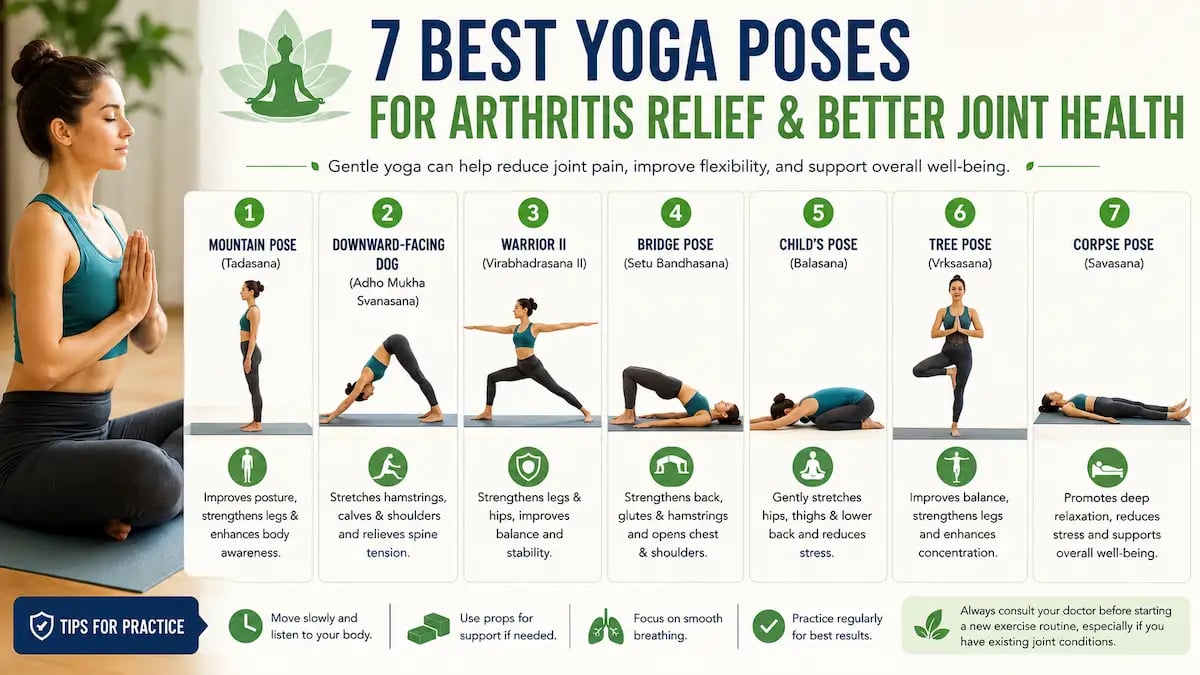
7 Best Yoga Poses for Arthritis Relief and Better Joint Health
Introduction
Arthritis is one of the most common joint disorders, affecting millions of people worldwide. It causes joint pain, stiffness, swelling, and reduced mobility, making everyday activities challenging. Although there is currently no cure for arthritis, maintaining an active lifestyle can help manage symptoms and improve overall joint function.
Yoga is a low-impact form of exercise that combines gentle stretching, controlled breathing, and mindful movement. Regular yoga practice may help improve flexibility, strengthen muscles that support the joints, reduce stiffness, and enhance overall well-being. While yoga cannot prevent every type of arthritis, it may lower certain risk factors and help people manage joint discomfort more effectively.
In this guide, we'll explore seven of the best yoga poses for arthritis relief and healthier joints.
1. Mountain Pose (Tadasana)
Mountain Pose is a simple yet powerful standing posture that improves body alignment and posture.
How to Do It
Stand with your feet hip-width apart.
Distribute your weight evenly on both feet.
Keep your spine straight and shoulders relaxed.
Engage your abdominal muscles.
Let your arms rest naturally at your sides.
Take slow, deep breaths for 30–60 seconds.
Benefits
Improves posture and balance
Strengthens leg muscles
Enhances body awareness
Reduces unnecessary stress on the joints
2. Downward-Facing Dog (Adho Mukha Svanasana)
This classic yoga pose stretches the entire body while strengthening the arms, shoulders, and legs.
How to Do It
Start on your hands and knees.
Place your hands slightly ahead of your shoulders.
Lift your hips toward the ceiling.
Straighten your legs as much as comfortable.
Press your palms firmly into the mat.
Keep your neck relaxed.
Benefits
Stretches hamstrings and calves
Strengthens shoulders and arms
Improves spinal flexibility
Helps reduce back stiffness
3. Warrior II (Virabhadrasana II)
Warrior II builds lower-body strength while improving stability and flexibility.
How to Do It
Stand with your feet wide apart.
Turn your right foot outward and your left foot slightly inward.
Bend your right knee until it aligns with your ankle.
Stretch both arms parallel to the floor.
Keep your gaze over your right hand.
Benefits
Strengthens the legs and hips
Improves balance
Increases joint stability
Enhances flexibility
4. Bridge Pose (Setu Bandhasana)
Bridge Pose strengthens the muscles supporting the spine and hips while gently stretching the front of the body.
How to Do It
Lie on your back with your knees bent.
Keep your feet hip-width apart.
Press your feet into the floor.
Slowly lift your hips upward.
Hold for 15–30 seconds before lowering.
Benefits
Strengthens the lower back
Builds glute and hamstring muscles
Opens the chest and shoulders
Improves spinal flexibility
5. Child's Pose (Balasana)
Child's Pose is a gentle resting posture that helps relieve tension throughout the body.
How to Do It
Kneel on the floor.
Sit back on your heels.
Lower your chest toward the floor.
Stretch your arms forward or keep them beside your body.
Rest your forehead on the mat.
Benefits
Relieves lower back tension
Gently stretches hips and thighs
Reduces stress
Encourages relaxation
6. Tree Pose (Vrksasana)
Tree Pose develops balance, coordination, and lower-body strength.
How to Do It
Stand upright with your feet together.
Shift your weight onto one foot.
Place the opposite foot against your inner calf or thigh (avoid placing it directly on the knee).
Bring your hands together in front of your chest.
Hold for 20–30 seconds before switching sides.
Benefits
Improves balance and stability
Strengthens ankles and knees
Enhances concentration
Supports healthy joint function
7. Corpse Pose (Savasana)
Savasana is a deeply relaxing pose that allows the body to recover after yoga practice.
How to Do It
Lie flat on your back.
Keep your legs comfortably apart.
Rest your arms beside your body with palms facing upward.
Close your eyes.
Focus on slow, deep breathing for 5–10 minutes.
Benefits
Reduces stress and muscle tension
Promotes relaxation
Supports mental well-being
Helps the body recover after exercise
Tips for Practicing Yoga with Arthritis
To practice yoga safely if you have arthritis:
Warm up before starting.
Move slowly and avoid sudden movements.
Never force a stretch beyond your comfort level.
Use yoga blocks, straps, or cushions for support.
Focus on smooth, controlled breathing.
Stop immediately if you experience sharp pain.
Practice consistently for the best results.
also read: benefits of apple
Can Yoga Help Prevent Arthritis?
Yoga cannot completely prevent arthritis because factors such as age, genetics, previous joint injuries, and autoimmune diseases also contribute to its development. However, regular yoga practice can help:
Maintain healthy joint mobility
Improve flexibility
Strengthen muscles around the joints
Reduce inflammation associated with a sedentary lifestyle
Support healthy body weight
Improve balance and reduce the risk of falls
These benefits may help lower the risk of joint problems and improve quality of life.
Conclusion
Adding yoga to your daily routine is a natural way to support healthy joints and manage arthritis symptoms. These seven beginner-friendly yoga poses can improve flexibility, increase muscle strength, reduce stiffness, and promote better posture and balance.
For the best results, practice regularly, listen to your body, and consult your doctor or a qualified yoga instructor before beginning a new exercise program—especially if you have moderate to severe arthritis or other medical conditions.
With patience and consistency, yoga can become an important part of a healthy lifestyle that supports long-term joint health and overall well-being.
Frequently Asked Questions (FAQs)
Is yoga good for arthritis?
Yes. Gentle yoga may help reduce joint stiffness, improve flexibility, strengthen supporting muscles, and ease pain for many people with arthritis.
Which yoga pose is best for knee arthritis?
Mountain Pose, Warrior II, Bridge Pose, and Child's Pose are commonly recommended because they strengthen the muscles around the knees while improving flexibility.
Can yoga cure arthritis?
No. Arthritis has no cure, but yoga may help manage symptoms, improve mobility, and enhance overall quality of life.
How often should I practice yoga for arthritis?
Practicing gentle yoga for 20–30 minutes, three to five times per week may provide noticeable improvements in flexibility and joint comfort over time.
Is yoga safe for seniors with arthritis?
Yes, provided the exercises are modified to match individual ability levels. Seniors should consult a healthcare professional before starting and consider working with a certified yoga instructor.
MicroNews © 2025
MicroNews empowers the generation of tomorrow for a brighter future and hope for every individual.
Thanks For Touch with us
We care about your data in our privacy policy.
Popular Post
Top 10 Calcium-Rich Vegetables for Strong Bones & Better Health
Patala Garuda (Rauvolfia serpentina): Health Benefits, Ayurvedic Uses
Ganga Siuli (Parijata Tree): Benefits, Uses, and Medicinal Properties
Freelancing Explained: How to Start, Earn, and Succeed as a Freelancer
Turmeric Benefits: Uses, Nutrition, Ayurveda Importance & Side Effects
Science of Longevity: New Research Reveals How Diet May Shape Lifespan