
Adrenal Gland Cancer: Causes, Symptoms, Diagnosis, and Treatment Options
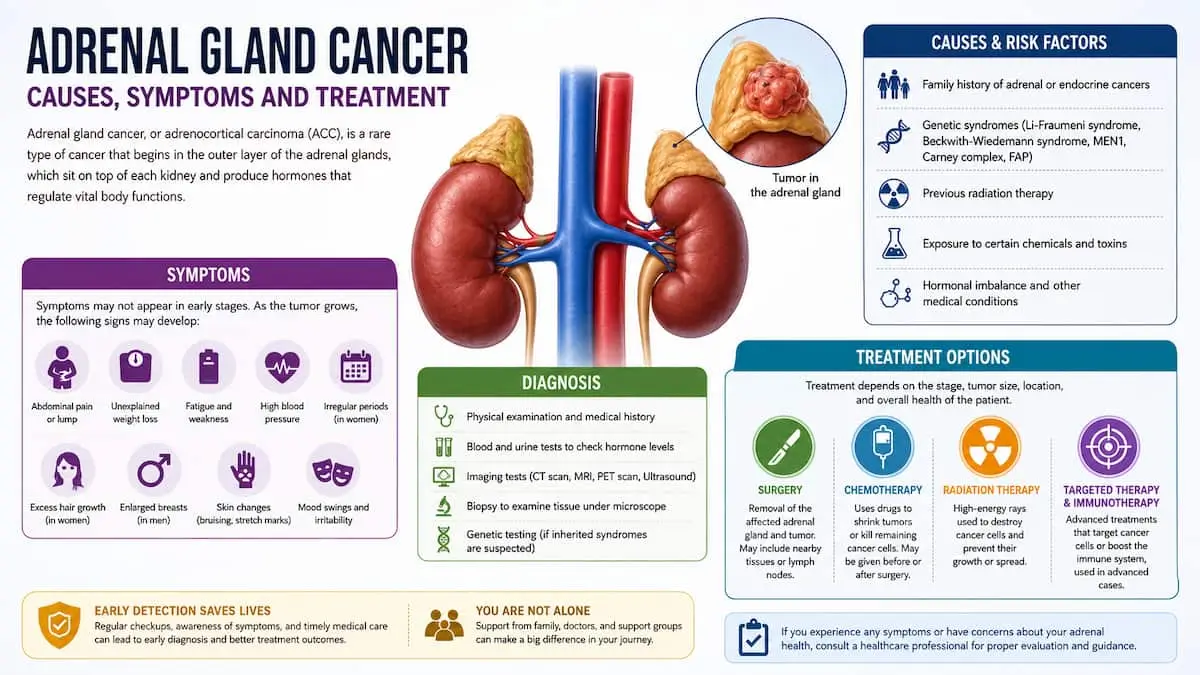
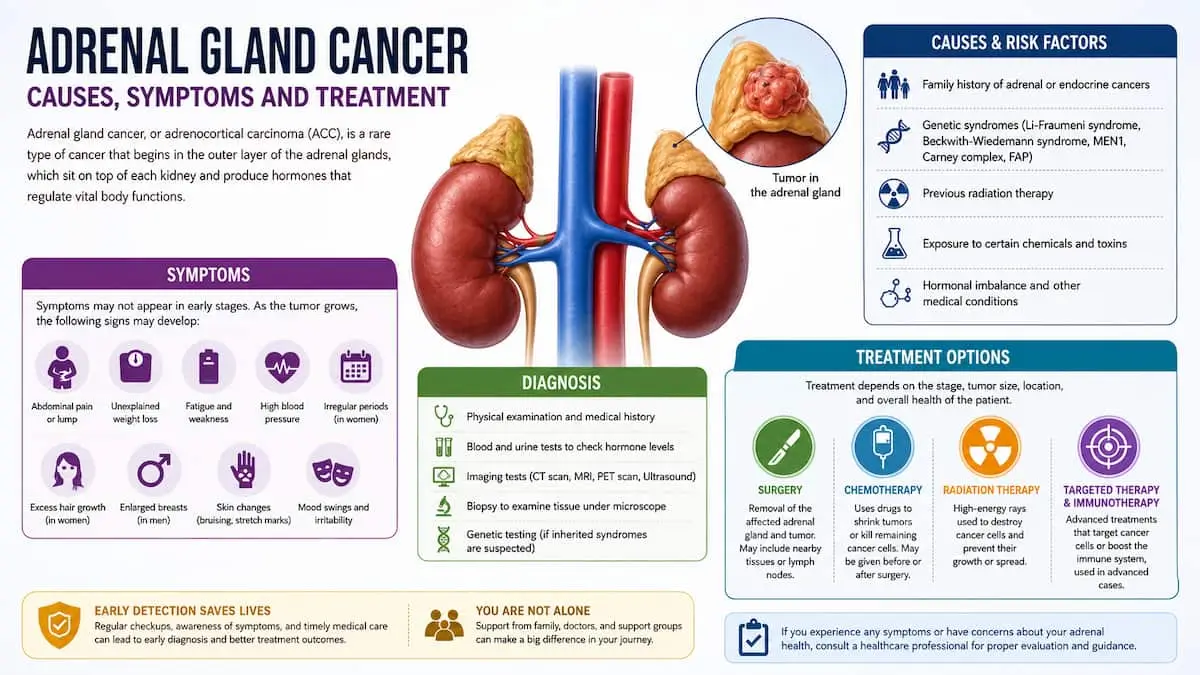
Adrenal gland cancer is a rare but serious disease that develops in the adrenal glands, small triangular-shaped organs located above each kidney. These glands play a vital role in the body by producing hormones that regulate metabolism, blood pressure, stress response, and sexual development. When cancer forms in the outer layer of the adrenal glands, it is called adrenocortical carcinoma (ACC).
Although adrenal gland cancer is uncommon, early diagnosis and proper treatment can improve outcomes significantly. Understanding the causes, symptoms, risk factors, and available treatment options is essential for better awareness and timely medical care.
What Is Adrenal Gland Cancer?
The adrenal glands are part of the endocrine system. Each gland has two main parts:
Adrenal cortex – the outer layer that produces hormones like cortisol, aldosterone, and androgens
Adrenal medulla – the inner part that produces adrenaline-related hormones
Adrenal gland cancer usually begins in the adrenal cortex and may affect hormone production. Some tumors produce excessive hormones, while others do not. The disease can occur in both adults and children, but it is more common in adults between the ages of 40 and 50.
Because adrenal gland cancer is rare, it is often difficult to diagnose in its early stages.
Causes of Adrenal Gland Cancer
The exact cause of adrenal gland cancer is still unknown. However, researchers believe that genetic mutations and inherited conditions may increase the risk of developing this disease.
Common Risk Factors
1. Family History
People with a family history of adrenal gland cancer may have a higher risk of developing the disease.
2. Genetic Disorders
Several inherited genetic syndromes are associated with adrenal gland cancer, including:
Beckwith-Wiedemann syndrome
Multiple endocrine neoplasia type 1 (MEN1)
Carney complex
Familial adenomatous polyposis (FAP)
These conditions can increase the likelihood of abnormal cell growth in the adrenal glands.
3. Radiation Exposure
Previous exposure to radiation therapy may slightly increase the risk of adrenal tumors.
4. Chemical Exposure
Long-term exposure to certain industrial chemicals and toxins may also contribute to the development of adrenal gland cancer.
5. Hormonal Imbalance
Abnormal hormone production can sometimes trigger uncontrolled cell growth in the adrenal glands.
Symptoms of Adrenal Gland Cancer
In the early stages, adrenal gland cancer may not cause noticeable symptoms. Many cases are discovered accidentally during imaging tests for unrelated health issues.
As the tumor grows, symptoms may appear due to hormone overproduction or pressure on nearby organs.
Common Symptoms Include:
1. Abdominal Pain or Lump
Patients may feel pain, pressure, or notice a mass in the abdomen.
2. Unexplained Weight Loss
Sudden weight loss without changes in diet or exercise can be a warning sign.
3. Fatigue and Weakness
Persistent tiredness and muscle weakness are common symptoms.
4. High Blood Pressure
Excess hormone production can lead to hypertension that is difficult to control.
5. Hormonal Changes in Women
Women may experience:
Irregular menstrual periods
Excess facial or body hair growth
Deepening of the voice
6. Hormonal Changes in Men
Men may develop:
Enlarged breasts
Reduced sex drive
Hormonal imbalance symptoms
7. Skin Changes
Some people notice:
Easy bruising
Purple stretch marks
Acne or oily skin
8. Mood Changes
Hormonal imbalance may cause:
Anxiety
Irritability
Mood swings
Depression
These symptoms do not always indicate cancer, but they should never be ignored. Consulting a healthcare professional is important for accurate diagnosis.
How Adrenal Gland Cancer Is Diagnosed
Doctors use several tests to diagnose adrenal gland cancer and determine whether the disease has spread.
Physical Examination
The doctor checks for visible symptoms and reviews medical history.
Blood and Urine Tests
Hormone levels are measured to identify abnormal adrenal gland activity.
Imaging Tests
Doctors may recommend:
CT scans
PET scans
Ultrasound
These tests help locate tumors and determine their size.
Biopsy
In some cases, a tissue sample is collected and examined under a microscope to confirm cancer.
Genetic Testing
Patients with inherited syndromes may undergo genetic screening to identify risk factors.
Stages of Adrenal Gland Cancer
Adrenal gland cancer is usually divided into stages based on tumor size and spread.
Stage 1
The tumor is small and limited to the adrenal gland.
Stage 2
The tumor is larger but still confined to the adrenal gland.
Stage 3
Cancer spreads to nearby lymph nodes or tissues.
Stage 4
Cancer spreads to distant organs such as the lungs, liver, or bones.
Early-stage diagnosis offers the best chance for successful treatment.
Treatment Options for Adrenal Gland Cancer
Treatment depends on several factors, including:
Cancer stage
Tumor size
Hormone activity
Overall patient health
A multidisciplinary team usually develops the treatment plan.
1. Surgery
Surgery is the primary treatment for adrenal gland cancer. The goal is to completely remove the tumor.
Types of Surgery
Adrenalectomy – removal of the affected adrenal gland
Removal of nearby tissues or lymph nodes if cancer has spread
Surgery is most effective when the cancer is detected early.
2. Chemotherapy
Chemotherapy uses drugs to destroy cancer cells. It may be recommended:
Before surgery to shrink tumors
After surgery to reduce recurrence risk
For advanced or metastatic cancer
Mitotane is one of the commonly used drugs for adrenal gland cancer treatment.
3. Radiation Therapy
Radiation therapy uses high-energy rays to kill cancer cells and prevent tumor growth.
Doctors may use radiation therapy:
After surgery
To control pain
To treat cancer spread to other organs
4. Targeted Therapy
Targeted therapy focuses on specific molecules involved in cancer growth. It helps minimize damage to healthy cells.
This treatment may benefit patients with advanced adrenal gland cancer.
5. Immunotherapy
Immunotherapy strengthens the body’s immune system to fight cancer. Although still being studied for adrenal gland cancer, it may help some patients with advanced disease.
Can Adrenal Gland Cancer Be Prevented?
There is no guaranteed way to prevent adrenal gland cancer. However, certain steps may reduce the risk:
Maintain a healthy lifestyle
Avoid tobacco and excessive alcohol
Limit exposure to harmful chemicals
Attend regular medical checkups
Seek genetic counseling if you have a family history of endocrine cancers
Early detection remains the most important factor in improving survival rates.
Living With Adrenal Gland Cancer
A diagnosis of adrenal gland cancer can be physically and emotionally challenging. Patients may require long-term monitoring even after successful treatment.
Important Support Measures
Regular follow-up scans
Hormone monitoring
Nutritional support
Emotional counseling
Physical rehabilitation
Support from family, healthcare providers, and cancer support groups can greatly improve quality of life.
Conclusion
Adrenal gland cancer is a rare but potentially aggressive disease that affects the hormone-producing adrenal glands. Although the exact cause remains unclear, genetic conditions and family history are major risk factors. Symptoms such as abdominal pain, hormonal imbalance, weight loss, and high blood pressure should not be ignored.
Modern treatment approaches, including surgery, chemotherapy, radiation therapy, targeted therapy, and immunotherapy, have improved the management of adrenal gland cancer. Early diagnosis and timely medical intervention offer the best chances for successful treatment and recovery.
If you notice unusual symptoms or have concerns about adrenal gland health, consult a qualified healthcare professional for proper evaluation and guidance.