
The Human Brain: Structure, Functions, Brain Health, and Ways to Improve Cognitive Performance
Introduction
The human brain is one of the most remarkable and complex organs in the body. Acting as the control center of the nervous system, it regulates every thought, movement, emotion, memory, and bodily function. Despite decades of scientific research, the brain continues to fascinate researchers due to its incredible capabilities and many remaining mysteries.
Composed of billions of nerve cells called neurons, the brain processes information, controls body functions, and enables us to interact with the world around us. Understanding how the brain works can help us maintain better mental health, improve cognitive performance, and reduce the risk of neurological disorders.
What Is the Human Brain?
The human brain is a highly sophisticated organ located within the skull. It serves as the command center for the entire body, receiving information from the senses, processing it, and sending signals to different organs and muscles.
Scientists estimate that the human brain contains approximately 86 billion neurons, which communicate through electrical and chemical signals. This vast network allows humans to think, learn, remember, solve problems, and experience emotions.
Structure of the Human Brain
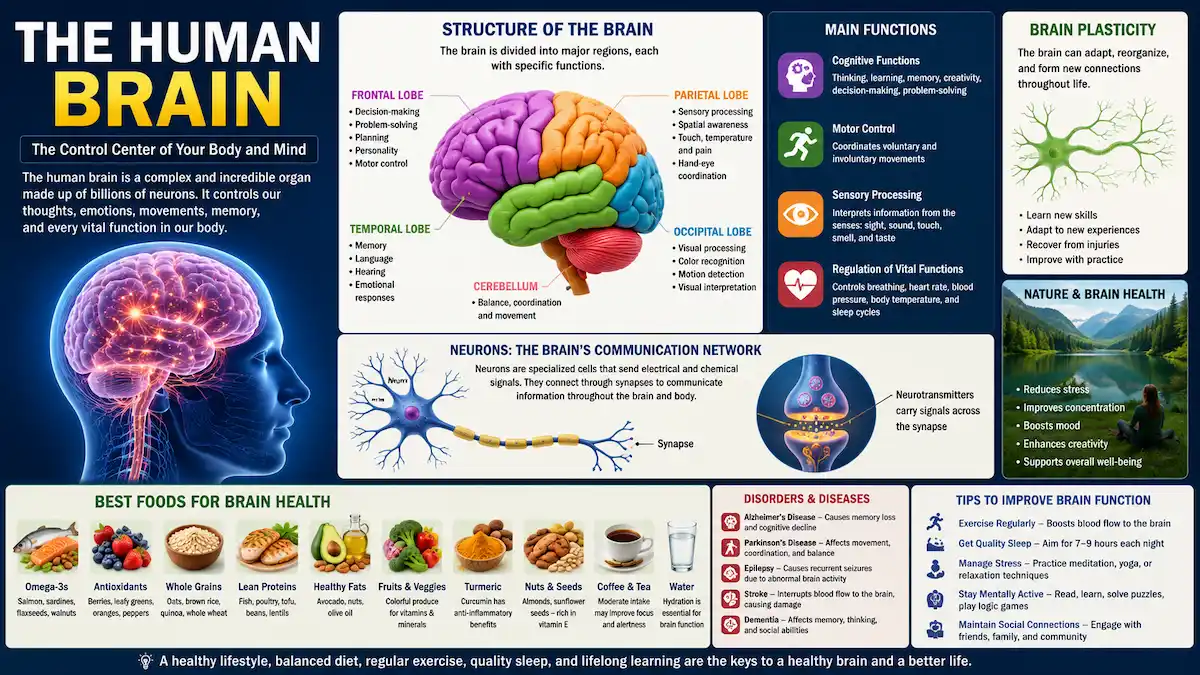
The brain is divided into several specialized regions, each responsible for specific functions.
1. Frontal Lobe
The frontal lobe is associated with:
Decision-making
Problem-solving
Planning and reasoning
Emotional control
Voluntary movement
Personality development
2. Temporal Lobe
The temporal lobe plays a vital role in:
Memory formation
Language comprehension
Hearing and auditory processing
Emotional responses
3. Parietal Lobe
The parietal lobe is responsible for:
Processing sensory information
Understanding touch, temperature, and pain
Spatial awareness
Hand-eye coordination
4. Occipital Lobe
The occipital lobe primarily handles:
Visual processing
Color recognition
Motion detection
Interpretation of visual information
Main Functions of the Human Brain
The brain performs numerous essential functions that keep the body operating efficiently.
Cognitive Functions
These include:
Thinking
Learning
Memory
Creativity
Decision-making
Problem-solving
Motor Control
The brain coordinates voluntary and involuntary movements, helping us walk, run, write, and perform daily activities.
Sensory Processing
Information from the eyes, ears, nose, skin, and tongue is processed by the brain, allowing us to see, hear, smell, taste, and feel.
Regulation of Vital Functions
The brain controls:
Breathing
Heart rate
Body temperature
Sleep cycles
Neurons: The Building Blocks of the Brain
Neurons are specialized nerve cells that form the communication network of the brain. These cells transmit electrical and chemical signals throughout the nervous system.
Neurons communicate through structures called synapses, where neurotransmitters carry messages from one cell to another. This communication system enables everything from simple reflexes to complex reasoning.
Brain Plasticity: The Brain’s Ability to Adapt
One of the most fascinating characteristics of the human brain is neuroplasticity.
Neuroplasticity refers to the brain’s ability to reorganize and form new neural connections throughout life. This allows individuals to:
Learn new skills
Adapt to new experiences
Recover from certain brain injuries
Improve cognitive performance through practice
The brain continuously changes and adapts based on experiences, learning, and environmental influences.
Consciousness and the Human Brain
Consciousness remains one of the greatest mysteries in neuroscience. Researchers continue to investigate how brain activity produces self-awareness, thoughts, emotions, and subjective experiences.
Although significant progress has been made, understanding consciousness remains a major scientific challenge.
Common Brain Disorders and Neurological Diseases
Several medical conditions can affect brain function and quality of life.
Alzheimer‘s Disease
A progressive neurological disorder that causes memory loss, cognitive decline, and behavioral changes.
Parkinson‘s Disease
A movement disorder that affects coordination, balance, and muscle control.
Epilepsy
A neurological condition characterized by recurrent seizures caused by abnormal brain activity.
Stroke
Occurs when blood flow to part of the brain is interrupted, potentially leading to permanent brain damage.
Dementia
A group of symptoms affecting memory, thinking, and social abilities.
Researchers worldwide continue developing treatments and preventive strategies for these conditions.
How Nature Benefits Brain Health
Recent studies suggest that spending time in nature can positively impact mental and cognitive health.
Benefits include:
Reduced stress levels
Improved concentration
Better mood and emotional well-being
Enhanced creativity
Lower risk of anxiety and depression
Regular exposure to natural environments may support overall brain function and mental wellness.
Best Foods for Brain Health
A nutritious diet plays a crucial role in supporting memory, focus, and overall cognitive performance.
1. Omega-3 Fatty Acids
Sources include:
Salmon
Sardines
Mackerel
Flaxseeds
Walnuts
Omega-3 fatty acids support brain structure and improve communication between brain cells.
2. Antioxidant-Rich Foods
Excellent sources include:
Blueberries
Strawberries
Spinach
Kale
Oranges
Antioxidants help protect the brain from oxidative stress and inflammation.
3. Whole Grains
Healthy options include:
Oats
Brown rice
Whole wheat
Quinoa
Whole grains provide a steady supply of glucose, the brain’s primary energy source.
4. Lean Protein Sources
Examples include:
Fish
Poultry
Tofu
Beans
Lentils
Protein supplies amino acids necessary for neurotransmitter production.
5. Healthy Fats
Good sources include:
Avocados
Olive oil
Almonds
Cashews
Healthy fats support cognitive function and brain cell health.
6. Fruits and Vegetables
Colorful fruits and vegetables provide essential vitamins, minerals, and antioxidants that help maintain brain health.
7. Turmeric
Turmeric contains curcumin, a compound known for its anti-inflammatory and antioxidant properties that may support cognitive function.
8. Nuts and Seeds
Nuts and seeds are rich in vitamin E, which has been linked to improved cognitive health and protection against age-related decline.
9. Coffee and Tea
Moderate consumption may:
Improve alertness
Enhance concentration
Support memory function
10. Water
Proper hydration is essential for:
Memory
Mental clarity
Overall brain performance
Foods and Habits to Limit
To maintain optimal brain health, consider reducing:
Highly processed foods
Excess sugar
Trans fats
Excessive alcohol consumption
Sugary beverages
These may negatively affect memory, concentration, and cognitive performance.
Additional Tips to Improve Brain Function
In addition to a healthy diet, the following habits can enhance brain health:
Exercise Regularly
Physical activity increases blood flow to the brain and supports cognitive function.
Get Quality Sleep
Adults should aim for 7–9 hours of sleep per night to support memory consolidation and brain recovery.
Manage Stress
Meditation, yoga, and relaxation techniques can reduce stress and improve mental clarity.
Stay Mentally Active
Challenge your brain through:
Reading
Learning new skills
Puzzles
Strategic games
Creative activities
Maintain Social Connections
Regular social interaction supports emotional well-being and cognitive health.
Conclusion
The human brain is an extraordinary organ responsible for every aspect of human thought, behavior, and bodily function. From controlling movement and processing sensory information to enabling creativity and consciousness, the brain plays a vital role in everyday life.
Maintaining brain health through proper nutrition, regular exercise, quality sleep, stress management, and lifelong learning can help improve cognitive performance and reduce the risk of neurological disorders. As scientific research continues, our understanding of the brain will undoubtedly reveal even more fascinating insights into this incredible organ.