
Top 10 Calcium-Rich Vegetables for Strong Bones & Better Health
Discover the top 10 calcium-rich vegetables that help strengthen bones, improve heart health, and support overall wellness. Learn healthy ways to add them to your daily diet.
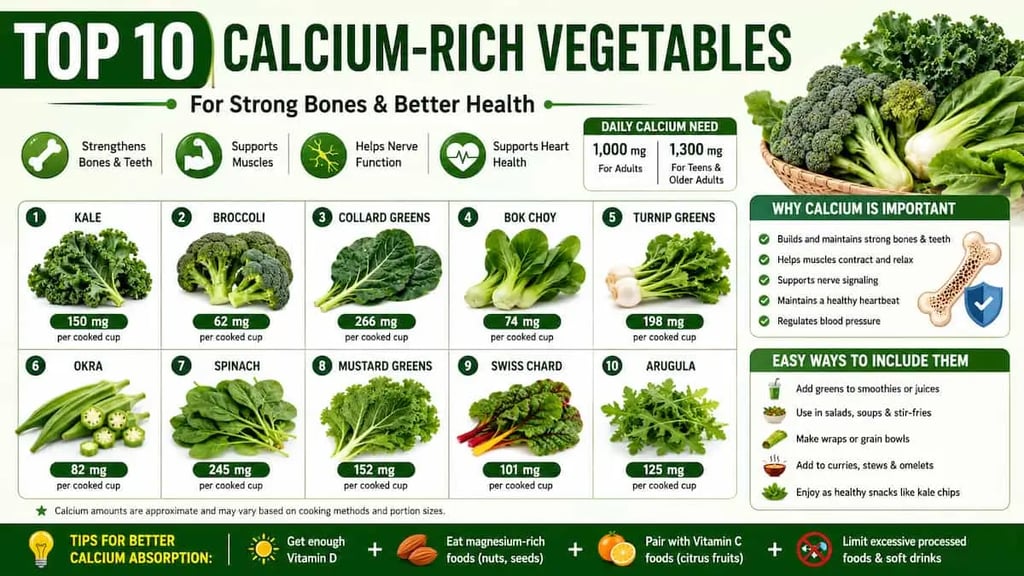
Top 10 Calcium-Rich Vegetables for Strong Bones and Better Health
Calcium is one of the most important minerals your body needs for maintaining strong bones, healthy teeth, proper muscle function, and heart health. While many people associate calcium with dairy products, several vegetables are also excellent natural sources of calcium. Adding calcium-rich vegetables to your daily diet can help improve bone strength, support nerve function, and reduce the risk of calcium deficiency.
In this article, we will explore the importance of calcium, the best calcium-rich vegetables, and easy ways to include them in your meals.
Why Is Calcium Important for Your Body?
Calcium plays a major role in maintaining overall health. Around 99% of the calcium in the human body is stored in bones and teeth, making it essential for skeletal strength and development.
Apart from bone health, calcium is also responsible for:
Supporting muscle contraction and relaxation
Helping nerves send signals throughout the body
Maintaining a healthy heartbeat
Regulating blood pressure
Supporting proper blood clotting
Without enough calcium, the body may develop health problems such as osteoporosis, muscle cramps, fatigue, weak teeth, and brittle bones.
Daily Recommended Calcium Intake
The recommended calcium intake varies according to age and gender. Most adults need around:
1,000 mg per day for adults
1,300 mg per day for teenagers and older adults
Including natural calcium-rich foods in your diet is one of the safest and healthiest ways to meet your daily calcium needs.
Top 10 Vegetables High in Calcium
Here are the best calcium-rich vegetables you should add to your diet for stronger bones and improved health.
1. Kale
Kale is one of the most nutrient-dense leafy greens and an excellent source of calcium. One cooked cup of kale provides approximately 150 mg of calcium. It is also rich in vitamins A, C, and K.
Health Benefits
Supports bone strength
Boosts immunity
Contains powerful antioxidants
How to Eat Kale
Add to smoothies
Use in salads
Sauté with garlic and olive oil
2. Broccoli
Broccoli contains around 62 mg of calcium per cup and is packed with fiber, vitamin C, and potassium.
Health Benefits
Improves digestion
Supports immunity
Promotes heart health
Best Ways to Eat
Steam lightly
Add to soups and stir-fries
Roast with herbs
3. Collard Greens
Collard greens are among the best vegetable sources of calcium, providing nearly 266 mg per cooked cup.
Benefits
Strengthens bones
Supports eye health
Rich in antioxidants
How to Include
Cook with garlic and onions
Add to wraps
Mix into soups
4. Bok Choy
Also called Chinese cabbage, bok choy contains approximately 74 mg of calcium per cup.
Benefits
Supports bone development
Good for skin and immunity
Low in calories
How to Eat
Add to stir-fries
Use in soups
Eat raw in salads
5. Turnip Greens
Turnip greens provide around 198 mg of calcium per cooked cup and are rich in vitamins A, C, and K.
Health Benefits
Improves bone density
Supports immunity
Helps reduce inflammation
Serving Ideas
Add to smoothies
Sauté with spices
Use in soups
6. Okra
Okra contains approximately 82 mg of calcium per cup along with fiber and folate.
Benefits
Supports digestion
Helps maintain bone health
Good for heart health
Best Ways to Eat
Add to curries
Roast with olive oil
Use in stews
7. Spinach
Spinach offers nearly 245 mg of calcium per cooked cup and is also rich in iron and magnesium.
Benefits
Boosts energy
Supports muscles
Helps maintain healthy bones
How to Consume
Blend into smoothies
Add to salads
Cook with garlic
8. Mustard Greens
Mustard greens contain approximately 152 mg of calcium per cooked cup.
Benefits
Supports bone health
Rich in antioxidants
Helps improve immunity
Serving Suggestions
Add to soups
Stir-fry with spices
Use in salads
9. Swiss Chard
Swiss chard provides about 101 mg of calcium per cup and contains essential vitamins and minerals.
Benefits
Promotes healthy bones
Supports heart health
Improves overall nutrition
Best Uses
Add to grain bowls
Use in soups
Sauté as a side dish
10. Arugula
Arugula contains approximately 125 mg of calcium per cup and adds a peppery flavor to meals.
Benefits
Supports bone health
Rich in vitamins A and C
Low-calorie nutritious green
How to Eat
Use in salads
Add on pizza
Blend into pesto
How to Add Calcium-Rich Vegetables to Your Diet
Including calcium-rich vegetables in your meals can be simple and delicious. Here are some practical ideas:
Breakfast Ideas
Add spinach or kale to smoothies
Prepare veggie omelets with broccoli and greens
Lunch Ideas
Make salads with bok choy or collard greens
Use whole-grain wraps filled with roasted vegetables
Dinner Ideas
Add okra, turnip greens, or broccoli to curries and stir-fries
Pair vegetables with tofu or beans for extra nutrition
Healthy Snacks
Enjoy kale chips
Eat raw broccoli with hummus
Blend green smoothies with almond milk
Tips for Better Calcium Absorption
To maximize calcium absorption naturally:
Eat foods rich in Vitamin D
Include magnesium-rich foods like nuts and seeds
Pair vegetables with citrus fruits for better absorption
Avoid excessive processed foods and soft drinks
Final Thoughts
Calcium-rich vegetables are an excellent natural way to support strong bones, healthy muscles, and overall wellness. Vegetables like kale, spinach, collard greens, broccoli, and bok choy provide essential nutrients while also delivering fiber, antioxidants, and vitamins.
Adding a variety of these vegetables to your daily diet can help improve your health naturally and reduce the risk of calcium deficiency over time. Whether you enjoy them in salads, soups, smoothies, or stir-fries, these vegetables are a smart addition to a balanced diet.
For long-term health benefits, focus on maintaining a nutrient-rich diet combined with regular exercise and a healthy lifestyle.