
Osteoporosis: 7 Risk Factors, Symptoms, Diagnosis, and Effective Treatment Options
Learn about osteoporosis, its causes, symptoms, diagnosis, and 7 effective treatment methods. Discover how to prevent bone loss and maintain strong, healthy bones.
7 Risk factors for Osteoporosis and 7 ways to treat....
Osteoporosis is a medical condition characterized by weakened and brittle bones, making them more prone to fractures and breaks. It occurs when the body loses too much bone, produces too little bone, or both. This imbalance leads to a decrease in bone density and a deterioration of the bone's microarchitecture, making bones more susceptible to fractures, especially in areas like the spine, hips, and wrists.
Osteoporosis: 7 Major Risk Factors, Symptoms, Diagnosis, and 7 Effective Treatment Options
Introduction
Osteoporosis is a common bone disease that causes bones to become weak, brittle, and more likely to break. Often called the "silent disease" or "silent thief," osteoporosis develops gradually without obvious symptoms until a fracture occurs. It affects millions of people worldwide, especially older adults and postmenopausal women.
Understanding the causes, risk factors, symptoms, diagnosis methods, and treatment options can help prevent serious complications and maintain strong, healthy bones throughout life.
What Is Osteoporosis?
Osteoporosis is a condition in which bone density and bone quality decrease over time. Healthy bones constantly rebuild themselves, but when the body loses too much bone or produces too little new bone, the balance is disrupted.
As bones become porous and fragile, even minor falls, bumps, or sudden movements can lead to fractures. The most commonly affected areas include:
Spine
Hip
Wrist
Ribs
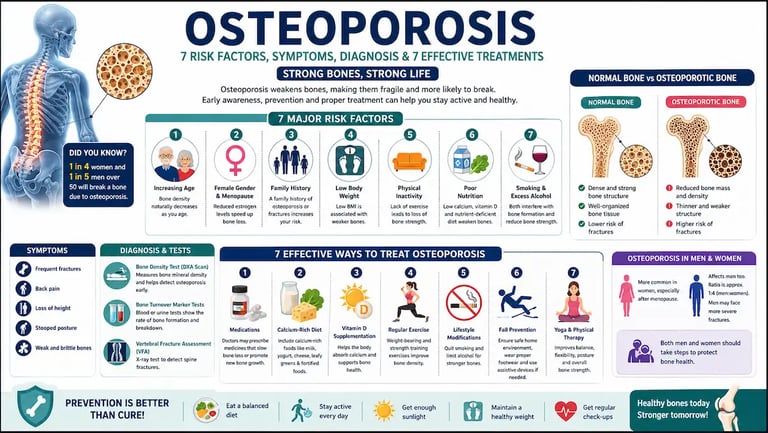
7 Major Risk Factors for Osteoporosis
1. Increasing Age
Age is one of the biggest risk factors for osteoporosis. Bone density naturally decreases as people grow older, increasing the likelihood of fractures.
2. Female Gender and Menopause
Women are significantly more likely to develop osteoporosis than men. After menopause, estrogen levels decline rapidly, accelerating bone loss.
3. Family History
A family history of osteoporosis or hip fractures can increase your risk of developing the condition.
4. Low Body Weight
Individuals with a low Body Mass Index (BMI) often have less bone mass, making them more vulnerable to osteoporosis.
5. Physical Inactivity
A sedentary lifestyle can weaken bones and muscles. Regular exercise helps maintain bone density and overall skeletal strength.
6. Poor Nutrition
Insufficient intake of calcium, vitamin D, protein, and other essential nutrients can negatively impact bone health.
7. Smoking and Excessive Alcohol Consumption
Smoking interferes with bone formation, while excessive alcohol consumption reduces calcium absorption and weakens bone structure.
Common Symptoms of Osteoporosis
In its early stages, osteoporosis may not cause noticeable symptoms. As the disease progresses, signs may include:
Frequent fractures
Loss of height over time
Stooped posture
Weak bones
Reduced mobility
7 Effective Ways to Treat Osteoporosis
1. Medications
Doctors may prescribe medications that slow bone loss or promote new bone growth. Common treatments include:
Bisphosphonates
Denosumab
Teriparatide
Hormone replacement therapy (for eligible women)
2. Calcium-Rich Diet
Calcium is essential for maintaining strong bones. Good dietary sources include:
Milk and dairy products
Cheese
Leafy green vegetables
Fortified cereals and beverages
3. Vitamin D Supplementation
Vitamin D helps the body absorb calcium effectively. Sunlight exposure, supplements, and fortified foods can help maintain healthy vitamin D levels.
4. Regular Exercise
Weight-bearing and resistance exercises help strengthen bones and muscles. Recommended activities include:
Walking
Jogging
Climbing stairs
Resistance training
Strength exercises
5. Lifestyle Modifications
Quitting smoking and reducing alcohol consumption can significantly improve bone health and reduce fracture risk.
6. Fall Prevention Strategies
Since fractures are the most serious consequence of osteoporosis, preventing falls is critical. Consider:
Installing grab bars
Improving home lighting
Wearing supportive footwear
Using mobility aids if necessary
7. Yoga and Physical Therapy
Gentle yoga, stretching, and physical therapy can improve balance, flexibility, posture, and mobility. Individuals with osteoporosis should consult healthcare professionals before beginning any exercise program.
How Osteoporosis Is Diagnosed
1. Bone Density Test (DXA Scan)
The Dual-Energy X-ray Absorptiometry (DXA) scan is considered the gold standard for diagnosing osteoporosis. It measures bone mineral density and helps determine fracture risk.
2. Bone Turnover Marker Tests
Blood and urine tests can assess the rate of bone formation and bone breakdown, providing valuable information about bone health.
3. Vertebral Fracture Assessment (VFA)
This specialized imaging test helps detect spinal fractures that may not cause noticeable symptoms.
Normal Bone vs. Osteoporotic Bone
Normal Bone
Healthy bone has:
Strong, dense structure
Well-organized internal architecture
Normal bone mineral density
Lower fracture risk
Osteoporotic Bone
Osteoporotic bone is characterized by:
Reduced bone mass
Thinner internal bone structure
Increased porosity
Higher risk of fractures
Osteoporosis in Men and Women
Although osteoporosis is more common in women, men can also develop the disease. Studies suggest that approximately four women are affected for every one man diagnosed with osteoporosis.
Women are particularly vulnerable after menopause due to hormonal changes. However, when men develop osteoporosis, fractures can often result in serious health complications because they are frequently diagnosed later in life.
Both men and women should monitor their bone health and take preventive measures if they have risk factors.
How to Prevent Osteoporosis
Preventing osteoporosis starts with healthy lifestyle habits:
Consume adequate calcium and vitamin D
Stay physically active
Maintain a healthy body weight
Avoid smoking
Limit alcohol intake
Get regular health screenings
Discuss risk factors with your healthcare provider
Conclusion
Osteoporosis may be a silent disease, but its effects can be life-changing. By understanding the risk factors, symptoms, diagnosis methods, and treatment options, individuals can take proactive steps to protect their bone health.
Whether you are young or elderly, it is never too early or too late to invest in stronger bones. A healthy diet, regular exercise, and routine medical checkups can help reduce your risk of osteoporosis and support lifelong mobility and independence.
Related Stories
MicroNews © 2025
MicroNews empowers the generation of tomorrow for a brighter future and hope for every individual.
Thanks For Touch with us
We care about your data in our privacy policy.
Popular Post
Top 10 Calcium-Rich Vegetables for Strong Bones & Better Health
Patala Garuda (Rauvolfia serpentina): Health Benefits, Ayurvedic Uses
Ganga Siuli (Parijata Tree): Benefits, Uses, and Medicinal Properties
Freelancing Explained: How to Start, Earn, and Succeed as a Freelancer
Turmeric Benefits: Uses, Nutrition, Ayurveda Importance & Side Effects
Science of Longevity: New Research Reveals How Diet May Shape Lifespan