

Natural Health Practices and Cultures Around the World: A Complete Guide
Discover the rich tapestry of cultures from various regions, influenced by history, geography, traditions, beliefs, and interactions with other cultures. Explore how these diverse cultures shape ou...
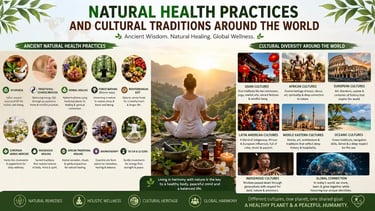
Natural Health Practices and Cultural Traditions Around the World
Introduction
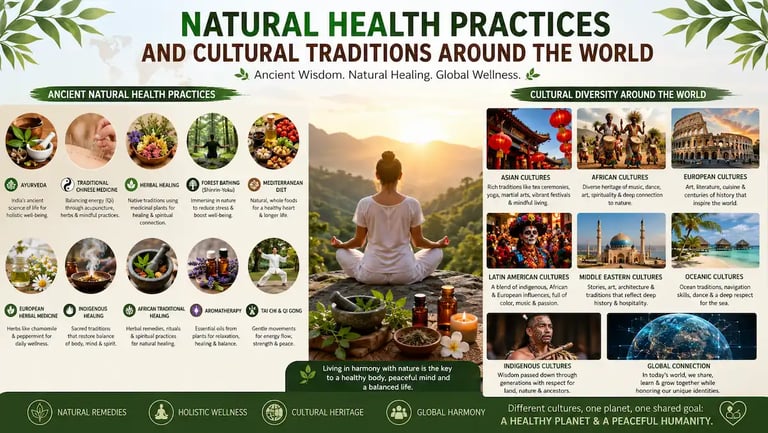
For centuries, people across the globe have relied on nature-based healing systems and traditional practices to maintain health, balance, and well-being. These ancient methods emphasize living in harmony with nature, using natural remedies, mindful practices, and holistic approaches to support physical, mental, and spiritual health.
Today, as interest in natural wellness continues to grow, many of these traditional practices are gaining worldwide recognition. From Ayurveda in India to Forest Bathing in Japan, cultures around the world offer valuable insights into healthy living and nature care.
In this article, we explore some of the most influential natural health traditions and cultural practices from different regions of the world.
Ancient Natural Health Practices Around the World
1. Ayurveda: India's Ancient Science of Life
Ayurveda is one of the world's oldest holistic healing systems, originating in India more than 5,000 years ago. The word "Ayurveda" means "science of life."
Key Principles of Ayurveda:
Balancing the three doshas: Vata, Pitta, and Kapha
Using herbal remedies and natural medicines
Practicing yoga and meditation
Following personalized dietary guidelines
Promoting physical, mental, and spiritual wellness
Benefits:
Improved digestion
Better immunity
Stress reduction
Enhanced overall health
2. Traditional Chinese Medicine (TCM)
Traditional Chinese Medicine focuses on maintaining balance within the body through the flow of vital energy known as Qi (Chi).
Common TCM Practices:
Acupuncture
Acupressure
Herbal medicine
Tai Chi
Qi Gong
Benefits:
Pain management
Improved circulation
Better energy levels
Enhanced mental well-being
TCM emphasizes the balance of Yin and Yang, which are believed to regulate the body's natural harmony.
3. Native American Herbal Healing
Many Indigenous communities in North America possess extensive knowledge of medicinal plants and natural healing methods.
Common Healing Herbs:
Sage
Cedar
Sweetgrass
Echinacea
Yarrow
Traditional Uses:
Spiritual cleansing
Healing ceremonies
Immune support
Treatment of minor ailments
These practices reflect a deep respect for nature and the interconnectedness of all living things.
4. Japanese Shinrin-Yoku (Forest Bathing)
Shinrin-Yoku, commonly known as Forest Bathing, originated in Japan and encourages individuals to immerse themselves in nature.
Benefits of Forest Bathing:
Reduced stress and anxiety
Lower blood pressure
Improved mood
Enhanced immune function
Better mental clarity
This simple practice highlights the healing power of spending time among trees and natural landscapes.
5. The Mediterranean Diet
The Mediterranean lifestyle is widely recognized for promoting longevity and heart health.
Key Foods:
Fresh fruits and vegetables
Olive oil
Whole grains
Fish and seafood
Nuts and seeds
Health Benefits:
Reduced risk of heart disease
Better brain function
Healthy weight management
Lower inflammation
This diet demonstrates how natural foods can significantly contribute to overall wellness.
6. European Herbal Medicine
Traditional European cultures have long relied on medicinal herbs for healing and wellness.
Popular Herbs:
Chamomile for relaxation
Peppermint for digestion
Lavender for stress relief
Rosemary for memory support
Benefits:
Natural symptom relief
Improved sleep quality
Better digestive health
Many of these herbal remedies remain popular in modern wellness practices.
7. Indigenous Healing Traditions
Indigenous communities worldwide use healing methods deeply connected to the natural environment.
Common Elements:
Herbal medicine
Spiritual ceremonies
Storytelling traditions
Community healing practices
These approaches often focus on restoring harmony between the body, mind, spirit, and nature.
8. Traditional African Healing Practices
Africa is home to diverse healing traditions that blend herbal medicine, spirituality, and cultural wisdom.
Common Practices:
Plant-based remedies
Traditional rituals
Spiritual guidance
Community-centered healing
These methods have been passed down through generations and remain an important part of healthcare in many communities.
9. Aromatherapy
Aromatherapy involves using essential oils extracted from plants to support health and relaxation.
Popular Essential Oils:
Lavender
Eucalyptus
Tea Tree
Peppermint
Lemon
Benefits:
Stress reduction
Improved sleep
Better mood
Respiratory support
This natural therapy has roots in several ancient cultures and remains widely used today.
10. Tai Chi and Qi Gong
Tai Chi and Qi Gong are traditional Chinese mind-body practices that combine movement, breathing, and meditation.
Benefits:
Improved flexibility
Better balance
Reduced stress
Enhanced concentration
Increased energy levels
These gentle exercises are suitable for people of all ages.
Cultural Diversity Around the World
Human civilization is enriched by diverse cultures, traditions, and customs. Each culture contributes unique perspectives and practices that shape our understanding of health, community, and well-being.
Asian Cultures
Chinese Culture
Chinese culture is known for:
Ancient philosophy
Traditional medicine
Calligraphy
Martial arts such as Kung Fu
Chinese New Year celebrations
Japanese Culture
Japan is famous for:
Tea ceremonies
Cherry blossom festivals
Sushi cuisine
Judo and Karate
Respect for nature and simplicity
Indian Culture
India is one of the world's oldest civilizations and is renowned for:
Yoga and meditation
Ayurveda
Diverse cuisines
Festivals such as Diwali and Holi
Rich spiritual traditions
African Cultures
Sub-Saharan African Cultures
Known for:
Traditional music and dance
Vibrant art forms
Community values
Strong connections to nature
North African Cultures
Influenced by Arab and Islamic traditions, these cultures feature:
Historic architecture
Rich culinary traditions
Ancient civilizations
Diverse artistic heritage
European Cultures
Western European Cultures
Countries such as France, Italy, and Spain are recognized for:
Art and architecture
Literature and philosophy
World-famous cuisine
Cultural festivals
Eastern European Cultures
These regions are known for:
Folk music and dance
Traditional crafts
Rich historical heritage
Distinctive culinary traditions
Latin American Cultures
Mexican Culture
Highlights include:
Day of the Dead celebrations
Traditional Mexican cuisine
Indigenous and Spanish influences
Colorful art and music
Brazilian Culture
Brazil is famous for:
Carnival festivals
Samba music
Diverse cultural heritage
Tropical traditions
Middle Eastern Cultures
Arab Culture
Known for:
Storytelling traditions
Islamic customs
Intricate art and architecture
Hospitality and family values
Persian Culture
Celebrated for:
Classical poetry
Traditional carpet weaving
Rich culinary heritage
Ancient historical contributions
Oceanic Cultures
Polynesian Culture
Polynesian traditions emphasize:
Ocean navigation
Hula dance
Community living
Respect for nature
Maori Culture
The Indigenous people of New Zealand are known for:
Haka performances
Traditional tattoos (Ta Moko)
Strong ancestral connections
Environmental stewardship
The Impact of Globalization on Culture
In today's interconnected world, globalization allows cultures to share ideas, traditions, foods, and wellness practices more easily than ever before. While modern influences continue to shape societies, preserving traditional knowledge remains essential for maintaining cultural identity and promoting sustainable living.
explore this guide: Automate Your Business with Artificial Intelligence
Conclusion
Natural health practices and cultural traditions provide valuable lessons about living in harmony with nature and achieving holistic well-being. From Ayurveda and Traditional Chinese Medicine to Indigenous healing systems and the Mediterranean lifestyle, these ancient approaches continue to inspire healthier ways of living.
Understanding and respecting cultural diversity not only enriches our knowledge but also helps preserve the wisdom passed down through generations. By learning from these traditions, we can promote wellness, environmental awareness, and a deeper appreciation for the world's rich cultural heritage.
also read: Obesity: Causes, Health Risks, Natural Weight Loss Tips & Best Yoga Poses
Keywords: Natural Health Practices, Ancient Healing Systems, Ayurveda Benefits, Traditional Chinese Medicine, Forest Bathing, Herbal Medicine, Cultural Diversity, Indigenous Healing Practices, Natural Wellness, Global Cultures.
Related Stories
MicroNews © 2025
MicroNews empowers the generation of tomorrow for a brighter future and hope for every individual.
Thanks For Touch with us
We care about your data in our privacy policy.
Popular Post
Top 10 Calcium-Rich Vegetables for Strong Bones & Better Health
Patala Garuda (Rauvolfia serpentina): Health Benefits, Ayurvedic Uses
Ganga Siuli (Parijata Tree): Benefits, Uses, and Medicinal Properties
Freelancing Explained: How to Start, Earn, and Succeed as a Freelancer
Turmeric Benefits: Uses, Nutrition, Ayurveda Importance & Side Effects
Science of Longevity: New Research Reveals How Diet May Shape Lifespan