
Best Diet for a Healthy Gallbladder: Foods, Nutrition & Natural Prevention Tips
Discover the best foods for gallbladder health, natural prevention tips, healthy eating habits, and lifestyle changes that support digestion and healthy bile flow.
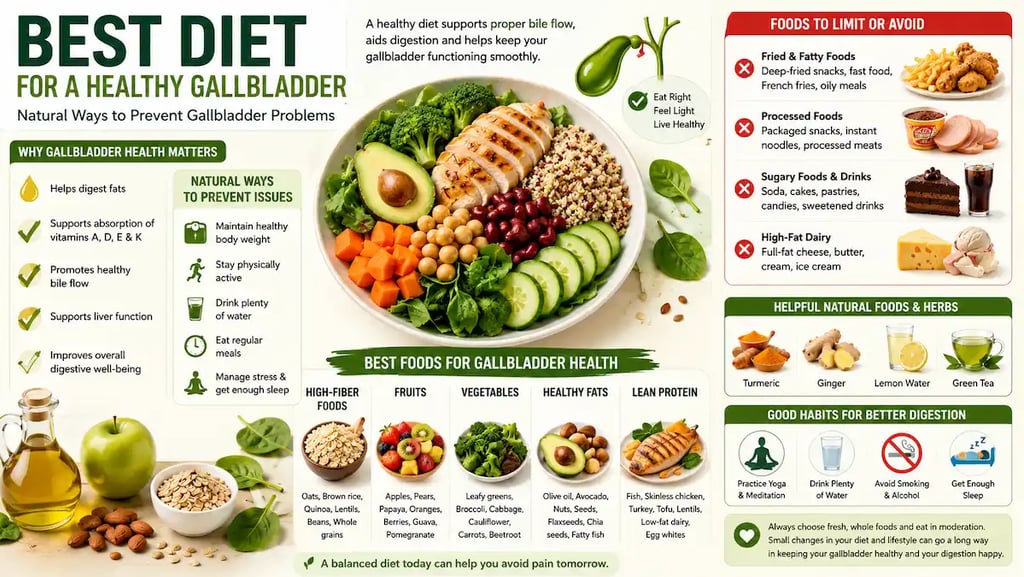
Best Diet for a Healthy Gallbladder: Natural Ways to Prevent Gallbladder Problems
Introduction
The gallbladder is a small but essential organ that plays a major role in digestion. Located beneath the liver, it stores and concentrates bile, a digestive fluid that helps break down fats. When the gallbladder is functioning properly, digestion runs smoothly. However, unhealthy eating habits, obesity, rapid weight loss, and a sedentary lifestyle can increase the risk of developing gallbladder problems.
Fortunately, maintaining a healthy diet and lifestyle can significantly reduce the chances of gallbladder-related issues. Choosing the right foods supports healthy bile production, improves digestion, and helps keep the gallbladder functioning efficiently.
This guide explores the best foods, dietary habits, and natural prevention strategies for maintaining long-term gallbladder health.
Why Gallbladder Health Matters
The gallbladder releases bile into the small intestine whenever you eat fatty foods. Bile contains cholesterol, bile salts, and other substances that aid digestion. When bile becomes overly concentrated or imbalanced, digestive complications can develop.
Maintaining healthy bile flow is essential because it:
Supports fat digestion
Helps absorb vitamins A, D, E, and K
Prevents bile stagnation
Supports liver function
Promotes digestive comfort
A healthy diet can help reduce stress on the gallbladder and improve overall digestive wellness.
Best Foods for Gallbladder Health
1. High-Fiber Foods
Fiber helps improve digestion and supports healthy cholesterol levels, which can benefit the gallbladder.
Excellent fiber-rich foods include:
Oats
Brown rice
Whole wheat bread
Quinoa
Beans
Chickpeas
Barley
Fiber also helps maintain a healthy weight, reducing one of the major risk factors for gallbladder problems.
2. Fresh Fruits
Fruits are packed with vitamins, antioxidants, and fiber that support digestive and liver health.
Recommended fruits include:
Pears
Oranges
Papaya
Guava
Berries
Pomegranate
Watermelon
Apples are particularly beneficial because they contain pectin, a soluble fiber that may support healthy digestion.
3. Green Leafy Vegetables
Vegetables provide nutrients that help the digestive system function efficiently.
Top choices include:
Kale
Lettuce
Fenugreek leaves
Mustard greens
Broccoli
Cabbage
Cauliflower
These vegetables are rich in antioxidants and support healthy bile metabolism.
4. Healthy Fats
Contrary to popular belief, completely eliminating fat is not ideal. The gallbladder needs some healthy fat intake to stimulate normal bile release.
Choose healthy fats such as:
Olive oil
Nuts
Seeds
Flaxseeds
Chia seeds
Fatty fish
Moderate consumption is important, as excessive fat intake may stress digestion.
5. Lean Protein Sources
Lean proteins provide essential nutrients without excessive saturated fat.
Healthy options include:
Skinless chicken
Turkey
Fish
Tofu
Lentils
Low-fat dairy products
Egg whites
Protein helps maintain muscle mass and supports healthy metabolism.
Foods to Limit for Better Gallbladder Function
Certain foods can increase digestive stress and should be consumed in moderation.
Fried Foods
Deep-fried foods are often high in unhealthy fats that may burden the digestive system.
Examples include:
French fries
Fried chicken
Chips
Fast food
Processed Foods
Many packaged foods contain unhealthy fats, preservatives, and excess sodium.
Examples include:
Processed meats
Instant noodles
Frozen snacks
Packaged desserts
Sugary Foods and Drinks
Excessive sugar consumption is linked to obesity and metabolic disorders that can negatively affect digestive health.
Limit:
Soft drinks
Candy
Cakes
Pastries
Sweetened beverages
High-Fat Dairy Products
Choose low-fat alternatives instead of:
Full-fat cheese
Cream
Butter
Ice cream
Natural Ways to Support Gallbladder Wellness
Maintain a Healthy Weight
Excess body weight is one of the leading risk factors for gallbladder disorders.
Focus on:
Balanced nutrition
Regular exercise
Sustainable weight management
Avoid crash diets and extreme calorie restriction.
Stay Physically Active
Regular physical activity helps maintain healthy cholesterol levels and supports digestion.
Aim for:
30 minutes of walking daily
Cycling
Swimming
Yoga
Light strength training
Drink Plenty of Water
Proper hydration supports healthy digestion and helps maintain normal bile consistency.
Most adults should aim for approximately:
2 to 3 liters of water daily
Water requirements vary based on age, activity level, and climate.
Eat Regular Meals
Skipping meals may affect normal bile release.
Healthy habits include:
Eating breakfast daily
Avoiding prolonged fasting
Maintaining consistent meal times
Regular eating patterns support healthy digestive function.
Beneficial Herbal and Natural Foods
Turmeric
Turmeric contains curcumin, a compound known for its antioxidant and anti-inflammatory properties.
It may help:
Support liver health
Promote healthy digestion
Encourage normal bile flow
Ginger
Ginger is widely used to support digestive comfort.
Potential benefits include:
Reduced bloating
Improved digestion
Enhanced gut function
Lemon Water
Many people consume lemon water as part of a healthy lifestyle.
It may:
Support hydration
Encourage healthy digestion
Provide vitamin C
Green Tea
Green tea contains antioxidants that support overall wellness and may benefit metabolic health.
Sample Gallbladder-Friendly Diet Plan
Breakfast
Oatmeal with sliced apples
Green tea
Handful of almonds
Mid-Morning Snack
Papaya or pear
Water
Lunch
Brown rice
Grilled fish or lentils
Mixed vegetable salad
Yogurt
Evening Snack
Roasted chickpeas
Herbal tea
Dinner
Whole wheat chapati
Vegetable curry
Salad
Low-fat soup
Before Bed
Warm water or herbal tea
Yoga and Lifestyle Practices
Certain yoga poses may help improve digestive wellness.
Popular options include:
Child's Pose (Balasana)
Cat-Cow Pose
Cobra Pose
Seated Forward Bend
Bridge Pose
Stress management techniques such as meditation and deep breathing may also support digestive health.
Common Mistakes That Affect Gallbladder Health
Avoid these habits:
Frequent consumption of fast food
Sedentary lifestyle
Excessive alcohol intake
Smoking
Skipping meals
Rapid weight-loss programs
Poor hydration
Making small, sustainable lifestyle changes often produces better long-term results.
When to Seek Medical Advice
Consult a healthcare professional if you experience:
Persistent upper abdominal discomfort
Digestive issues after meals
Nausea or vomiting
Yellowing of the skin or eyes
Unexplained digestive symptoms
Early medical evaluation can help identify underlying conditions and prevent complications.
Conclusion
A healthy gallbladder is essential for efficient digestion and overall wellness. Consuming fiber-rich foods, fruits, vegetables, lean proteins, and healthy fats can support normal digestive function and healthy bile flow. Staying active, maintaining a healthy weight, drinking enough water, and avoiding highly processed foods are simple yet effective ways to promote long-term gallbladder health.
By adopting healthy eating habits and making positive lifestyle changes, you can naturally support digestive wellness and reduce the risk of gallbladder-related problems for years to come.
MicroNews © 2025
MicroNews empowers the generation of tomorrow for a brighter future and hope for every individual.
Thanks For Touch with us
We care about your data in our privacy policy.
Popular Post
Top 10 Calcium-Rich Vegetables for Strong Bones & Better Health
Patala Garuda (Rauvolfia serpentina): Health Benefits, Ayurvedic Uses
Ganga Siuli (Parijata Tree): Benefits, Uses, and Medicinal Properties
Freelancing Explained: How to Start, Earn, and Succeed as a Freelancer
Turmeric Benefits: Uses, Nutrition, Ayurveda Importance & Side Effects
Science of Longevity: New Research Reveals How Diet May Shape Lifespan