
Human Nervous System: Functions, Common Disorders, and Natural Ways to Keep It Healthy
Learn about the human nervous system, its functions, common neurological disorders, and natural ways to support brain and nerve health through diet, exercise, sleep, and stress management.
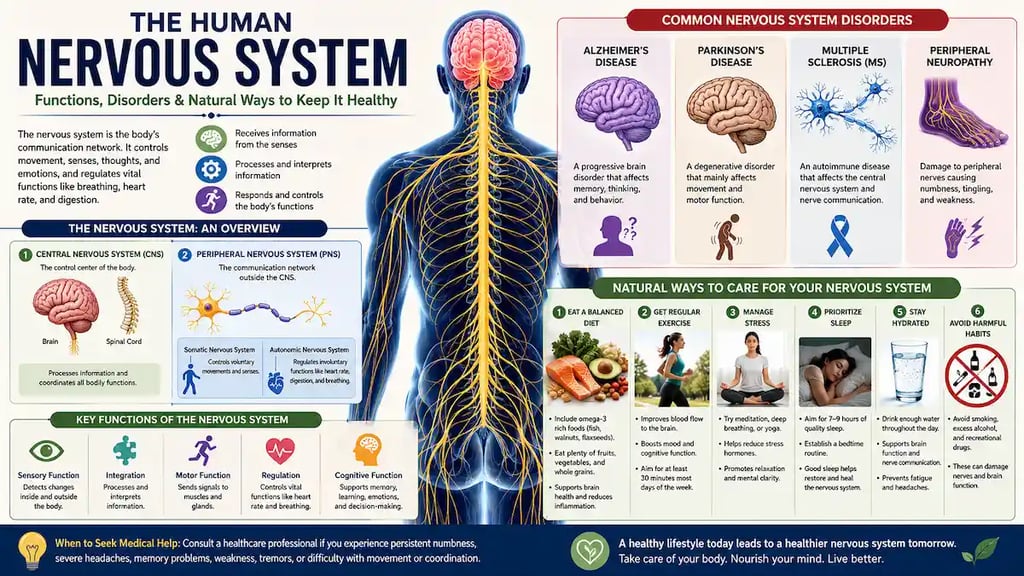
Human Nervous System: Functions, Common Disorders, and Natural Ways to Keep It Healthy
Introduction
The human nervous system is one of the most complex and essential systems in the body. It acts as the body's communication network, transmitting signals between the brain, spinal cord, and every organ, tissue, and muscle. From controlling movement and sensation to regulating vital functions such as breathing and heart rate, the nervous system plays a critical role in maintaining overall health.
Understanding how the nervous system works and learning how to protect it can help improve physical and mental well-being. In this article, we explore the structure and functions of the human nervous system, common nervous system disorders, and natural ways to support nervous system health.
What Is the Human Nervous System?
The nervous system is a sophisticated network of nerves, neurons, and specialized cells that transmit information throughout the body. It enables the body to respond to internal and external stimuli and coordinates nearly every bodily function.
The nervous system is divided into two primary components:
1. Central Nervous System (CNS)
The Central Nervous System consists of:
The brain serves as the body's control center, processing information, making decisions, and regulating emotions, memory, and movement. The spinal cord acts as a communication pathway between the brain and the rest of the body.
2. Peripheral Nervous System (PNS)
The Peripheral Nervous System includes all nerves outside the brain and spinal cord. It connects the CNS to muscles, organs, and tissues throughout the body.
The PNS is further divided into:
Somatic Nervous System
The somatic nervous system controls voluntary movements such as walking, writing, and speaking. It also processes sensory information from the environment.
Autonomic Nervous System
The autonomic nervous system regulates involuntary functions, including:
Heart rate
Digestion
Blood pressure
Breathing
Body temperature
This system works automatically without conscious effort and is essential for survival.
Functions of the Nervous System
The nervous system performs several critical functions that keep the body operating efficiently.
Sensory Function
Receives information from the body's senses, including touch, sight, hearing, taste, and smell.
Integration Function
Processes and interprets sensory information within the brain and spinal cord.
Motor Function
Sends signals to muscles and glands, allowing the body to move and respond appropriately.
Regulation of Vital Functions
Controls automatic processes such as heartbeat, breathing, digestion, and sleep cycles.
Cognitive Functions
Supports memory, learning, concentration, emotions, and decision-making.
Common Nervous System Disorders
Various diseases and conditions can affect the nervous system, leading to physical, cognitive, and emotional challenges.
Alzheimer's Disease
Alzheimer's disease is a progressive neurological disorder that gradually damages memory and cognitive abilities. It is the most common cause of dementia among older adults.
Common Symptoms
Memory loss
Confusion
Difficulty speaking
Behavioral changes
Impaired judgment
Parkinson's Disease
Parkinson's disease is a degenerative disorder that affects movement and coordination due to the loss of dopamine-producing brain cells.
Common Symptoms
Tremors
Muscle stiffness
Slowed movement
Balance problems
Difficulty walking
Multiple Sclerosis (MS)
Multiple sclerosis is an autoimmune disease in which the immune system attacks the protective covering of nerve fibers.
Common Symptoms
Fatigue
Vision problems
Muscle weakness
Numbness and tingling
Difficulty with coordination
Peripheral Neuropathy
Peripheral neuropathy occurs when peripheral nerves become damaged, affecting communication between the brain, spinal cord, and body.
Common Symptoms
Tingling sensations
Burning pain
Muscle weakness
Reduced coordination
Natural Ways to Support Nervous System Health
While medical treatment is important for managing neurological disorders, adopting healthy lifestyle habits can significantly support nervous system function.
1. Follow a Balanced and Nutrient-Rich Diet
Nutrition plays a vital role in maintaining healthy nerve cells and brain function.
Best Foods for Nervous System Health
Fatty fish such as salmon and sardines
Walnuts and almonds
Flaxseeds and chia seeds
Leafy green vegetables
Berries
Whole grains
Eggs
These foods provide essential nutrients, including omega-3 fatty acids, antioxidants, vitamins, and minerals that support nerve health.
2. Exercise Regularly
Physical activity improves blood circulation and delivers oxygen and nutrients to the brain and nerves.
Benefits of Exercise for the Nervous System
Enhances cognitive function
Improves memory
Reduces inflammation
Supports nerve regeneration
Helps manage stress
Aim for at least 30 minutes of moderate exercise, such as walking, cycling, swimming, or yoga, most days of the week.
3. Manage Stress Effectively
Chronic stress can negatively impact the nervous system and increase the risk of mental and physical health problems.
Effective Stress-Reduction Techniques
Meditation
Deep breathing exercises
Yoga
Mindfulness practices
Spending time in nature
Listening to relaxing music
These activities help lower stress hormone levels and promote nervous system balance.
4. Prioritize Quality Sleep
Sleep is essential for brain function, memory consolidation, and nervous system repair.
Tips for Better Sleep
Maintain a consistent sleep schedule
Avoid caffeine before bedtime
Limit screen time at night
Create a quiet and comfortable sleeping environment
Aim for 7–9 hours of sleep each night
5. Stay Properly Hydrated
Water is crucial for maintaining communication between nerve cells and supporting overall brain function.
Benefits of proper hydration include:
Improved concentration
Better memory
Reduced fatigue
Enhanced cognitive performance
Prevention of headaches
Drink sufficient water throughout the day to support optimal nervous system function.
6. Avoid Harmful Habits
Certain lifestyle habits can damage the nervous system over time.
Try to limit or avoid:
Smoking
Excessive alcohol consumption
Recreational drug use
Chronic sleep deprivation
Prolonged sedentary behavior
Replacing these habits with healthier alternatives can significantly improve neurological health.
When to Seek Medical Attention
Consult a healthcare professional if you experience symptoms such as:
Persistent numbness or tingling
Frequent headaches
Memory problems
Muscle weakness
Loss of coordination
Tremors
Difficulty speaking or walking
Early diagnosis and treatment can help prevent complications and improve outcomes.
Conclusion
The human nervous system is a remarkable network that controls virtually every function in the body. Maintaining its health is essential for physical well-being, mental clarity, and overall quality of life. By following a nutritious diet, staying physically active, managing stress, getting adequate sleep, and maintaining proper hydration, you can naturally support your nervous system and reduce the risk of neurological problems.
Taking care of your nervous system today can help ensure a healthier and more active future.
MicroNews © 2025
MicroNews empowers the generation of tomorrow for a brighter future and hope for every individual.
Thanks For Touch with us
We care about your data in our privacy policy.
Popular Post
Top 10 Calcium-Rich Vegetables for Strong Bones & Better Health
Patala Garuda (Rauvolfia serpentina): Health Benefits, Ayurvedic Uses
Ganga Siuli (Parijata Tree): Benefits, Uses, and Medicinal Properties
Freelancing Explained: How to Start, Earn, and Succeed as a Freelancer
Turmeric Benefits: Uses, Nutrition, Ayurveda Importance & Side Effects
Science of Longevity: New Research Reveals How Diet May Shape Lifespan