
Ovarian Cysts: Causes, Symptoms, Treatment, Prevention & Fertility Impact
Learn about ovarian cysts, including their causes, symptoms, diagnosis, treatment options, prevention tips, and how they may affect fertility and women's health.
Ovarian Cysts: Causes, Symptoms, Treatment, Prevention, and When to See a Doctor
Introduction
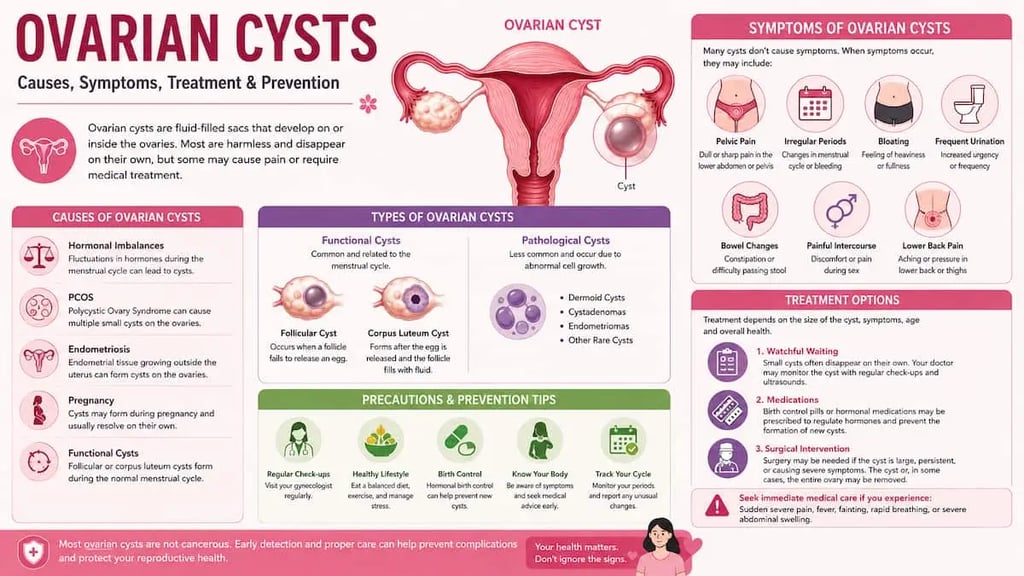
Ovarian cysts are fluid-filled sacs that develop on or inside the ovaries. They are a common gynecological condition affecting women of all ages, particularly during their reproductive years. In many cases, ovarian cysts are harmless and disappear naturally without causing symptoms. However, some cysts can grow larger, cause discomfort, and occasionally require medical treatment.
Understanding the causes, symptoms, treatment options, and preventive measures for ovarian cysts can help women maintain better reproductive health and seek timely medical attention when necessary.
What Are Ovarian Cysts?
The ovaries are two small organs located on either side of the uterus. They play a vital role in the female reproductive system by producing eggs and hormones such as estrogen and progesterone.
An ovarian cyst develops when a sac filled with fluid forms within or on the surface of an ovary. Most ovarian cysts are benign (non-cancerous) and often resolve on their own. However, some cysts may persist, enlarge, or cause complications that require medical evaluation.
Types of Ovarian Cysts
Functional Cysts
Functional cysts are the most common type of ovarian cyst and occur as part of the normal menstrual cycle.
Follicular Cysts
These cysts develop when a follicle fails to release an egg during ovulation and continues to grow.
Corpus Luteum Cysts
After releasing an egg, the follicle normally shrinks. If it fills with fluid instead, a corpus luteum cyst may form.
Pathological Cysts
These cysts develop due to abnormal cell growth and may require treatment.
Examples include:
Dermoid cysts
Cystadenomas
Endometriomas
Common Causes of Ovarian Cysts
Several factors can contribute to the formation of ovarian cysts.
1. Hormonal Imbalances
Hormonal fluctuations are one of the most common causes of ovarian cysts. Women with hormone-related disorders may be more likely to develop recurring cysts.
2. Polycystic Ovary Syndrome (PCOS)
PCOS is a hormonal disorder characterized by multiple small cysts on the ovaries. It can cause irregular periods, infertility, weight gain, and hormonal imbalances.
3. Endometriosis
Women with endometriosis may develop endometriomas, also known as "chocolate cysts." These cysts form when endometrial tissue grows on the ovaries.
4. Pregnancy
In some cases, ovarian cysts develop during pregnancy to support the pregnancy until the placenta forms. Most pregnancy-related cysts resolve naturally.
5. Previous Ovarian Cysts
Women who have had ovarian cysts before may have a higher risk of developing them again.
6. Pelvic Infections
Severe pelvic infections can spread to the ovaries and fallopian tubes, increasing the likelihood of cyst formation.
Symptoms of Ovarian Cysts
Many ovarian cysts do not cause symptoms and are discovered during routine pelvic examinations or imaging tests.
When symptoms occur, they may include:
Pelvic Pain
Sharp or dull pain in the lower abdomen
Pain on one side of the pelvis
Persistent pelvic discomfort
Irregular Menstrual Periods
Delayed periods
Heavy bleeding
Irregular menstrual cycles
Abdominal Bloating
Women may experience:
Abdominal swelling
Feeling of fullness
Pressure in the lower abdomen
Frequent Urination
A large cyst may press against the bladder, causing:
Increased urination
Difficulty emptying the bladder completely
Changes in Bowel Movements
Pressure from a cyst may lead to:
Difficulty passing stool
Pain During Intercourse
Some women experience discomfort or pain during sexual activity due to pressure from the cyst.
Lower Back Pain
Larger cysts may cause pain that radiates to the lower back or thighs.
Warning Signs That Require Immediate Medical Attention
Seek emergency medical care if you experience:
Sudden severe pelvic pain
Fever with pelvic pain
Fainting or dizziness
Rapid breathing
Severe abdominal swelling
Signs of internal bleeding
These symptoms could indicate a ruptured cyst or ovarian torsion, both of which require urgent treatment.
How Are Ovarian Cysts Diagnosed?
Healthcare providers may use several methods to diagnose ovarian cysts, including:
Pelvic Examination
A routine pelvic exam may reveal an enlarged ovary or abnormal growth.
Ultrasound
Ultrasound imaging helps determine:
Cyst size
Shape
Location
Fluid or solid contents
Blood Tests
Blood tests may be recommended to evaluate hormone levels or rule out ovarian cancer in certain cases.
CT Scan or MRI
Advanced imaging tests may be used when further evaluation is necessary.
Treatment Options for Ovarian Cysts
Treatment depends on factors such as:
Cyst size
Symptoms
Age
Type of cyst
Risk of complications
1. Watchful Waiting
Many small cysts disappear naturally within a few months.
Doctors may recommend:
Regular ultrasounds
Follow-up examinations
Monitoring symptoms
2. Hormonal Medications
Birth control pills may help:
Regulate menstrual cycles
Prevent new cysts from forming
Reduce hormonal fluctuations
However, they do not typically shrink existing cysts.
3. Surgical Treatment
Surgery may be necessary if:
The cyst is large
Symptoms are severe
The cyst persists over time
Cancer is suspected
Common surgical procedures include:
Cystectomy
Removal of the cyst while preserving the ovary.
Oophorectomy
Removal of one ovary if necessary.
In rare situations involving cancer or extensive damage, additional surgery may be required.
Tips to Help Prevent Ovarian Cysts
Although ovarian cysts cannot always be prevented, certain lifestyle habits may support reproductive health.
Maintain a Healthy Diet
Focus on:
Fruits and vegetables
Whole grains
Lean proteins
Healthy fats
Exercise Regularly
Physical activity supports hormonal balance and overall wellness.
Manage Stress
Stress management techniques include:
Yoga
Meditation
Deep breathing exercises
Regular relaxation
Attend Regular Gynecological Checkups
Routine examinations can help detect ovarian abnormalities early.
Monitor Menstrual Changes
Keep track of:
Cycle length
Pain levels
Unusual bleeding
Persistent symptoms
Can Ovarian Cysts Affect Fertility?
Most ovarian cysts do not affect fertility. However, certain conditions associated with ovarian cysts, such as PCOS and endometriosis, may impact a woman's ability to conceive.
Early diagnosis and appropriate treatment can improve fertility outcomes in many cases.
Conclusion
Ovarian cysts are common and often harmless growths that develop on or inside the ovaries. While many cysts disappear without treatment, some may cause pain, menstrual irregularities, or complications that require medical attention.
Understanding the causes, symptoms, treatment options, and preventive measures associated with ovarian cysts can help women make informed decisions about their reproductive health. Regular gynecological checkups, a healthy lifestyle, and awareness of warning signs are essential for early detection and effective management.
If you experience persistent pelvic pain, abnormal menstrual changes, or any concerning symptoms, consult a healthcare professional for proper evaluation and treatment.
MicroNews © 2025
MicroNews empowers the generation of tomorrow for a brighter future and hope for every individual.
Thanks For Touch with us
We care about your data in our privacy policy.
Popular Post
Top 10 Calcium-Rich Vegetables for Strong Bones & Better Health
Patala Garuda (Rauvolfia serpentina): Health Benefits, Ayurvedic Uses
Ganga Siuli (Parijata Tree): Benefits, Uses, and Medicinal Properties
Freelancing Explained: How to Start, Earn, and Succeed as a Freelancer
Turmeric Benefits: Uses, Nutrition, Ayurveda Importance & Side Effects
Science of Longevity: New Research Reveals How Diet May Shape Lifespan