
Prostate Gland: Functions, Common Problems, Symptoms & Treatment Guide
Learn about the prostate gland, its functions, common prostate problems, symptoms, PSA testing, prostate cancer, BPH, prostatitis, and effective treatment options.
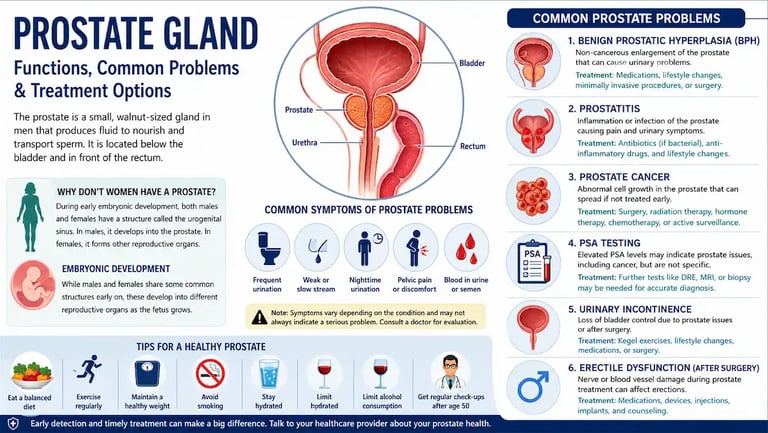
Prostate Gland: Function, Common Prostate Problems, Symptoms, and Treatment Options
What Is the Prostate Gland?
The prostate is a small, walnut-sized gland that forms an important part of the male reproductive system. It is located just below the bladder and in front of the rectum. The primary function of the prostate is to produce a fluid that nourishes, protects, and transports sperm during ejaculation.
This fluid combines with sperm and other secretions to form semen, which plays a vital role in male fertility and reproduction.
Why Don't Women Have a Prostate?
Women do not have a prostate gland because male and female reproductive organs develop differently during fetal growth. During early embryonic development, both sexes share a common structure known as the urogenital sinus.
In males, this tissue develops into the prostate gland and other reproductive organs. In females, it forms different structures of the reproductive system, including parts of the urinary and reproductive tracts.
Instead of a prostate, women have reproductive organs such as:
Ovaries
Fallopian tubes
Uterus
Cervix
Vagina
These organs are responsible for egg production, fertilization, pregnancy, and childbirth.
Although men and women share some common embryonic structures, these tissues develop into different organs as the fetus grows.
Common Prostate Problems in Men
Prostate disorders become increasingly common with age, especially after 50 years. Early diagnosis and treatment can help prevent complications and improve quality of life.
1. Benign Prostatic Hyperplasia (BPH)
What Is BPH?
Benign Prostatic Hyperplasia (BPH) is a non-cancerous enlargement of the prostate gland. As the prostate grows, it can press against the urethra and interfere with normal urine flow.
Common Symptoms
Frequent urination
Difficulty starting urination
Weak urine stream
Nighttime urination (nocturia)
Feeling that the bladder is not completely empty
Treatment Options
Alpha-blocker medications
5-alpha reductase inhibitors
Lifestyle modifications
Minimally invasive procedures
Transurethral Resection of the Prostate (TURP)
Laser prostate surgery
2. Prostatitis
What Is Prostatitis?
Prostatitis is inflammation of the prostate gland. It may occur due to bacterial infections or non-infectious causes.
Common Symptoms
Pelvic pain
Painful urination
Frequent urination
Fever and chills (in bacterial prostatitis)
Pain during ejaculation
Treatment Options
Antibiotics for bacterial infections
Anti-inflammatory medications
Pain management therapies
Increased hydration
Lifestyle changes
3. Prostate Cancer
What Is Prostate Cancer?
Prostate cancer occurs when abnormal cells grow uncontrollably in the prostate gland. It is one of the most common cancers affecting men worldwide.
Risk Factors
Age above 50 years
Family history of prostate cancer
Hormonal factors
Genetic mutations
Symptoms
Early-stage prostate cancer may not cause symptoms. Advanced cases may present with:
Difficulty urinating
Blood in urine or semen
Pelvic discomfort
Bone pain
Erectile dysfunction
Treatment Options
Depending on the stage and severity, treatment may include:
Active surveillance
Surgery (prostatectomy)
Radiation therapy
Hormone therapy
Chemotherapy
Targeted therapies
4. PSA Testing (Prostate-Specific Antigen Test)
What Is a PSA Test?
A PSA test measures the level of Prostate-Specific Antigen in the blood. Elevated PSA levels may indicate prostate enlargement, inflammation, infection, or prostate cancer.
Why Is It Important?
PSA testing can help detect prostate abnormalities at an early stage. However, elevated PSA levels do not always mean cancer is present.
Doctors may recommend additional tests such as:
for accurate diagnosis.
5. Urinary Incontinence
What Is Urinary Incontinence?
Some men experience loss of bladder control due to prostate enlargement, prostate surgery, or nerve damage.
Treatment Options
Pelvic floor (Kegel) exercises
Bladder training
Lifestyle modifications
Medications
Surgical interventions when necessary
6. Erectile Dysfunction After Prostate Surgery
Why Does It Happen?
Men undergoing prostate cancer surgery or radiation therapy may experience erectile dysfunction due to nerve or blood vessel damage.
Treatment Options
Oral medications such as sildenafil
Vacuum erection devices
Penile injections
Penile implants
Counseling and lifestyle modifications
Tips for Maintaining a Healthy Prostate
To support long-term prostate health:
Eat a balanced diet rich in fruits and vegetables
Maintain a healthy weight
Exercise regularly
Limit alcohol consumption
Avoid smoking
Stay hydrated
Schedule regular health screenings after age 50
Discuss family history with your doctor
When Should You See a Doctor?
Consult a healthcare professional if you experience:
Frequent urination
Difficulty urinating
Blood in urine or semen
Pelvic pain
Erectile dysfunction
Persistent urinary symptoms
Early diagnosis can significantly improve treatment outcomes and quality of life.
Conclusion
The prostate gland plays a crucial role in male reproductive health. While women do not have a prostate due to differences in embryonic development, men may face several prostate-related conditions, including BPH, prostatitis, and prostate cancer. Understanding the symptoms and seeking timely medical care can help prevent complications and ensure better overall health. Regular screenings, healthy lifestyle choices, and professional medical guidance are essential for maintaining optimal prostate health throughout life.
Related Stories
MicroNews © 2025
MicroNews empowers the generation of tomorrow for a brighter future and hope for every individual.
Thanks For Touch with us
We care about your data in our privacy policy.
Popular Post
Top 10 Calcium-Rich Vegetables for Strong Bones & Better Health
Patala Garuda (Rauvolfia serpentina): Health Benefits, Ayurvedic Uses
Ganga Siuli (Parijata Tree): Benefits, Uses, and Medicinal Properties
Freelancing Explained: How to Start, Earn, and Succeed as a Freelancer
Turmeric Benefits: Uses, Nutrition, Ayurveda Importance & Side Effects
Science of Longevity: New Research Reveals How Diet May Shape Lifespan