
Regular Exercise Benefits: 7 Tips to Improve Your Health
Discover regular exercise benefits with 7 simple fitness tips to improve your health, boost energy, reduce stress, and stay active every day.
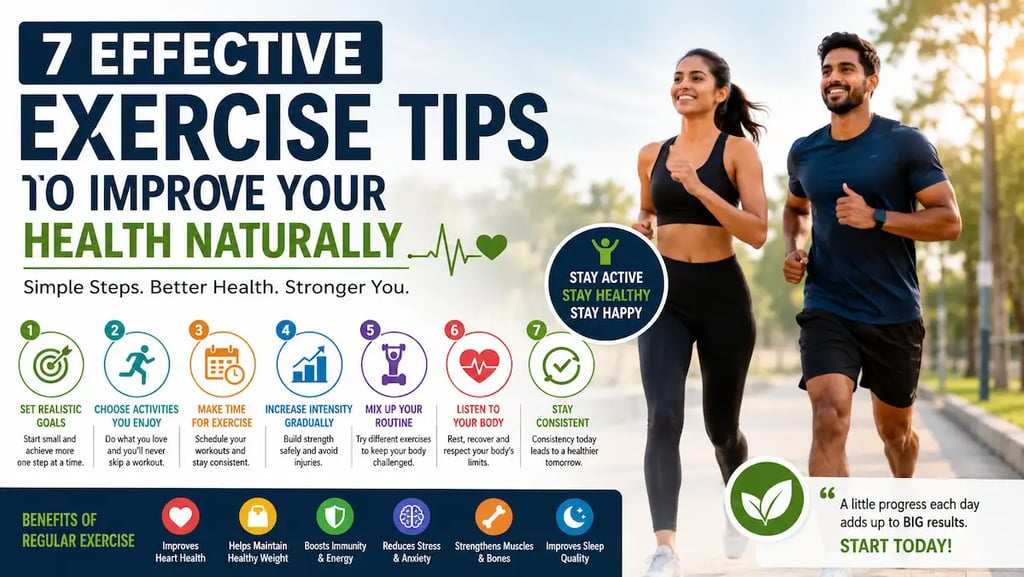

7 Effective Exercise Tips to Improve Your Health Naturally
Regular physical activity is one of the most powerful ways to improve your overall health. Exercise strengthens your heart, builds muscles, supports weight management, boosts immunity, and enhances mental well-being. Whether you're just beginning your fitness journey or looking to improve your current routine, following the right exercise habits can help you achieve lasting results.
In this guide, we'll explore seven practical exercise tips that can help you stay active, motivated, and healthy for years to come.
Why Regular Exercise Is Important
A physically active lifestyle provides numerous health benefits, including:
Improves heart health
Helps maintain a healthy weight
Strengthens muscles and bones
Reduces the risk of diabetes and high blood pressure
Improves flexibility and balance
Boosts energy levels
Reduces stress, anxiety, and depression
Promotes better sleep quality
Supports a stronger immune system
Experts recommend adults engage in at least 150 minutes of moderate-intensity exercise or 75 minutes of vigorous physical activity each week, along with muscle-strengthening exercises twice a week.
1. Set Achievable Fitness Goals
Starting with realistic goals is one of the best ways to stay motivated. Trying to do too much too soon often leads to frustration or injury.
Instead of aiming for dramatic results immediately, focus on small milestones such as:
Walking for 30 minutes daily
Exercising three to five days per week
Losing 1–2 kg per month
Completing a beginner workout program
Tracking your progress helps build confidence and encourages consistency.
2. Choose Exercises You Actually Enjoy
Exercise shouldn't feel like punishment. The more enjoyable your workout is, the more likely you'll continue doing it.
Popular fitness activities include:
Walking
Running
Cycling
Swimming
Dancing
Yoga
Pilates
Strength training
Team sports
Hiking
Experiment with different activities until you find one that suits your personality and lifestyle.
3. Make Exercise Part of Your Daily Schedule
Busy schedules often become the biggest obstacle to staying active.
Treat your workout like any other important appointment.
Helpful strategies include:
Exercise early in the morning
Schedule workouts on your calendar
Take the stairs instead of elevators
Walk during lunch breaks
Park farther from your destination
Stretch while watching television
Even 20–30 minutes of daily movement can significantly improve your health over time.
4. Increase Intensity Gradually
If you're new to fitness, avoid pushing yourself too hard during the first few weeks.
Gradually increasing workout intensity allows your body to adapt safely while reducing the risk of injuries.
A smart progression includes:
Start with low-impact exercises
Increase workout duration slowly
Add resistance training over time
Include proper warm-up and cool-down sessions
Remember, consistency is more important than intensity when building long-term fitness habits.
5. Include Different Types of Exercise
Performing the same workout every day can become repetitive and may slow your progress.
A balanced fitness routine should include:
Cardiovascular Exercise
Improves heart health and burns calories.
Examples:
Strength Training
Builds muscle, increases metabolism, and strengthens bones.
Examples:
Dumbbells
Resistance bands
Bodyweight exercises
Weight machines
Flexibility Exercises
Improve posture, reduce muscle stiffness, and enhance mobility.
Examples:
Stretching
Pilates
Balance Training
Especially important for older adults to reduce fall risk.
Examples:
Tai Chi
Single-leg stands
Stability exercises
Combining different workout styles keeps exercise enjoyable while improving overall fitness.
6. Listen to Your Body
Your body provides important signals during exercise.
Normal signs include:
Mild muscle soreness
Increased breathing
Sweating
However, stop exercising immediately if you experience:
Chest pain
Severe dizziness
Difficulty breathing
Sharp joint pain
Fainting
Extreme fatigue
Allow your body enough time to recover with proper sleep, hydration, and nutrition.
Rest days are just as important as workout days.
7. Stay Consistent for Long-Term Results
Fitness isn't about being perfect—it's about being consistent.
Skipping one workout isn't a problem, but giving up entirely can delay your progress.
Stay motivated by:
Exercising with a friend
Joining a fitness class
Tracking your workouts
Setting monthly goals
Rewarding yourself for milestones
Celebrating small improvements
Remember that lasting health improvements come from regular physical activity over months and years—not just a few intense workouts.
Additional Healthy Habits to Support Exercise
Exercise works best when combined with healthy lifestyle choices.
Make sure to:
Eat a balanced diet rich in fruits and vegetables
Stay hydrated throughout the day
Get 7–9 hours of quality sleep
Avoid smoking and excessive alcohol
Manage stress through meditation or relaxation techniques
Maintain a healthy body weight
Together, these habits create a strong foundation for lifelong wellness.
Benefits of Regular Exercise
Staying physically active offers countless benefits, including:
Better cardiovascular health
Increased muscle strength
Stronger bones
Improved flexibility
Better mental health
Enhanced memory and concentration
Healthy weight management
Reduced risk of chronic diseases
Improved mood and self-confidence
Longer life expectancy
Frequently Asked Questions (FAQs)
How much exercise should adults do each week?
Adults should aim for at least 150 minutes of moderate-intensity exercise or 75 minutes of vigorous exercise every week, plus strength training exercises at least two days per week.
Is walking enough for good health?
Yes. Brisk walking is an excellent form of exercise that improves heart health, burns calories, and enhances overall fitness when performed regularly.
What is the best time to exercise?
The best time is whenever you can exercise consistently. Morning workouts help establish routine, while evening workouts may improve performance for some people.
Can beginners exercise every day?
Beginners can stay active daily by alternating workout intensity. Include light activities such as walking or stretching on recovery days to prevent overtraining.
Do I need a gym to stay fit?
No. Many effective exercises such as walking, jogging, yoga, bodyweight workouts, and resistance band training can be performed at home.
Conclusion
Improving your health doesn't require expensive gym memberships or complicated workout plans. Small, consistent steps can lead to significant long-term benefits. By setting realistic goals, choosing enjoyable activities, staying consistent, and listening to your body, you can create a sustainable fitness routine that supports both your physical and mental well-being.
Start today—even a short walk or a few minutes of stretching can make a positive difference. Every step toward a more active lifestyle is an investment in a healthier, happier future.
MicroNews © 2025
MicroNews empowers the generation of tomorrow for a brighter future and hope for every individual.
Thanks For Touch with us
We care about your data in our privacy policy.
Popular Post
Top 10 Calcium-Rich Vegetables for Strong Bones & Better Health
Patala Garuda (Rauvolfia serpentina): Health Benefits, Ayurvedic Uses
Ganga Siuli (Parijata Tree): Benefits, Uses, and Medicinal Properties
Freelancing Explained: How to Start, Earn, and Succeed as a Freelancer
Turmeric Benefits: Uses, Nutrition, Ayurveda Importance & Side Effects
Science of Longevity: New Research Reveals How Diet May Shape Lifespan