
Rice: Nutrition, Health Benefits, Types, Uses, and Side Effects
Discover the nutrition, health benefits, types, and uses of rice. Learn why rice is a staple food worldwide, its nutritional value, benefits, potential drawbacks, and how it fits into a healthy diet.
Rice: Nutrition, Benefits, Types, and Importance in a Healthy Diet
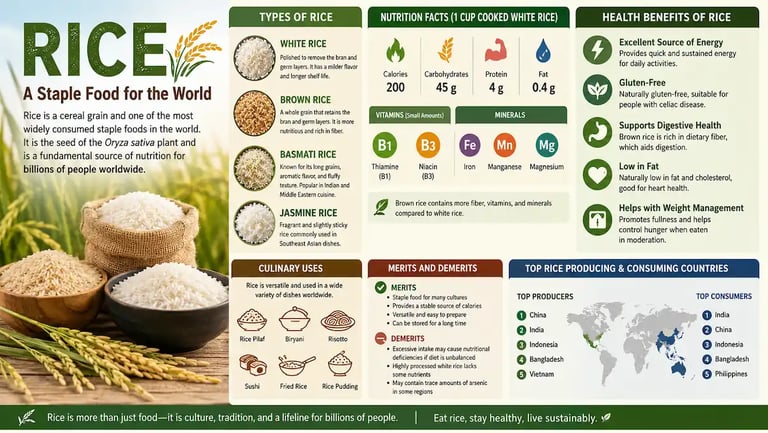
Rice is one of the most widely consumed staple foods in the world and serves as a primary source of nutrition for billions of people. It is the edible seed of the Oryza sativa plant and plays a vital role in the daily diet of many countries, especially across Asia. Due to its versatility, affordability, and nutritional value, rice has become an essential ingredient in countless traditional and modern dishes.
What is Rice?
Rice is a cereal grain cultivated in many parts of the world. It is available in various varieties, including white rice, brown rice, basmati rice, jasmine rice, and wild rice. Each type offers a unique flavor, texture, and nutritional profile, making rice a versatile choice for different cuisines and cooking methods.
Nutritional Value of Rice
Rice is primarily composed of carbohydrates, which provide the body with energy. It also contains small amounts of protein, vitamins, and minerals. Brown rice, in particular, is rich in dietary fiber and nutrients because it retains its bran and germ layers.
A typical cup of cooked rice contains:
Calories: Approximately 200
Carbohydrates: About 45 grams
Protein: Around 4 grams
Fat: Very low amounts
Vitamins: Thiamine (Vitamin B1), Niacin (Vitamin B3)
Minerals: Iron, Manganese, and Magnesium
Health Benefits of Rice
1. Excellent Source of Energy
Rice is rich in carbohydrates, which provide the body with quick and sustained energy for daily activities.
2. Naturally Gluten-Free
Rice is naturally gluten-free, making it an ideal food choice for people with celiac disease or gluten sensitivity.
3. Supports Digestive Health
Brown rice contains dietary fiber that helps promote healthy digestion and supports regular bowel movements.
4. Low in Fat
Rice is naturally low in fat and cholesterol, making it suitable for heart-conscious diets.
5. Helps with Weight Management
Rice can increase feelings of fullness, helping control hunger and support healthy weight management when consumed in moderation.
Types of Rice
White Rice
White rice is processed to remove the bran and germ layers. It has a softer texture, milder flavor, and longer shelf life.
Brown Rice
Brown rice is a whole grain that retains its bran and germ. It contains more fiber, vitamins, and minerals than white rice.
Basmati Rice
Popular in Indian and Middle Eastern cuisine, basmati rice is known for its long grains and aromatic flavor.
Jasmine Rice
A fragrant rice variety commonly used in Southeast Asian dishes.
Culinary Uses of Rice
Rice is one of the most versatile ingredients in the kitchen. It can be steamed, boiled, fried, or baked and is used in a variety of dishes, including:
Rice Pilaf
Biryani
Risotto
Sushi
Fried Rice
Rice Pudding
Rice-Based Beverages
Its adaptability makes it a staple ingredient in cuisines around the world.
Cultural and Economic Importance of Rice
Rice holds deep cultural significance in many countries, particularly in Asia. It is a symbol of prosperity, tradition, and food security. Countries such as India, China, Japan, Thailand, and Indonesia have built rich culinary traditions around rice cultivation and consumption.
Potential Drawbacks of Rice
While rice offers many health benefits, there are some considerations:
Excessive consumption of refined white rice may contribute to nutritional imbalances if not paired with other nutrient-rich foods.
Brown rice may contain small amounts of naturally occurring arsenic, though proper cooking methods can help reduce exposure.
A diet relying solely on rice may lack essential nutrients found in fruits, vegetables, and protein-rich foods.
Top Rice-Producing and Consuming Countries
Largest Rice Producers
China
India
Indonesia
Bangladesh
Vietnam
Largest Rice Consumers
India
China
Indonesia
Bangladesh
Philippines
Conclusion
Rice remains one of the world's most important staple foods, providing energy, nutrition, and food security to billions of people. Whether consumed as white rice, brown rice, or specialty varieties, rice can be part of a balanced and healthy diet. When combined with vegetables, proteins, and other nutrient-rich foods, rice serves as a versatile foundation for countless nutritious meals.
Related Stories
MicroNews © 2025
MicroNews empowers the generation of tomorrow for a brighter future and hope for every individual.
Thanks For Touch with us
We care about your data in our privacy policy.
Popular Post
Top 10 Calcium-Rich Vegetables for Strong Bones & Better Health
Patala Garuda (Rauvolfia serpentina): Health Benefits, Ayurvedic Uses
Ganga Siuli (Parijata Tree): Benefits, Uses, and Medicinal Properties
Freelancing Explained: How to Start, Earn, and Succeed as a Freelancer
Turmeric Benefits: Uses, Nutrition, Ayurveda Importance & Side Effects
Science of Longevity: New Research Reveals How Diet May Shape Lifespan