
Urticaria (Hives): Causes, Symptoms, Treatment & Prevention
Learn about urticaria (hives), including its causes, symptoms, diagnosis, treatment options, prevention tips, and when to seek medical care.
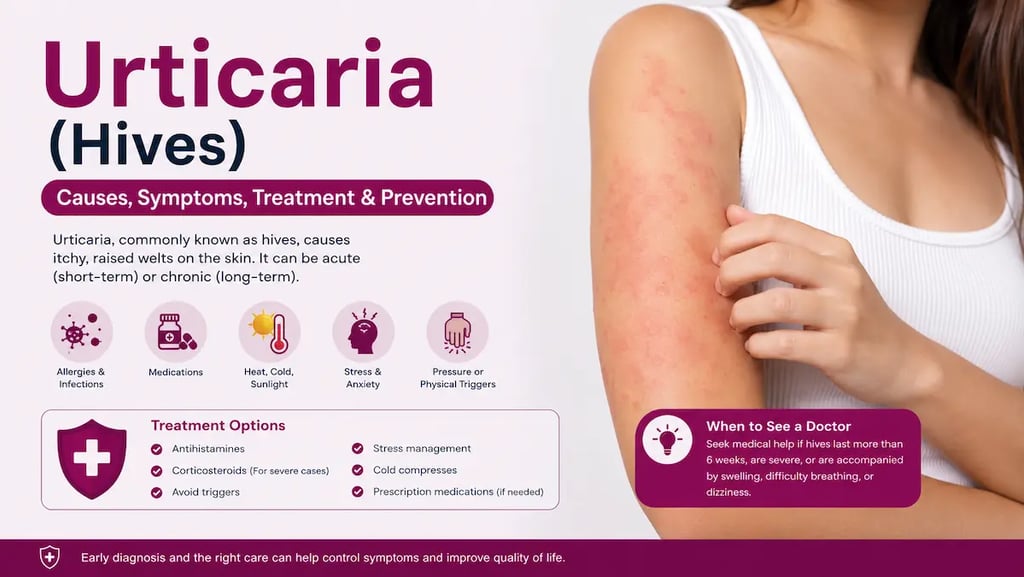
Urticaria: Causes, Symptoms, Treatment, and Prevention of Hives
Introduction
Urticaria, commonly known as hives, is a common skin condition that causes itchy, red, raised welts on the skin. These welts can appear suddenly, vary in size and shape, and may disappear within hours while new ones develop elsewhere on the body. Although hives are often harmless, they can be uncomfortable and may sometimes indicate an underlying allergic reaction or medical condition.
Urticaria is classified into two main types:
Acute urticaria: Lasts less than six weeks and is often triggered by allergies, infections, or medications.
Chronic urticaria: Persists for more than six weeks and may recur frequently, often without an obvious cause.
Understanding the causes, symptoms, and treatment options can help manage urticaria effectively and reduce the risk of recurring flare-ups.
What Is Urticaria?
Urticaria is a skin reaction caused by the release of histamine and other inflammatory chemicals from immune cells. This reaction leads to swelling in the skin, resulting in itchy, raised bumps or patches known as hives.
Hives can appear anywhere on the body, including the face, arms, legs, back, and abdomen. They may last from a few minutes to several hours before fading.
Common Causes of Urticaria
Several factors can trigger urticaria. Identifying the underlying cause is essential for effective treatment.
1. Allergic Reactions
Allergies are one of the most common causes of acute urticaria. Common allergens include:
Certain foods such as peanuts, shellfish, eggs, milk, and nuts
Medications like antibiotics and pain relievers
Insect bites or stings
Pollen, dust mites, mold, or pet dander
2. Infections
Viral and bacterial infections can trigger hives, including:
Common cold
Flu
Sinus infections
Urinary tract infections (UTIs)
COVID-19 and other viral illnesses
3. Autoimmune Disorders
Chronic urticaria may be associated with autoimmune diseases such as:
4. Physical Triggers
Some people develop hives due to physical factors, including:
Heat or excessive sweating
Cold temperatures
Sunlight exposure
Pressure on the skin
Exercise
Water (rare cases)
5. Stress and Anxiety
Emotional stress does not directly cause urticaria but can trigger or worsen existing symptoms by affecting the immune system.
Symptoms of Urticaria
The symptoms of urticaria can appear suddenly and may vary from person to person.
Common symptoms include:
Raised red or skin-colored welts
Intense itching
Swelling of the affected area
Welts that change shape or move to different areas
Burning or stinging sensation
In some cases, urticaria may occur with angioedema, which causes deeper swelling around the lips, eyelids, hands, feet, or throat. Immediate medical attention is required if swelling affects breathing or swallowing.
How Is Urticaria Diagnosed?
A healthcare provider usually diagnoses urticaria by examining the skin and reviewing your medical history.
Additional tests may include:
Allergy testing
Blood tests
Thyroid function tests
Skin biopsy (rarely)
Tests to identify infections or autoimmune conditions
Urticaria Treatment Options
Treatment focuses on relieving symptoms, reducing inflammation, and preventing future outbreaks.
1. Antihistamines
Antihistamines are the first-line treatment for urticaria. They block histamine, reducing itching and swelling.
Doctors often recommend:
Non-drowsy antihistamines during the day
Sedating antihistamines at night if itching interferes with sleep
2. Corticosteroids
For severe flare-ups, short-term corticosteroids may be prescribed to reduce inflammation. Long-term use is generally avoided because of potential side effects.
3. Avoid Trigger Factors
Preventing exposure to known triggers is one of the most effective ways to reduce recurring hives.
Helpful tips include:
Avoid allergy-causing foods
Read medication labels carefully
Protect your skin from extreme temperatures
Wear loose-fitting clothing
Maintain good skin hygiene
Keeping a symptom diary can help identify patterns and possible triggers.
4. Stress Management
Managing stress may help reduce flare-ups.
Effective techniques include:
Meditation
Deep breathing exercises
Regular physical activity
Adequate sleep
5. Cold Compresses
Applying a cool compress or taking a cool shower can temporarily relieve itching and reduce skin irritation.
6. Prescription Medications
For chronic urticaria that does not respond to antihistamines, a dermatologist or allergy specialist may prescribe medications such as:
Omalizumab
Cyclosporine
Other immune-modulating therapies
These treatments require regular medical supervision.
Can Urticaria Be Prevented?
While not all cases can be prevented, you can reduce the likelihood of flare-ups by:
Identifying and avoiding triggers
Managing allergies effectively
Reducing stress levels
Wearing comfortable, loose clothing
Avoiding overheating
Following your healthcare provider's treatment plan
Keeping your skin moisturized
When Should You See a Doctor?
Seek medical advice if:
Hives last longer than six weeks.
Symptoms keep returning without an obvious cause.
Over-the-counter antihistamines do not provide relief.
You experience severe swelling of the lips, tongue, or throat.
You have difficulty breathing or swallowing, as this may indicate a life-threatening allergic reaction requiring emergency medical care.
Conclusion
Urticaria is a common skin condition that can range from mild and temporary to persistent and chronic. Understanding the causes of urticaria, recognizing the symptoms early, and following the right treatment plan can help control outbreaks and improve your quality of life. Most cases respond well to antihistamines and lifestyle modifications, while chronic urticaria may require specialized treatment. If your hives are severe, recurrent, or accompanied by swelling that affects breathing, seek immediate medical attention.
MicroNews © 2025
MicroNews empowers the generation of tomorrow for a brighter future and hope for every individual.
Thanks For Touch with us
We care about your data in our privacy policy.
Popular Post
Top 10 Calcium-Rich Vegetables for Strong Bones & Better Health
Patala Garuda (Rauvolfia serpentina): Health Benefits, Ayurvedic Uses
Ganga Siuli (Parijata Tree): Benefits, Uses, and Medicinal Properties
Freelancing Explained: How to Start, Earn, and Succeed as a Freelancer
Turmeric Benefits: Uses, Nutrition, Ayurveda Importance & Side Effects
Science of Longevity: New Research Reveals How Diet May Shape Lifespan