
7 Best Yoga for Asthma Relief: Improve Breathing Naturally
Discover the 7 best yoga for asthma relief. Learn how yoga, breathing exercises, and relaxation techniques can improve lung function and help manage asthma symptoms naturally.
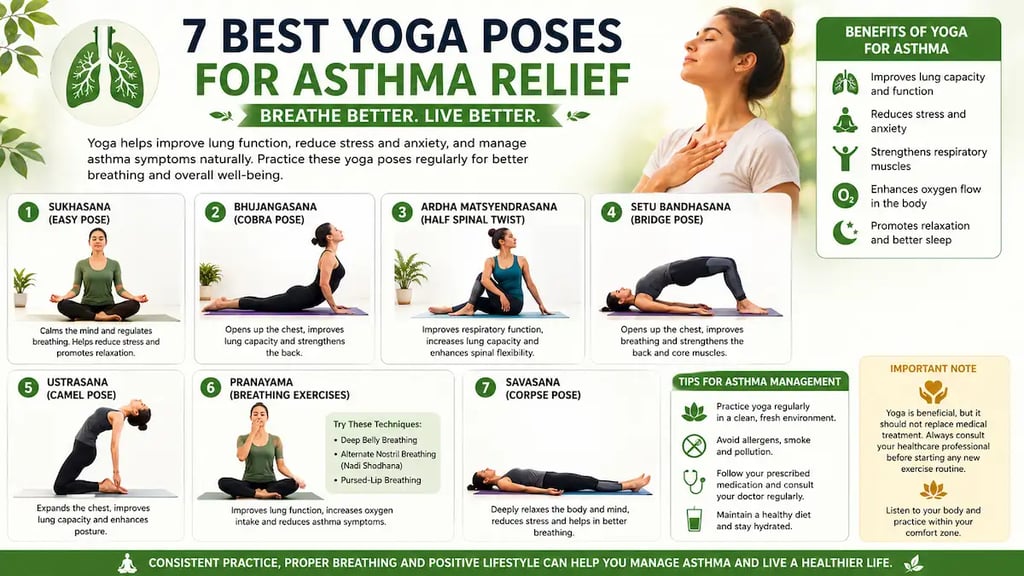
7 Best Yoga Poses for Asthma Relief: Improve Breathing Naturally
Introduction
Asthma is a chronic respiratory condition that affects millions of people worldwide. It causes inflammation and narrowing of the airways, leading to symptoms such as wheezing, coughing, chest tightness, and shortness of breath. Although asthma cannot be completely cured, it can be effectively managed through medication, lifestyle changes, and complementary practices such as yoga.
Yoga is an ancient mind-body practice that combines physical postures, breathing techniques, and meditation. Research suggests that regular yoga practice may help improve lung function, reduce stress, and enhance overall respiratory health. For people with asthma, yoga can be a valuable addition to their treatment plan when practiced safely and under proper guidance.
In this article, we'll explore seven effective yoga poses for asthma relief and how they may help improve breathing naturally.
How Yoga Helps Manage Asthma
Yoga focuses on controlled breathing and relaxation, which can benefit individuals with asthma by:
Improving lung capacity
Enhancing respiratory muscle strength
Reducing stress and anxiety
Promoting better oxygen flow
Supporting overall physical and mental well-being
Practicing yoga regularly may help reduce the frequency and severity of asthma symptoms while improving quality of life.
1. Sukhasana (Easy Pose)
Sukhasana is a simple seated posture that encourages relaxation and mindful breathing.
How to Perform Sukhasana
Sit comfortably on the floor with your legs crossed.
Keep your spine straight and shoulders relaxed.
Place your hands on your knees.
Close your eyes and focus on slow, deep breathing through your nose.
Benefits for Asthma
Calms the nervous system
Reduces stress-related asthma triggers
Encourages deep, controlled breathing
Improves focus and relaxation
2. Bhujangasana (Cobra Pose)
Bhujangasana helps expand the chest and strengthen respiratory muscles.
How to Perform Cobra Pose
Lie on your stomach with your legs extended.
Place your palms under your shoulders.
Inhale deeply and slowly lift your chest off the floor.
Keep your elbows slightly bent.
Hold for several breaths before lowering down gently.
Benefits for Asthma
Opens the chest and lungs
Improves breathing capacity
Enhances posture
Strengthens the back muscles
3. Ardha Matsyendrasana (Half Spinal Twist)
This seated twisting posture helps improve respiratory efficiency and flexibility.
How to Perform the Pose
Sit with your legs stretched forward.
Bend your right knee and place the foot outside your left thigh.
Inhale and lengthen your spine.
Exhale and twist your torso toward the right.
Hold for a few breaths and repeat on the opposite side.
Benefits for Asthma
Improves lung expansion
Enhances oxygen circulation
Promotes spinal flexibility
Supports respiratory health
4. Setu Bandhasana (Bridge Pose)
Bridge Pose gently stretches the chest and promotes deeper breathing.
How to Perform Bridge Pose
Lie flat on your back.
Bend your knees and place your feet hip-width apart.
Press your feet into the floor.
Inhale and lift your hips toward the ceiling.
Hold for a few breaths before lowering slowly.
Benefits for Asthma
Opens the chest cavity
Improves lung function
Strengthens the back and core muscles
Reduces fatigue
5. Ustrasana (Camel Pose)
Camel Pose is a deep backbend that stretches the chest and respiratory muscles.
How to Perform Camel Pose
Kneel on the floor with your knees hip-width apart.
Place your hands on your lower back or heels.
Inhale and lift your chest upward.
Gently arch your back while maintaining comfort.
Hold for several breaths and return slowly.
Benefits for Asthma
Expands the lungs
Increases chest flexibility
Improves breathing efficiency
Enhances posture
6. Pranayama (Breathing Exercises)
Pranayama refers to yogic breathing techniques that help regulate and strengthen the respiratory system.
Effective Pranayama Techniques for Asthma
Deep Belly Breathing
Focus on slow, deep inhalations and exhalations using the diaphragm.
Alternate Nostril Breathing (Nadi Shodhana)
Alternate breathing through each nostril to promote balance and relaxation.
Pursed-Lip Breathing
Helps slow breathing and improve airflow.
Benefits for Asthma
Improves oxygen intake
Strengthens respiratory muscles
Reduces shortness of breath
Promotes calmness and stress relief
7. Savasana (Corpse Pose)
Savasana is the final relaxation posture in yoga that helps release physical and mental tension.
How to Perform Savasana
Lie flat on your back.
Keep your arms comfortably at your sides.
Close your eyes.
Focus on your breathing and relax every part of your body.
Remain in the pose for 5–10 minutes.
Benefits for Asthma
Relieves stress and anxiety
Encourages deep breathing
Supports relaxation of respiratory muscles
Promotes overall well-being
Additional Tips for Managing Asthma Naturally
To maximize the benefits of yoga, consider these healthy habits:
Follow your prescribed asthma treatment plan.
Avoid exposure to smoke and allergens.
Maintain a healthy weight.
Stay physically active.
Drink plenty of water.
Practice breathing exercises daily.
Monitor asthma triggers and symptoms.
Precautions Before Practicing Yoga
Although yoga can help manage asthma symptoms, it should not replace medical treatment.
Important Safety Tips
Consult your healthcare provider before starting yoga.
Practice under the guidance of a qualified yoga instructor.
Avoid poses that cause discomfort or breathing difficulty.
Stop immediately if you experience dizziness or shortness of breath.
Keep your rescue inhaler nearby if recommended by your doctor.
also read: Yoga and Its Benefits: 9 Science-Backed Reasons to Practice Yoga Daily
Conclusion
Yoga can be an effective complementary therapy for individuals living with asthma. By combining gentle physical movements, breathing exercises, and relaxation techniques, yoga may help improve lung function, reduce stress, and support better respiratory health.
The seven yoga poses discussed above—Sukhasana, Bhujangasana, Ardha Matsyendrasana, Setu Bandhasana, Ustrasana, Pranayama, and Savasana—can help individuals manage asthma symptoms naturally when practiced regularly and safely.
Remember, yoga works best as part of a comprehensive asthma management plan that includes proper medical care, healthy lifestyle choices, and regular monitoring. With consistency and professional guidance, yoga can become a powerful tool for breathing easier and living healthier.
Breathe deeply, stay active, and take charge of your respiratory health.
MicroNews © 2025
MicroNews empowers the generation of tomorrow for a brighter future and hope for every individual.
Thanks For Touch with us
We care about your data in our privacy policy.
Popular Post
Top 10 Calcium-Rich Vegetables for Strong Bones & Better Health
Patala Garuda (Rauvolfia serpentina): Health Benefits, Ayurvedic Uses
Ganga Siuli (Parijata Tree): Benefits, Uses, and Medicinal Properties
Freelancing Explained: How to Start, Earn, and Succeed as a Freelancer
Turmeric Benefits: Uses, Nutrition, Ayurveda Importance & Side Effects
Science of Longevity: New Research Reveals How Diet May Shape Lifespan