
Acne: Causes, Types, Symptoms, Treatment, and Prevention Tips
What Is Acne?
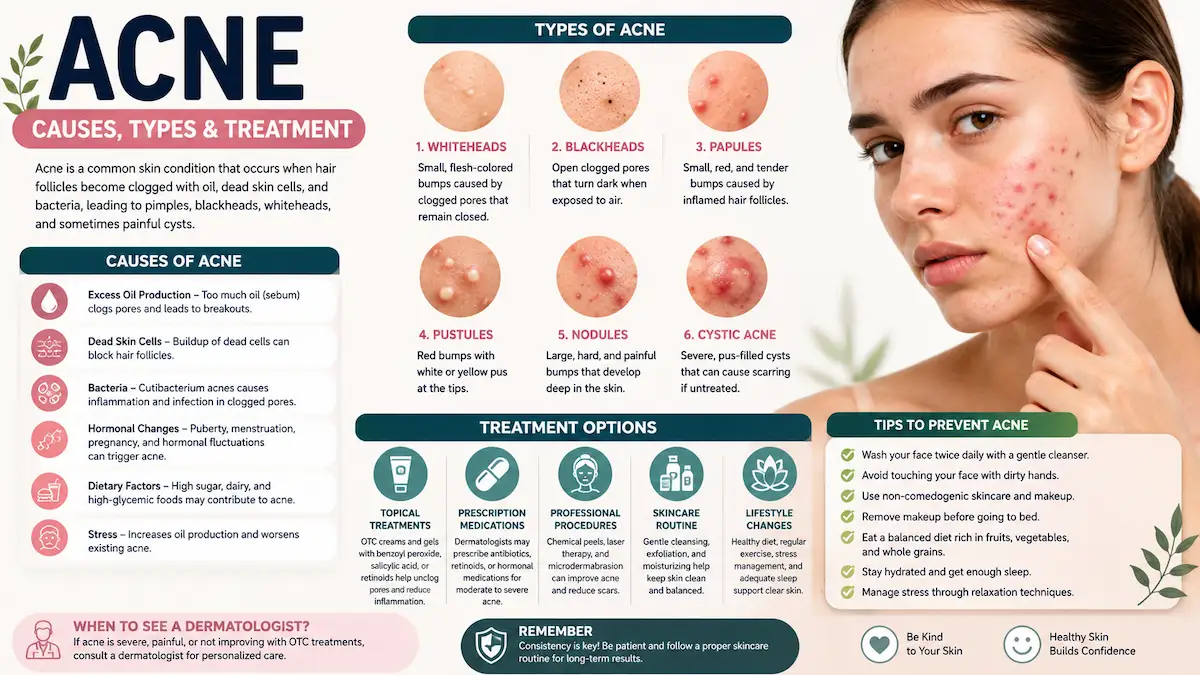
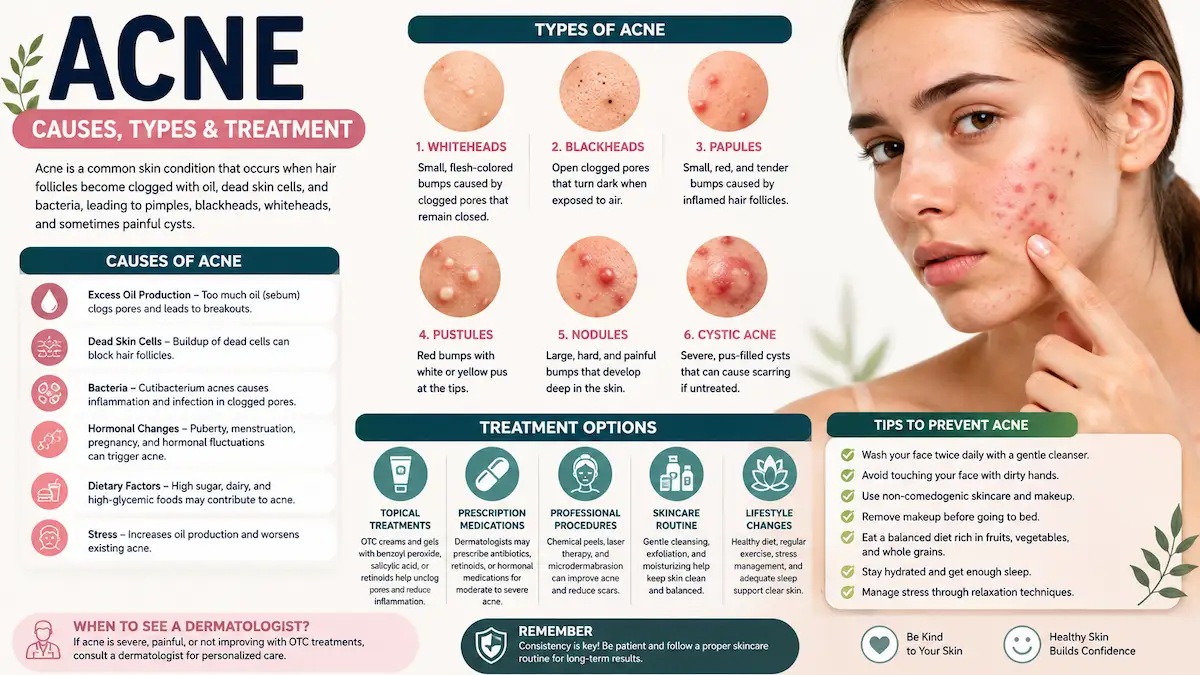
Acne is one of the most common skin conditions worldwide, affecting teenagers and adults alike. Also known as pimples, acne develops when hair follicles become clogged with excess oil (sebum), dead skin cells, and bacteria. This blockage can lead to blackheads, whiteheads, pimples, and, in severe cases, painful cysts and permanent scarring.
Although acne is not a life-threatening condition, it can affect self-confidence and emotional well-being. Understanding its causes, types, and treatment options can help you manage breakouts effectively and maintain healthy skin.
Types of Acne
Acne can appear in several forms, ranging from mild blemishes to severe inflammatory lesions. Identifying the type of acne is important because treatment approaches may vary.
1. Whiteheads
Whiteheads are small, flesh-colored or white bumps that form when pores become clogged with oil and dead skin cells. Since the pore remains closed, the trapped material stays beneath the skin’s surface.
Characteristics:
Small and raised bumps
White or skin-colored appearance
Common on the face, forehead, and chin
2. Blackheads
Blackheads occur when clogged pores remain open. The trapped oil and dead skin cells react with oxygen in the air, causing the surface to turn black.
Characteristics:
Small dark spots on the skin
Usually appear on the nose, chin, and forehead
Non-inflammatory type of acne
3. Papules
Papules are inflamed acne lesions that appear as small, red, tender bumps. They develop when the walls surrounding hair follicles become irritated and break down.
Characteristics:
Red and swollen bumps
Painful when touched
No visible pus
4. Pustules
Pustules are similar to papules but contain pus. They appear as red bumps with a white or yellow center.
Characteristics:
Inflamed and red
Filled with pus
Commonly referred to as pimples
5. Nodules
Nodules are large, hard, and painful lumps that develop deep beneath the skin’s surface. They often require medical treatment.
Characteristics:
Deep and painful
Firm to the touch
Can cause scarring
6. Cystic Acne
Cystic acne is the most severe form of acne. It occurs when infections develop deep within the skin, resulting in large, painful, pus-filled cysts.
Characteristics:
Large, painful lumps
Often causes permanent scars
Requires professional treatment
What Causes Acne?
Acne develops due to a combination of biological and environmental factors. Understanding these triggers can help reduce breakouts.
Excess Oil Production
Sebaceous glands produce oil to keep the skin moisturized. However, excessive oil production can clog pores and create an environment where acne-causing bacteria thrive.
Dead Skin Cell Buildup
Normally, dead skin cells are shed naturally. When they accumulate and mix with excess oil, they can block hair follicles and contribute to acne formation.
Bacterial Growth
A bacteria known as Cutibacterium acnes (formerly Propionibacterium acnes) naturally lives on the skin. When trapped in clogged pores, it can multiply and cause inflammation.
Hormonal Changes
Hormonal fluctuations are one of the most common causes of acne. Increased androgen levels can stimulate oil production and trigger breakouts.
Common hormonal triggers include:
Puberty
Menstruation
Pregnancy
Menopause
Polycystic Ovary Syndrome (PCOS)
Genetics
Family history can play a significant role in acne development. If one or both parents experienced acne, you may be more likely to develop it as well.
Stress
Stress does not directly cause acne but can worsen existing breakouts by increasing inflammation and stimulating hormone production.
Diet and Nutrition
Research suggests that certain foods may contribute to acne in some individuals.
Potential dietary triggers include:
High-sugar foods
White bread and processed carbohydrates
Sugary beverages
Excessive dairy consumption
Maintaining a balanced diet rich in fruits, vegetables, and whole grains may support healthier skin.
Certain Medications
Some medications can contribute to acne, including:
Corticosteroids
Lithium
Testosterone supplements
Certain anticonvulsants
Common Symptoms of Acne
Acne symptoms can vary from person to person. Common signs include:
Whiteheads
Blackheads
Red bumps
Pus-filled pimples
Painful nodules
Cysts beneath the skin
Oily skin
Acne scars and dark spots
Acne commonly appears on areas with a high concentration of oil glands, including:
Face
Forehead
Chest
Back
Shoulders
Neck
Effective Acne Treatment Options
Fortunately, several treatments can help control acne and improve skin appearance.
Topical Treatments
Topical medications are often the first line of treatment for mild to moderate acne.
Common ingredients include:
Benzoyl Peroxide
Kills acne-causing bacteria
Reduces inflammation
Helps prevent future breakouts
Salicylic Acid
Unclogs pores
Removes excess oil
Exfoliates dead skin cells
Retinoids
Promote skin cell turnover
Prevent clogged pores
Improve acne scars over time
Prescription Medications
For moderate to severe acne, dermatologists may prescribe:
Oral antibiotics
Prescription-strength retinoids
Hormonal therapy
Isotretinoin for severe cystic acne
Professional Dermatological Procedures
Advanced treatments may include:
Chemical Peels
Chemical solutions exfoliate the skin and help reduce acne and post-acne marks.
Microdermabrasion
This procedure removes the outer layer of dead skin cells, improving skin texture.
Laser and Light Therapy
Laser treatments target acne-causing bacteria and reduce inflammation.
Acne Scar Treatments
Dermatologists may recommend:
Microneedling
Laser resurfacing
Dermal fillers
Chemical reconstruction techniques
How to Prevent Acne Naturally
While acne cannot always be prevented, these habits can significantly reduce breakouts.
Follow a Consistent Skincare Routine
Wash your face twice daily
Use a gentle cleanser
Avoid harsh scrubbing
Moisturize regularly
Avoid Touching Your Face
Hands carry bacteria and oils that can worsen acne.
Remove Makeup Before Sleeping
Sleeping with makeup can clog pores and trigger breakouts.
Use Non-Comedogenic Products
Choose skincare and cosmetic products labeled “non-comedogenic” to avoid blocked pores.
Maintain a Healthy Diet
Focus on:
Fresh fruits and vegetables
Lean proteins
Whole grains
Adequate hydration
Manage Stress
Activities such as yoga, meditation, and regular exercise can help lower stress levels and support healthier skin.
Get Enough Sleep
Aim for 7–9 hours of quality sleep each night to support skin repair and hormonal balance.
When Should You See a Dermatologist?
You should consult a dermatologist if:
Acne is severe or painful
Over-the-counter treatments are ineffective
Acne is causing emotional distress
You notice scarring
Breakouts continue despite proper skincare
Early treatment can help prevent long-term skin damage and improve treatment outcomes.
Conclusion
Acne is a common but manageable skin condition that affects people of all ages. It develops when pores become clogged with oil, dead skin cells, and bacteria, leading to various forms of acne such as whiteheads, blackheads, papules, pustules, nodules, and cysts. Understanding the causes and triggers of acne is the first step toward effective treatment and prevention.
With proper skincare, healthy lifestyle habits, and appropriate medical treatments, most people can successfully control acne and achieve clearer, healthier skin. If your acne becomes severe or persistent, seeking professional advice from a dermatologist can help you find the most effective treatment plan for your specific needs.
Disclaimer:The information provided on this website and in our health-related articles is intended for general informational and educational purposes only. It is not intended to be a substitute for professional medical advice, diagnosis, treatment, or care.
In an emergency, contact your local emergency medical service or visit the nearest emergency department.