
Alopecia Areata: Symptoms, Causes, Treatment & Hair Regrowth
Learn about alopecia areata, including symptoms, causes, diagnosis, treatment options, hair regrowth, prevention tips, and when to consult a dermatologist .
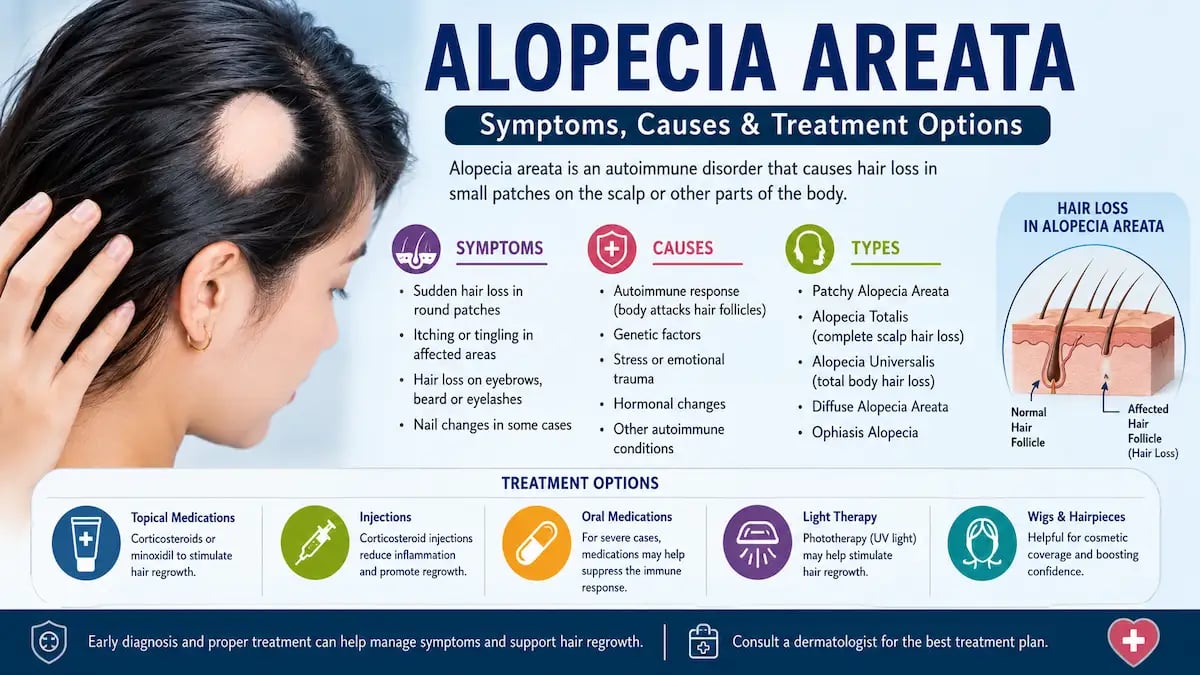
Alopecia Areata: Symptoms, Causes, Diagnosis, Treatment, and Hair Regrowth
Hair loss can be alarming, especially when it happens suddenly in small, round patches. Alopecia areata is a common autoimmune condition that causes unexpected hair loss on the scalp and other parts of the body. While it is not contagious or life-threatening, it can significantly affect a person's confidence and emotional well-being.
The good news is that many people experience hair regrowth with proper treatment, although the condition may recur. Understanding the symptoms, causes, diagnosis, and available treatments can help you manage alopecia areata more effectively.
What Is Alopecia Areata?
Alopecia areata is an autoimmune disease in which the body's immune system mistakenly attacks healthy hair follicles, causing hair to fall out. The condition most commonly affects the scalp but may also involve the eyebrows, eyelashes, beard, and other hair-bearing areas.
Hair loss can develop over days or weeks and varies from a few small patches to widespread hair loss. While anyone can develop alopecia areata, it often begins before the age of 30.
Symptoms of Alopecia Areata
The symptoms of alopecia areata vary from person to person. Common signs include:
Sudden hair loss in one or more round or oval patches
Smooth, hairless areas on the scalp
Hair loss on the eyebrows, eyelashes, or beard
Small broken hairs around the edges of bald patches (often called "exclamation mark hairs")
Tingling, itching, or burning sensation before hair falls out
Nail abnormalities such as ridges, pits, or roughness in some individuals
In severe cases, hair loss may spread to the entire scalp or body.
Types of Alopecia Areata
There are several forms of alopecia areata, including:
Patchy Alopecia Areata
The most common type, causing one or more round bald patches on the scalp.
Alopecia Totalis
Complete loss of all hair on the scalp.
Alopecia Universalis
Complete loss of hair on the scalp, face, and body.
Diffuse Alopecia Areata
Hair thins across the scalp rather than forming distinct patches.
Ophiasis Alopecia
Hair loss occurs in a band-like pattern around the sides and back of the scalp.
Causes of Alopecia Areata
The exact alopecia areata causes remain unclear. Researchers believe it develops due to a combination of genetic and environmental factors.
Possible causes and triggers include:
Autoimmune reaction targeting hair follicles
Family history of autoimmune diseases
Emotional or physical stress
Viral infections
Hormonal changes
Thyroid disorders
Vitiligo
Type 1 diabetes
Rheumatoid arthritis
It is important to note that alopecia areata is not contagious and cannot spread from one person to another.
Risk Factors
Certain factors may increase your likelihood of developing alopecia areata:
Family history of alopecia areata
Personal history of autoimmune disorders
Asthma or allergies
Young age (although it can occur at any age)
Genetic susceptibility
How Is Alopecia Areata Diagnosed?
A dermatologist usually diagnoses alopecia areata through the following:
Physical examination of the scalp and affected areas
Medical and family history review
Hair pull test
Dermoscopy (scalp examination using a magnifying device)
Blood tests to identify associated autoimmune diseases
Skin biopsy in rare or uncertain cases
Early diagnosis helps determine the most effective treatment plan.
Alopecia Areata Treatment Options
Although there is currently no permanent cure for alopecia areata, several treatments can encourage hair regrowth and reduce immune system activity.
1. Topical Corticosteroids
Prescription steroid creams, lotions, or foams help reduce inflammation around hair follicles.
2. Corticosteroid Injections
Steroid injections into bald patches are one of the most effective treatments for small areas of hair loss.
3. Minoxidil
Topical minoxidil may stimulate hair growth and is often used alongside other treatments.
4. Oral Medications
For extensive hair loss, doctors may prescribe:
Oral corticosteroids
Immunosuppressants
Janus kinase (JAK) inhibitors for eligible patients
These medications require close medical supervision.
5. Light Therapy
Phototherapy using ultraviolet light may benefit some patients, particularly when combined with medications.
6. Wigs and Hairpieces
High-quality wigs, hairpieces, eyebrow prostheses, or cosmetic camouflage can improve appearance and confidence during treatment.
Can Hair Grow Back?
Yes. Many people experience alopecia areata hair regrowth, often within several months. However, hair loss may recur unexpectedly.
Hair may initially grow back:
White
Fine
Soft
Over time, it usually regains its normal color and thickness.
Some individuals recover completely, while others experience repeated episodes throughout life.
Lifestyle Tips for Managing Alopecia Areata
While lifestyle changes cannot cure the condition, they may help support overall health:
Manage stress through meditation or yoga
Eat a balanced diet rich in vitamins, iron, zinc, and protein
Protect bald areas from sun exposure
Avoid harsh chemical hair treatments
Follow your dermatologist's treatment plan consistently
Seek emotional support if hair loss affects your mental health
Possible Complications
Alopecia areata may lead to:
Emotional stress and anxiety
Depression
Reduced self-confidence
Increased sunburn risk on exposed scalp
Eye irritation if eyelashes are lost
Early medical treatment and emotional support can help reduce these challenges.
When to See a Doctor
Consult a dermatologist if you notice:
Sudden patchy hair loss
Rapidly increasing bald areas
Hair loss involving eyebrows or eyelashes
Repeated episodes of hair loss
Nail changes along with hair loss
Prompt evaluation can help identify the cause and improve treatment outcomes.
Frequently Asked Questions (FAQs)
Is alopecia areata permanent?
No. Hair often grows back, although some people experience recurring episodes or long-term hair loss.
Is alopecia areata contagious?
No. It is an autoimmune condition and cannot spread through physical contact.
Can stress cause alopecia areata?
Stress alone is not the direct cause, but it may trigger or worsen flare-ups in people who are genetically susceptible.
Can alopecia areata be cured?
There is currently no permanent cure, but many treatments can stimulate hair regrowth and help control symptoms.
Does diet help with alopecia areata?
A nutritious diet supports overall hair health, but it cannot cure the autoimmune condition.
Conclusion
Alopecia areata is a common autoimmune disorder that causes sudden patchy hair loss on the scalp and other parts of the body. Although the exact cause remains unknown, genetics and immune system dysfunction play major roles. Early diagnosis and treatment can improve the chances of hair regrowth and help manage recurring episodes.
If you experience unexplained hair loss, consult a dermatologist promptly. A personalized treatment plan can help restore hair growth, improve confidence, and enhance your overall quality of life.
MicroNews © 2025
MicroNews empowers the generation of tomorrow for a brighter future and hope for every individual.
Thanks For Touch with us
We care about your data in our privacy policy.
Popular Post
Top 10 Calcium-Rich Vegetables for Strong Bones & Better Health
Patala Garuda (Rauvolfia serpentina): Health Benefits, Ayurvedic Uses
Ganga Siuli (Parijata Tree): Benefits, Uses, and Medicinal Properties
Freelancing Explained: How to Start, Earn, and Succeed as a Freelancer
Turmeric Benefits: Uses, Nutrition, Ayurveda Importance & Side Effects
Science of Longevity: New Research Reveals How Diet May Shape Lifespan