
Arthritis: Causes, Symptoms, Treatment, and Natural Ways to Relieve Joint Pain
Arthritis is one of the most common chronic health conditions affecting millions of people worldwide. It causes pain, swelling, stiffness, and reduced movement in one or more joints. While arthritis is more common among older adults, it can affect people of all ages, including children and young adults.
Although arthritis cannot always be cured, early diagnosis and proper treatment can significantly reduce symptoms, prevent joint damage, and improve quality of life.
What Is Arthritis?
Arthritis is not a single disease. Instead, it is a group of more than 100 different joint disorders that affect the joints and surrounding tissues.
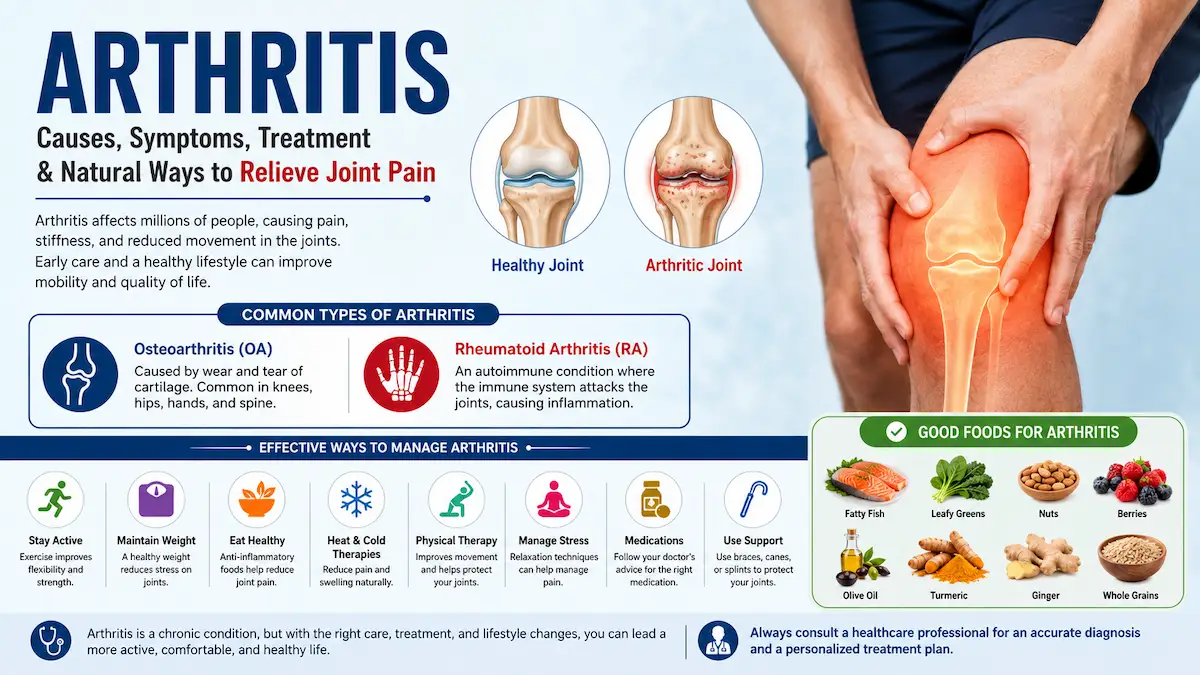
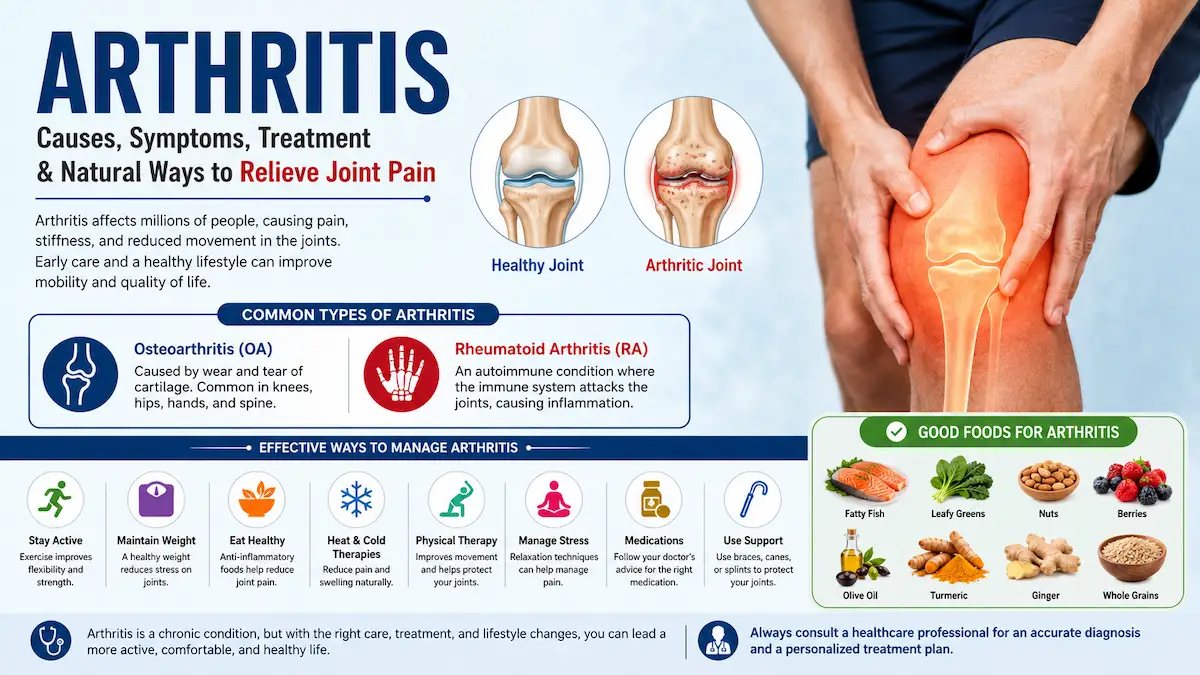
Healthy joints allow smooth movement because they are protected by cartilage—a flexible tissue that cushions the ends of bones. When arthritis develops, this protective tissue becomes damaged or inflamed, causing pain and limiting movement.
Common symptoms include:
Persistent joint pain
Swelling around the joints
Morning stiffness
Reduced flexibility
Warmth or redness in affected joints
Difficulty walking or performing daily activities
Common Types of Arthritis
1. Osteoarthritis (OA)
Osteoarthritis is the most common type of arthritis. It develops gradually as the protective cartilage wears away over time.
Commonly Affected Joints
Knees
Hips
Hands
Neck
Lower back
Spine
Risk Factors
Aging
Previous joint injuries
Repetitive physical work
Sports-related injuries
Genetics
Symptoms
Joint pain during movement
Stiffness after resting
Clicking or cracking sounds
Reduced flexibility
2. Rheumatoid Arthritis (RA)
Rheumatoid arthritis is an autoimmune disease in which the immune system mistakenly attacks healthy joint tissue.
Unlike osteoarthritis, RA usually affects joints on both sides of the body simultaneously.
Symptoms
Swollen joints
Morning stiffness lasting over an hour
Fatigue
Low-grade fever
Loss of appetite
Joint deformities over time
Without treatment, rheumatoid arthritis can also affect the lungs, heart, eyes, and blood vessels.
Other Types of Arthritis
Several other conditions can also cause arthritis, including:
Psoriatic arthritis
Gout
Lupus-related arthritis
Ankylosing spondylitis
Juvenile idiopathic arthritis
Reactive arthritis
Infectious arthritis
Each type has different causes and treatment options, making an accurate diagnosis essential.
Causes of Arthritis
The causes depend on the type of arthritis.
Osteoarthritis Causes
Natural aging
Cartilage wear and tear
Joint injuries
Obesity
Repetitive stress on joints
Rheumatoid Arthritis Causes
The exact cause remains unknown, but experts believe several factors contribute:
Genetic predisposition
Immune system abnormalities
Hormonal influences
Environmental triggers
Certain infections
Smoking
Risk Factors
You may have a higher risk of developing arthritis if you have:
Family history
Age above 50
Excess body weight
Previous joint injuries
Smoking habits
Sedentary lifestyle
Diabetes or metabolic disorders
Occupations requiring repetitive joint movements
Common Symptoms of Arthritis
Symptoms vary depending on the type but often include:
Joint pain
Swelling
Stiffness
Reduced range of motion
Tenderness
Warm joints
Muscle weakness
Fatigue
Difficulty climbing stairs
Difficulty gripping objects
Symptoms often worsen during cold weather or after prolonged inactivity.
How Is Arthritis Diagnosed?
Doctors diagnose arthritis using a combination of:
Physical examination
Medical history
Blood tests
MRI scans
Ultrasound imaging
Joint fluid analysis
Early diagnosis helps prevent permanent joint damage.
Arthritis Treatment Options
Treatment focuses on relieving pain, reducing inflammation, preserving joint function, and slowing disease progression.
1. Medications
Depending on the type of arthritis, doctors may prescribe:
Pain relievers
Nonsteroidal anti-inflammatory drugs (NSAIDs)
Corticosteroids
Disease-modifying antirheumatic drugs (DMARDs)
Biologic medications
Topical pain relief creams
Always take medications under medical supervision.
2. Physical Therapy
A physical therapist can teach exercises that:
Strengthen muscles
Improve flexibility
Increase joint stability
Reduce pain
Improve posture
3. Regular Exercise
Exercise is one of the best ways to manage arthritis naturally.
Recommended activities include:
Walking
Cycling
Yoga
Tai Chi
Stretching
Water aerobics
Aim for at least 150 minutes of moderate physical activity per week, unless advised otherwise by your healthcare provider.
4. Weight Management
Being overweight increases pressure on weight-bearing joints such as:
Knees
Hips
Ankles
Even losing 5–10% of body weight can significantly reduce pain and improve mobility.
5. Heat and Cold Therapy
Heat Therapy
Helps relax muscles and reduce stiffness.
Examples include:
Warm baths
Heating pads
Warm towels
Cold Therapy
Helps reduce inflammation and swelling.
Examples include:
Ice packs
Cold compresses
Gel packs
6. Assistive Devices
Supportive devices reduce stress on painful joints.
Examples include:
Walking sticks
Knee braces
Wrist splints
Shoe inserts
Grab bars
7. Surgery
If conservative treatments fail, surgery may be recommended.
Common procedures include:
Joint replacement
Joint fusion
Arthroscopy
Cartilage repair
Modern joint replacement surgery has excellent success rates and can restore mobility for many patients.
Best Foods for Arthritis
A healthy anti-inflammatory diet may help reduce symptoms.
Foods to Eat
Fatty fish (salmon, sardines, mackerel)
Olive oil
Walnuts
Flaxseeds
Leafy green vegetables
Broccoli
Berries
Citrus fruits
Turmeric
Ginger
Whole grains
Beans
Lentils
Stay well hydrated by drinking plenty of water throughout the day.
Foods to Limit
Some foods may increase inflammation in certain people.
Try limiting:
Sugary drinks
Processed foods
Deep-fried foods
Processed meats
Excess salt
Refined carbohydrates
Excessive alcohol
Natural Ways to Reduce Arthritis Pain
In addition to medical treatment, these habits may help:
Exercise daily
Maintain a healthy weight
Practice yoga or stretching
Get enough sleep
Manage stress through meditation or deep breathing
Avoid smoking
Stay physically active throughout the day
Natural remedies should complement—not replace—professional medical care.
Can Arthritis Be Cured?
Currently, there is no permanent cure for most forms of arthritis. However, many people successfully manage their symptoms through:
Early diagnosis
Medication
Exercise
Healthy eating
Weight control
Physical therapy
Lifestyle modifications
With proper treatment, many individuals continue to lead active, productive lives.
Tips for Living Well with Arthritis
Follow your doctor’s treatment plan.
Exercise regularly without overloading painful joints.
Eat an anti-inflammatory diet.
Maintain a healthy body weight.
Use supportive footwear.
Protect your joints during daily activities.
Stay positive and seek support when needed.
Attend regular medical check-ups.
Frequently Asked Questions (FAQs)
What is the main cause of arthritis?
The cause depends on the type. Osteoarthritis results from cartilage wear and tear, while rheumatoid arthritis occurs when the immune system attacks healthy joints.
What are the first signs of arthritis?
Early symptoms include joint pain, stiffness, swelling, tenderness, and reduced flexibility.
Which exercise is best for arthritis?
Low-impact activities such as walking, swimming, cycling, yoga, and stretching are generally recommended.
Can losing weight improve arthritis?
Yes. Losing excess weight reduces stress on joints and often decreases pain, especially in the knees and hips.
Which foods help arthritis?
Fatty fish, olive oil, leafy greens, berries, nuts, turmeric, ginger, whole grains, and legumes are commonly included in anti-inflammatory eating patterns.
Final Thoughts
Arthritis is a long-term condition, but it does not have to limit your life. Understanding the type of arthritis you have, seeking early medical care, maintaining a healthy lifestyle, staying physically active, and following a personalized treatment plan can significantly reduce pain and improve mobility.
If you experience persistent joint pain, swelling, or stiffness that lasts for several weeks, consult a qualified healthcare professional for an accurate diagnosis and appropriate treatment.