
Bartholin Cysts: Symptoms, Causes, Diagnosis & Treatment Guide
Learn about Bartholin cysts symptoms, causes, diagnosis, and treatment options. Discover home remedies, medical procedures, and when to see a doctor for a Bartholin gland cyst.
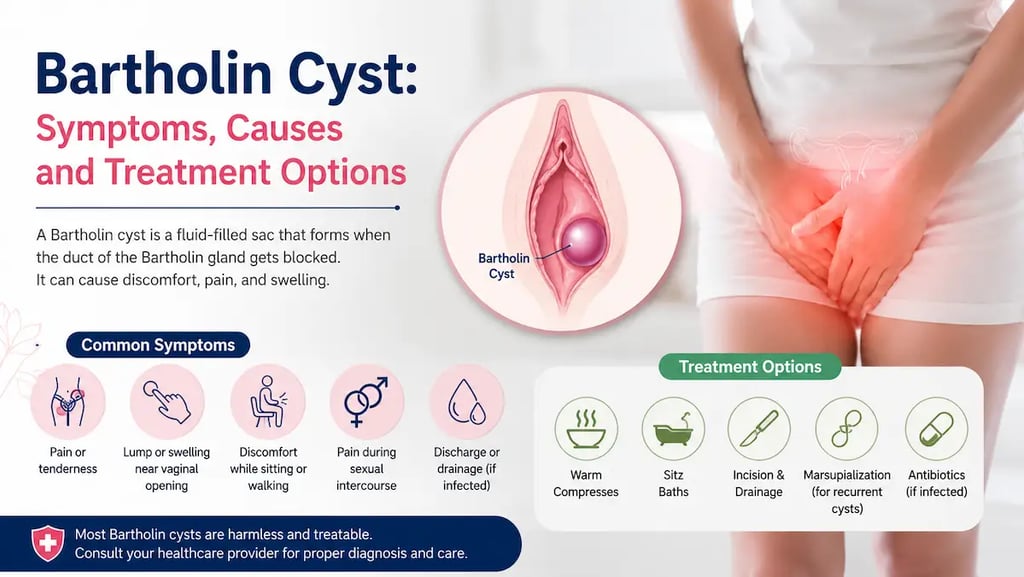
Bartholin Cyst: Symptoms, Causes, Diagnosis, and Treatment Options
Introduction
A Bartholin cyst is a common condition that develops when one of the Bartholin glands becomes blocked. These small glands are located on either side of the vaginal opening and produce a lubricating fluid that helps keep the vagina moist during sexual activity. When the gland's duct is obstructed, fluid builds up, forming a painless or painful cyst.
While many Bartholin gland cysts are harmless and may disappear without treatment, larger or infected cysts can lead to discomfort, swelling, and difficulty performing daily activities. Understanding the symptoms, causes, and available treatment options can help you seek timely medical care and avoid complications.
What Is a Bartholin Cyst?
A Bartholin cyst is a fluid-filled sac that forms when the opening of a Bartholin gland becomes blocked. The cyst may remain small and symptom-free or gradually enlarge over time. If bacteria enter the cyst, it can become infected and develop into a Bartholin abscess, which often causes severe pain and swelling.
Although Bartholin cysts can occur at any age, they are most commonly seen in women of reproductive age.
Bartholin Cyst Symptoms
Many small Bartholin cysts do not cause noticeable symptoms. However, as the cyst grows or becomes infected, you may experience:
A soft lump or swelling near one side of the vaginal opening
Pain or tenderness around the affected area
Discomfort while sitting, walking, or exercising
Pain during sexual intercourse
Redness and swelling around the cyst
Warmth in the affected area
Drainage of fluid or pus if the cyst ruptures
Fever and chills in cases of an infected Bartholin cyst or abscess
If you develop severe pain, fever, or rapid swelling, seek medical attention promptly.
What Causes a Bartholin Cyst?
A Bartholin cyst develops when the duct that drains the Bartholin gland becomes blocked. The blockage may occur due to:
Thick mucus buildup
Minor injury or irritation
Bacterial infection
Inflammation of the gland
Sexually transmitted infections (STIs) in some cases
When bacteria infect the trapped fluid, an abscess can form, requiring medical treatment.
How Is a Bartholin Cyst Diagnosed?
A healthcare provider usually diagnoses a Bartholin cyst through a physical examination. In some situations, additional tests may be recommended, particularly if:
The cyst is recurrent
The patient is over 40 years of age
There are signs of infection
Cancer needs to be ruled out
Your doctor may also collect a sample of fluid if an infection is suspected.
Bartholin Cyst Treatment Options
Treatment depends on the size of the cyst, the severity of symptoms, and whether an infection is present.
1. Warm Compresses
Applying a warm compress several times a day can help reduce discomfort and encourage the cyst to drain naturally. Place a clean cloth soaked in warm water over the affected area for 10–15 minutes, three to four times daily.
2. Sitz Baths
A warm sitz bath is one of the most effective home remedies for a small Bartholin cyst. Sitting in a few inches of warm water for 15–20 minutes several times a day may help reduce swelling, relieve pain, and promote natural drainage.
3. Incision and Drainage
For larger or painful cysts, a healthcare provider may perform an incision and drainage procedure. After numbing the area with local anesthesia, a small cut is made to release the trapped fluid, providing quick relief.
4. Marsupialization
If Bartholin cysts continue to recur, your doctor may recommend marsupialization. During this minor surgical procedure, a permanent opening is created to allow continuous drainage and reduce the risk of future cyst formation.
5. Antibiotics
Antibiotics are prescribed when a Bartholin cyst becomes infected or develops into an abscess. They help eliminate the infection and reduce the risk of complications. In some cases, antibiotics are combined with drainage procedures for the best outcome.
Can a Bartholin Cyst Be Prevented?
Although it may not always be possible to prevent a Bartholin cyst, you can reduce your risk by:
Practicing good intimate hygiene
Having regular gynecological checkups
Using protection during sexual activity to lower the risk of STIs
Seeking prompt treatment for vaginal infections
When Should You See a Doctor?
Consult a healthcare provider if you experience:
A painful lump near the vaginal opening
A cyst that continues to grow
Severe pain while sitting or walking
Fever or chills
Recurrent Bartholin cysts
Drainage of pus from the cyst
Early diagnosis and treatment can help prevent complications and provide faster relief.
Conclusion
A Bartholin cyst is a common condition that often resolves with simple home care, especially when it is small and not infected. However, larger or infected cysts may require medical treatment such as drainage, antibiotics, or surgery. If you notice persistent swelling, increasing pain, or signs of infection, consult your healthcare provider for an accurate diagnosis and appropriate treatment. Prompt care can help relieve symptoms, prevent recurrence, and support overall vaginal health.
MicroNews © 2025
MicroNews empowers the generation of tomorrow for a brighter future and hope for every individual.
Thanks For Touch with us
We care about your data in our privacy policy.
Popular Post
Top 10 Calcium-Rich Vegetables for Strong Bones & Better Health
Patala Garuda (Rauvolfia serpentina): Health Benefits, Ayurvedic Uses
Ganga Siuli (Parijata Tree): Benefits, Uses, and Medicinal Properties
Freelancing Explained: How to Start, Earn, and Succeed as a Freelancer
Turmeric Benefits: Uses, Nutrition, Ayurveda Importance & Side Effects
Science of Longevity: New Research Reveals How Diet May Shape Lifespan